Loading this page…

Loading this page…
Sailing club
Victorian Blokart Club is a land-sailing (Blokart) club based at Casey Fields in Cranbourne East, Victoria. The club organises regular social and competitive blokart sailing activities and events at Casey Fields (160 Berwick Cranbourne Rd) and other venues such as Waratah Bay. Membership spans a wide age range, and the club promotes participation in local, state, national and international blokart events.
About
Victorian Blokart Club is a land-sailing (Blokart) club based at Casey Fields in Cranbourne East, Victoria. The club organises regular social and competitive blokart sailing activities and events at Casey Fields (160 Berwick Cranbourne Rd) and other venues such as Waratah Bay. Membership spans a wide age range, and the club promotes participation in local, state, national and international blokart events.
Service area: Cranbourne East, VIC
Keep exploring
Start with the most important fact: there is no water. The Victorian Blokart Club sails on land, racing Blokarts — compact three-wheeled land yachts — around a dedicated track at Casey Fields in Cranbourne East. It is sailing in every technical sense, from windward legs to a formal international rulebook, conducted on wheels at speeds that can exceed the wind itself.
The club is a not-for-profit organisation established in 2012, with a membership that has fluctuated between ten and twenty-five people over the years and members whose ages span from fifteen to eighty-seven. It holds dual membership of the Australian Blokart Association and Australian Sailing, and its delegates to the national association are Peter Walsh, who also serves as the association's Vice President, and Ross Porz. Blokart International, the sport's manufacturer body, calls it "Victoria's newest and largest Blokart club", adding that it is an active participant in the national association. A Facebook group, Victorian.Blokarts, serves as the community noticeboard.
Small numbers have not meant small occasions. Over the Australia Day weekend of January 2020 the club staged the Australian Blokart Open on its Casey Fields home track, drawing pilots from across Australia and New Zealand, and its members continue to compete at state and national championships; by the club's own account, those members have achieved strong results at state, national and even international level. The club gathers most Sundays, once lunch is done, at Cranbourne and welcomes anyone curious enough to want a go — which, for a sport most Australians have never seen, is very often how the addiction starts.
Training at the Victorian Blokart Club is deliberately informal, and that informality is the point. Sunday afternoons at Casey Fields double as open come-and-try sessions: anyone who wants to experience land sailing is welcomed, and the learning happens kart-to-kart, beside and on the track, rather than in a classroom. There is no accredited learn-to-sail program or junior sailing school here — the sport is compact enough that mentoring happens one pilot at a time, and the club's own material simply invites would-be land sailors to come along on a Sunday and try it.
The equipment itself is the great teacher and the great equaliser. A Blokart is controlled entirely by the upper body, and it packs down into a bag that will fit most car boots, which makes it a genuine option for sailors who find moving about a water-based yacht difficult; the physical barriers that can end a sailing career on the water are largely absent on land. Club racing runs under version seven of the International Blokart Racing Association rulebook, so even a first-timer is stepping into a codified international sport with real structure.
Nationally, Blokart racing is contested in two classes — Production and Performance — across four weight divisions, with men and women of all ages racing directly against one another. The club's members take their competition seriously beyond the Sunday social level: the club sent a team of four to the 2025 national championships at Waratah Bay in South Gippsland, and it reports strong performances by its members across state, national and international competition over the years.
The heading promises sailing waters, but this club's water is a paddock of purpose-built track. Home is Casey Fields, a City of Casey recreation reserve at 160 Berwick-Cranbourne Road, Cranbourne East, where the council lists the club among the ground's tenants and users. The Blokart track measures 105 by 220 metres, and its dimensions shape the sport: in a twelve-knot breeze the karts can reach speeds of up to twenty-five knots on the downwind leg — apparent-wind sailing at its most accessible.
What startles newcomers is the velocity. Blokarts can sail faster than the wind, and in the right conditions they have been credited with speeds approaching 100 kilometres per hour; even at the 2025 nationals at Waratah Bay, racing karts reached around fifty kilometres per hour. On a compact track like Casey Fields that translates into tight, tactical racing in which gybes and mark roundings arrive every few seconds, all of it visible from the sideline — a spectator-friendly quality that water-based sailing rarely manages.
Casey Fields may be home, but it is not the whole map. The club also ventures to other venues, among them Waratah Bay in South Gippsland, host of the 2025 national titles, and the club's own website promises that other places and new adventures await. Because the equipment travels in a car boot, the club is geographically liberated in a way no keelboat or off-the-beach dinghy club can match: the fleet goes wherever the wind and the venue align, whether that means an outer-suburban recreation reserve on a Sunday afternoon or a windswept coastal flat at championship time.
The Victorian Blokart Club was established in 2012, by its own account to provide a safe and pleasant environment in which members could enjoy the sport. That makes it a young club in an even younger sport: the Blokart was invented in New Zealand only in 1999, and by 2024 more than 16,000 of the craft had been manufactured worldwide. The Australian Blokart Association was formed in 2009 to promote the sport nationally, and the Victorian club joined a scene that today numbers seven or eight Australian clubs and around two hundred association members, with the biggest fleets found in Queensland.
Youth has not stopped the club from taking on big jobs. Across 25 to 28 January 2020 it ran the Australian Blokart Open at Casey Fields, attracting pilots from both Australia and New Zealand — a serious organisational lift for a club whose membership has always sat between ten and twenty-five people. Blokart International's description of the club as "Victoria's newest and largest Blokart club" dates from this era of growth and ambition.
The competitive calendar supplies the framework around which the club's history is still being written. National championships are held every two years, rotating between Victoria, Western Australia, Queensland and South Australia, while state championships regularly draw fields of eighty to one hundred land sailors. The club fielded four competitors when the 2025 nationals were held at Waratah Bay, and it states that its members have, over the years, performed strongly in state, national and international competition — a claim the club makes proudly on its own website.
For a sense of how the club thinks about its own direction, it operated under a formal Strategic Plan across 2021 to 2023 — evidence that, small as it is, this club plans its future rather than simply drifting with the breeze.
Corner Inlet is a large, tide‑dominated embayment at the northern edge of Wilsons Promontory in South Gippsland, Victoria. It combines extensive tidal flats, shallow sheltered waters and a scattering of barrier islands and channels that make it a rich but exacting sailing destination. The inlet suits day sailing, trailer‑launched excursions, weekend cruises and coastal passagemaking when crews understand tidal flows, shallow channels and protected marine parks. The waters inside the inlet are generally much more sheltered than the exposed ocean around Wilsons Promontory, but strong tidal flows

Look for a friendly club with beginner-focused training, accessible facilities and boats, a supportive community, clear safety practices, and opportunities to progress at your own pace.
Explore →
Expect very different seasonal systems across Western Australia: the south‑west (Perth to Albany) has a strong summer afternoon sea breeze (the “Fremantle Doctor”) and winter westerly fronts, while northern WA follows a wet/dry monsoonal cycle with strong seasonal onshore winds, thunderstorms and cyclone risk in the wet season. Local headlands, estuaries and tidal flows often change what you actually feel on the water, so learn the local timing and sheltered venues first.
Explore →
Use ramps and beaches with respect for local conditions: check ramp layout, tide and swell, wind direction, vehicle access and crowding; prepare boat and crew before you launch or retrieve; and follow local signage, courtesy and safety practices. Specifics vary by ramp and beach, so confirm details for the exact site before you go.
Explore →
Pick a protected bay, estuary or river reach where you can rig, launch and arrive on calm water within a short, sheltered transit; choose a site with a good ramp or jetty, clear recovery options and a nearby sailing club, marina or commercial operator for local knowledge and help.
Explore →
A practical guide for new sailors on picking the right Australian sailing club: training, boat access, racing, social fit, costs and the key questions to ask before joining.
Explore →
A practical, Australia-focused guide for planning and sailing around the Whitsunday Islands: weather and seasons, navigation and anchoring, moorings and parks, provisioning and charters, safety and common mistakes, plus checklists and next steps.
Explore →A practical guide for recreational sailors planning visits to Albany and King George Sound. Covers the main anchorage areas, typical local weather patterns, tidal and current considerations, navigational hazards, on-the-water etiquette and a pre-departure checklist to help you plan a safe passage and enjoyable stopover
Explore →A practical guide for recreational sailors planning voyages to Esperance and the Recherche Archipelago: what to expect, key planning considerations, common anchorages, safety and communications, equipment recommendations and sensible steps for a successful trip in this remote southern WA cruising area.
Explore →Burke Yachtsman Gear Bag 40L - Shop Now Zip Pay | Tamar Marine Skip to content 59 – 63 Holbrook Street, Invermay Online Shop Open 24/7 Products search Contact us 1300 MARINE $ 0.00 0 Cart Burke Yachtsman Gear Bag 40L $ 79.90 Colour Choose an option Black Blue Black Blue Clear - Burke Yachtsman Gear Bag 40L quantity + Add to cart Enquire about this product SKU BAGB-Y24/BLACK* Category Bags - Sail & Gear A Burke classic and customer favourite, the Yachtsman’s Gear Bag is built tough to handle wet, salty conditions while keeping your gear dry and protected. Made from double coated waterproof…
Explore →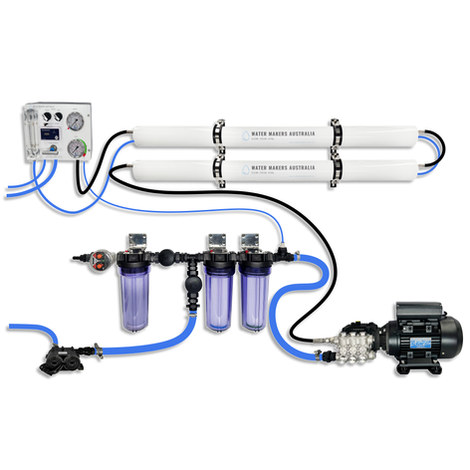
A two-membrane modular watermaker with 140 L/h nominal output, aimed at families and liveaboards that want more water per run.
Explore →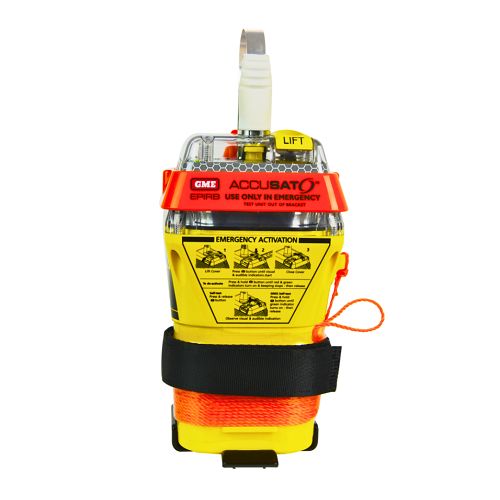
A 10‑year battery EPIRB with integrated GNSS (supports GPS and Galileo), infrared strobe and 121.5 MHz homing signal. Approved for worldwide COSPAS‑SARSAT operation.
Explore →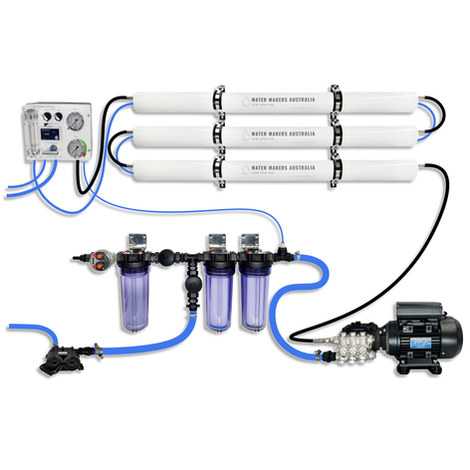
A three-membrane modular watermaker with 200 L/h nominal output and up to 240 L/h family-level marketing, for larger crews and heavy use.
Explore →