Loading this page…

Loading this page…
Sailing club
Wagga Wagga Sailing Club is an inland dinghy club on Lake Albert in Wagga Wagga, NSW. A small, community-focused club of around 40 members with regular Saturday racing, the club runs learn-to-sail courses each summer and supports radio-controlled yacht racing. Visitors are welcome to bring their own boat, use club boats or take a crew position.
About
Wagga Wagga Sailing Club is an inland dinghy club on Lake Albert in Wagga Wagga, NSW. A small, community-focused club of around 40 members with regular Saturday racing, the club runs learn-to-sail courses each summer and supports radio-controlled yacht racing. Visitors are welcome to bring their own boat, use club boats or take a crew position.
Service area: Lake Albert, Wagga Wagga, NSW
Keep exploring
Wagga Wagga Sailing Club is a community sailing club based on Lake Albert in Wagga Wagga, NSW. The club runs an active Saturday racing program during the season (briefing 14:00, racing from 14:30) with roughly 20–25 regular racers and welcomes visitors, crew and visiting boats. The club also conducts regular learn-to-sail courses delivered by trained coaches, covering safety awareness, rigging, basic boat handling, capsize recovery, launching/recovery and other introductory sailing skills. Members may use club boats or bring their own.
Two kinds of sailing happen under this club's banner, and one of them fits in the palm of your hand. The radio sailing section races DF65 restricted-class yachts off Nelson Drive on Lake Albert, meeting on Wednesday and Sunday afternoons in summer and Saturday afternoons in winter, and is affiliated with the NSW Radio Yachting Association. Radio sailing is having a genuine boom across regional Australia, and for good reason: it demands the same tactical reading of wind shifts and the same rules knowledge as full-size racing, yet needs no boat ownership, no trailer and no physical strength, making it a lifeline for older sailors and a curiosity-satisfier for newcomers.
Wagga's embrace of it shows a club alert to where participation is growing.
The full-size teaching side is conventional but thorough. Learn-to-sail courses run regularly through the warmer months under skilled coaches, and the published syllabus is unusually comprehensive for a small club: rigging and parts of the boat, clothing and safety equipment, wind awareness, rope work including the figure of eight and the round turn with two half hitches, capsize recovery, heaving-to, towing, launching and landing, supervised helming, rescue drills, right-of-way basics, and meteorology covering storm clouds, wind, tides and currents.
The city council's own lake guide notes the club's regular events and beginner program, and the national directory lists kids' learn-to-sail among its offerings. Discover Sailing Centre accreditation is not recorded, but with club boats available to visitors, crew positions on offer and coaches delivering that syllabus each season, the pathway from curious spectator to Saturday racer is short and well signposted.
Lake Albert began life as Swampy Plains, a low-lying flat on Wagga's southern fringe that was dammed into a 125-hectare artificial lake, named for Prince Albert, sometime in the nineteenth century; the club's own account dates construction to the 1890s while other sources say 1868. Either way, generations of engineers have tinkered with it since. A sill built under the Lake Albert Road bridge in the late 1950s used boards to lift the water level by about thirty centimetres, works in 1969-70 diverted Crooked Creek into the lake to bolster inflows, and as far back as the summers of 1906 and 1907 more than two thousand fish were transferred here from ponds near the Murrumbidgee.
Water levels and quality have always ridden the region's drought and flood cycles, a familiar reality for inland sailors who learn to watch the gauge as carefully as the sky.
The clubrooms stand at 67 Plumpton Road on the lake's south-western corner, within the Bosley Memorial Park precinct, with public ramps also at Apex Park and a popular five-and-a-half-kilometre walking circuit around the shore. For sailing, a 125-hectare lake delivers exactly what a dinghy club needs: room for a proper windward-leeward or triangle course, flat water, and shifty breezes broken up by the surrounding parkland and rooftops that punish anyone who stops watching the trees. Flat water and fickle wind make for technical, thinking-person's racing, and they make Lake Albert a genuinely good classroom.
The shared shore keeps things lively. The neighbouring Wagga Wagga Boat Club runs a licensed bar and meals and stages the Barry Carne Memorial ski race each Mother's Day, dragon boaters train out of the same precinct, and the all-abilities wharf beside the sailing club shed, a twenty-metre ramp to an eight-metre pontoon, has opened the water to people the sport rarely reaches.
Ask when the sailing club itself was founded and the honest answer is that the date is not published anywhere readily found; the neighbouring Wagga Wagga Boat Club — an entirely separate body — dates its establishment to 28 November 1952. But sailing on Lake Albert is demonstrably older than most records. A regatta at the Wagga Boat Club was photographed on 31 January 1955, the image now held in the Charles Sturt University Regional Archives, and a 1973 report describes Wagga's growing band of sailors contesting a novelty race in preparation for an interstate regatta hosted in the city over that Easter weekend.
Through the 1950s the lake was the town's aquatic heart: sailing, swimming, canoeing, fishing and water skiing all flourished, and power boat racing drew large crowds.
Trailer-sailers feature in the club's more recent past. Long-term members raced RL24s on the lake, with one family sailing an RL24 in club colours from 1986 until relocating to Wollongong in 2015, a span that covers a lot of Saturday afternoons. The club's organisational life continues steadily: it hosted an Australian Sailing re-accreditation course for Club Race Officers at the Plumpton Road clubhouse in September 2022, and it maintains its incorporated status and national affiliation.
The modern chapter is about infrastructure and partnership. In July 2021 the city council backed a joint project between the sailing club, the boat club and the Bidgee Dragons to build an all-abilities wharf outside the sailing shed, estimated at fifty to seventy thousand dollars. Around it, the wider foreshore redevelopment, targeted for completion around 2025, has been adding ramps, boardwalks and event spaces. From a photographed regatta in 1955 to a purpose-built accessible pontoon seventy years on, sailing on this little inland lake has proved remarkably durable.
A detailed sailing guide to the Tollgate Islands area on the NSW south coast, focused on Batemans Bay, the Clyde River entrance and nearby sheltered waters. The guide explains geography, typical conditions, principal sailing zones, anchorages and moorings, facilities ashore and practical arrival notes. It highlights local hazards — exposed heads, shifting sand, bird-protection restrictions and commercial traffic — and outlines local rules and responsible-access requirements. Several suggested sailing experiences are provided for day sailors, weekend cruisers and passagemakers, with clear notes

Maybe — it depends. In NSW you often need registration and a boat operator licence for motorised vessels, but many small trailerable sailing dinghies without engines don’t require boat registration or a licence. Check the specific rules for your craft, trailer and engine.
Explore →
Look for a friendly club with beginner-focused training, accessible facilities and boats, a supportive community, clear safety practices, and opportunities to progress at your own pace.
Explore →
Pick a stable, simple, forgiving dinghy with a single sail or basic sloop rig, affordable handling and easy maintenance—ideally one with a local class or school nearby so you can access coaching and spare parts.
Explore →
Legal requirements can change — check Transport for NSW for the current rules. As a practical baseline for coastal day sailing from NSW shores: keep the right number and type of lifejackets for everyone, have a means of calling for help, show navigation lights if you’ll be out after dusk, and carry basic items to manage a man‑overboard or abandon‑ship situation. Add anchor, bilge/bailer, sun/protection and basic repair kit as recommended items.
Explore →
A concise, practical guide to the points of sail and how to trim sails effectively for common Australian conditions. Learn the basics of wind angles, sail shape, telltales, reefing considerations and simple steps to improve boat speed and balance.
Explore →
A practical guide for new sailors on picking the right Australian sailing club: training, boat access, racing, social fit, costs and the key questions to ask before joining.
Explore →A concise, practical introduction to the essential parts of a recreational sailing boat for beginners in Australia. Covers hull, deck, rigging, sails, steering, below-decks spaces and safety equipment, with simple explanations, common mistakes and a pre-decast checklist to help new sailors communicate and get underway.
Explore →
A practical, Australia‑focused introduction to sailing: key terms, common boat types, basic manoeuvres, where to learn, licence and club options, and planning your first trips with safety and local conditions in mind.
Explore →Burke Yachtsman Gear Bag 40L - Shop Now Zip Pay | Tamar Marine Skip to content 59 – 63 Holbrook Street, Invermay Online Shop Open 24/7 Products search Contact us 1300 MARINE $ 0.00 0 Cart Burke Yachtsman Gear Bag 40L $ 79.90 Colour Choose an option Black Blue Black Blue Clear - Burke Yachtsman Gear Bag 40L quantity + Add to cart Enquire about this product SKU BAGB-Y24/BLACK* Category Bags - Sail & Gear A Burke classic and customer favourite, the Yachtsman’s Gear Bag is built tough to handle wet, salty conditions while keeping your gear dry and protected. Made from double coated waterproof…
Explore →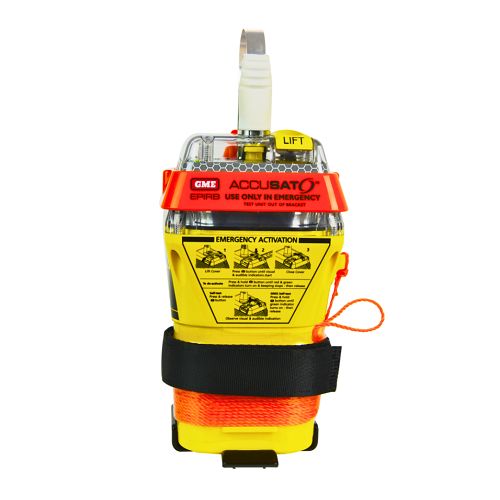
A 10‑year battery EPIRB with integrated GNSS (supports GPS and Galileo), infrared strobe and 121.5 MHz homing signal. Approved for worldwide COSPAS‑SARSAT operation.
Explore →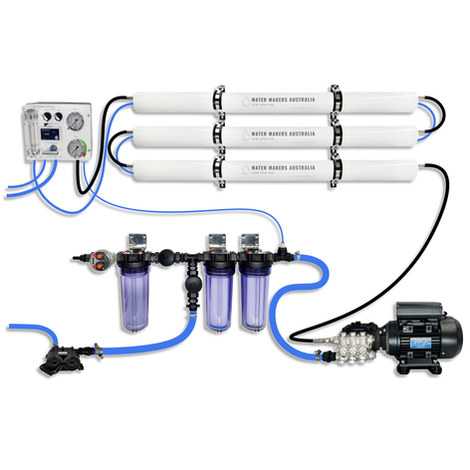
A three-membrane modular watermaker with 200 L/h nominal output and up to 240 L/h family-level marketing, for larger crews and heavy use.
Explore →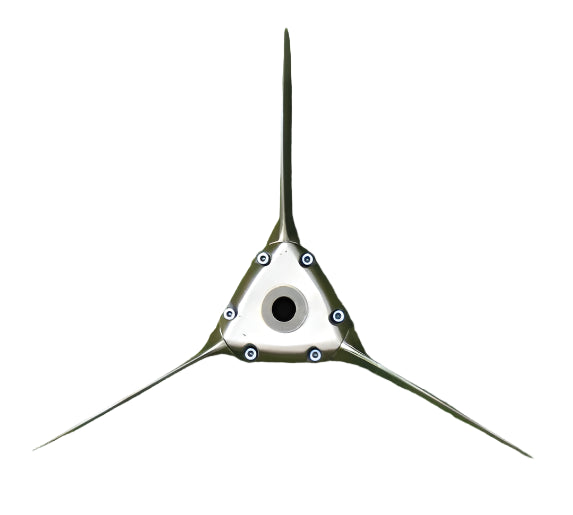
Feathering propeller designed for larger cruising yachts. Diameter range 18"–25"; shaft range 1¼"–1¾"; hub lengths 120mm or 165mm (with anode). Sail drive option available.
Explore →