Loading this page…

Loading this page…
Sailing club
Walpole Yacht Club is a small, community-centred dinghy club on Coalmine Beach at the Nornalup Inlet on Western Australia’s south coast. Set inside the Walpole and Nornalup Inlets Marine Park and fringed by karri and peppermint forest, the club runs local sailing, social activities and an annual In the Trees (In the Tree’s) Regatta held over the Labour Day long weekend in March. The club welcomes visiting trailer-sailors and families and supports informal junior and learn-to-sail activity alongside other water-based recreation.
About
Walpole Yacht Club is a small, community-centred dinghy club on Coalmine Beach at the Nornalup Inlet on Western Australia’s south coast. Set inside the Walpole and Nornalup Inlets Marine Park and fringed by karri and peppermint forest, the club runs local sailing, social activities and an annual In the Trees (In the Tree’s) Regatta held over the Labour Day long weekend in March. The club welcomes visiting trailer-sailors and families and supports informal junior and learn-to-sail activity alongside other water-based recreation.
Service area: Coalmine Beach / Nornalup Inlet, Walpole (Shire of Manjimup)
Keep exploring
Walpole's teaching happens the way everything else happens here — hands-on, family-first and mostly outdoors. The club maintains a training fleet alongside a flotilla of club kayaks, both pitched at juniors and families; the season opening of December 2015 drew some fifty people, including families who had made the trip from Albany, with the youngest members paddling the kayaks and training boats.
Then-Commodore Maree Pickett confirmed that regional pull, reporting families travelling from Albany specifically for club events — a significant draw for a town of Walpole's size. Formal learn-to-sail structure is where honesty is required: no Australian Sailing Discover Sailing Centre accreditation or branded training program could be verified for the club, so nothing of that kind should be assumed. What is documented is a club that teaches by inclusion.
It promotes sailing together with swimming, canoeing, fishing and power boating among people and families across the Walpole, Manjimup and Denmark shires, and class notes compiled by Shelley Sailing Club record Windrush 14 catamarans being sailed at Walpole — the Perth-designed fourteen-footer that suits exactly this kind of sheltered inlet water. In practice, small regional clubs of this type generally induct newcomers informally — a borrowed boat, a crewing spot, a parent-and-child paddle graduating to a sail — and Walpole's training fleet and kayaks exist precisely for that pattern, though visitors should confirm current arrangements directly.
The centrepiece of the participation calendar needs no accreditation at all: the In the Trees Regatta is pitched as a safe, family-focused occasion and a perfect way to sample the Walpole and Nornalup Inlets Marine Park, with racing on Saturday afternoon and Sunday morning and catering laid on.
The Nornalup Inlet is the club's racecourse, and it is unlike any other on this list. The inlet belongs to a connected system watered by the Frankland and Deep rivers — streams canoeists have long celebrated for their wilderness character — and the whole complex lies within the Walpole and Nornalup Inlets Marine Park, which covers both inlets plus the tidal reaches of the Frankland, Deep and Walpole rivers.
The system's two basins have distinct personalities: Walpole Inlet is shallow, reaching barely a metre at its deepest, while Nornalup Inlet runs to about five metres, and a one-kilometre channel at The Knolls joins them. Coalmine Beach, where the clubhouse stands, puts sailors straight onto the deeper basin — flat, protected, tree-lined water where the wind arrives filtered through karri forest and a capsize means a swim, not a rescue.
Launching options stud the shoreline: the Coalmine Beach boat ramp beside the club, plus ramps at Rest Point, the Walpole town jetty, Isle Road and Nornalup. The setting is national-park country in every direction — karri, red flowering gum and peppermint forest running down to the water — which explains both the regatta's name and the club's by-its-own-account reputation among sailors as one of the world's top ten sailing locations.
The club's own history records how much of this water early members left unexplored: the first sailing stayed confined to Swan Bay, and only later did crews feel confident enough to take on the broader Nornalup Inlet. Today's regatta fleets range far more widely, but the essential bargain is unchanged — wilderness water, sailed gently, inside a marine park no other Australian yacht club can call home.
The club's beginning reads like a parable of country enterprise. In 1956 local boat builder Terry Swarbrick purchased a VJ — a twelve-foot two-crew dinghy — from a tourist who was holidaying at Rest Point, then sailed it past Claude Cooper and his son Frank in Swan Bay; the sight, by the local account, sparked district interest almost immediately. A club took shape around 1957-58 with Swarbrick as Commodore, Claude Cooper in the vice-commodore's role, Harley Swarbrick stepping in as Rear Commodore while Don Hadfield combined the secretary and treasurer jobs.
The Walpole-Nornalup District Historical Society timeline supplies the precise scaffolding: an inaugural meeting on 13 February 1958, a first public meeting a fortnight later on 27 February, a decision in April 1958 to abandon Swan Bay for Coalmine Beach, and a lean-to boatshed built with jetty construction under way there by late 1958. A first small regatta took place in Swan Bay that same year, and the club's own website records that it became formal in 1958 before shifting to Coalmine Beach in 1959.
That year delivered the foundations in earnest: a lease and permit to build, a jetty completed from timber salvaged out of the old Kent River Sawmill; March 1959 brought the first official regatta to draw visiting boats, and an official opening on 23 November 1959 saw Lady Walpole appear before a crowd of spectators. Consolidation followed — a 21-year lease in 1961 at five pounds a year, foreshore reclaimed with sleepers taken from the Nornalup Railway, a boat ramp beside the jetty arriving in 1962, and a starter's box added at the jetty's end in 1963.
The early fleet was VJs and Moths, sailed with a certain flair: one enterprising member reportedly fashioned a spinnaker from an old parachute, and the local history recalls crews who, by their own rueful account, passed more of their time inverted in the water than upright and sailing. Photographs in the district collection show regattas with Sharpies from around 1960 and the fleet gathered at the Nornalup Inlet jetty through the 1970s — the visual record of a club the bush never swallowed.
Apollo Bay is a small working harbour on Victoria’s Great Ocean Road where sheltered inshore sailing meets the Southern Ocean. The character is a mix of protected harbour berths and an exposed open coast: pleasant day-sails and sheltered weekend cruising inside the bay, with demanding coastal passages immediately offshore where south‑westerly swell and strong winds from the Southern Ocean dominate. It suits coastal cruisers, trailer sailors who launch at the ramp, and experienced coastal sailors who understand bar and swell behaviour; it is not a casual open‑ocean anchorage for unprepared or

Expect very different seasonal systems across Western Australia: the south‑west (Perth to Albany) has a strong summer afternoon sea breeze (the “Fremantle Doctor”) and winter westerly fronts, while northern WA follows a wet/dry monsoonal cycle with strong seasonal onshore winds, thunderstorms and cyclone risk in the wet season. Local headlands, estuaries and tidal flows often change what you actually feel on the water, so learn the local timing and sheltered venues first.
Explore →
Legal safety equipment for recreational boats in South Australia depends on the type, size and where you operate; you must check the current SA government requirements for your vessel. Independently of legal minimums, carry a sensible set of recommended items (lifejackets, means of communication, signaling, fire protection, anchor and basic tools) and make them usable and maintained.
Explore →
There are legal obligations in Western Australia for recreational boat owners and skippers covering vessel registration, carriage of safety equipment and general skipper responsibilities, but the exact requirements depend on vessel type, size, where you sail and whether the vessel is commercial or recreational. Check the Western Australian Department of Transport (DoT WA) and the national authority for the precise checklist that applies to your boat and voyage.
Explore →
Do a seasonal inspection and servicing routine that focuses on hull and antifouling, through-hulls and seacocks, rigging and sails, engine and fuel systems, electricals and batteries, safety gear and bilge systems. Tailor exact tasks to your boat type, age and where you sail in South Australia, and follow manufacturer and marine service advice for anything technical.
Explore →A practical guide to the coastal weather systems that affect sailing along Western Australia's coast, focusing on the Fremantle Doctor, local sea breezes, and linked coastal phenomena. Explains how these systems form, when they tend to occur, how they influence boat handling and passage planning, common mistakes, and a
Explore →Practical guide for recreational sailors planning passages, anchorages and visits to Ningaloo Reef and the Exmouth coast. Covers anchoring considerations, marine park rules and how local weather, tides and currents affect safety and enjoyment.
Explore →A practical guide to preparing, planning and executing a recreational offshore passage along the New South Wales coast. Covers route selection, weather and tidal considerations, vessel and crew checks, safety equipment, communication, watchkeeping and common mistakes, with clear pre‑departure and underway checklists.
Explore →A practical guide for recreational sailors planning visits to Albany and King George Sound. Covers the main anchorage areas, typical local weather patterns, tidal and current considerations, navigational hazards, on-the-water etiquette and a pre-departure checklist to help you plan a safe passage and enjoyable stopover
Explore →Burke Yachtsman Gear Bag 40L - Shop Now Zip Pay | Tamar Marine Skip to content 59 – 63 Holbrook Street, Invermay Online Shop Open 24/7 Products search Contact us 1300 MARINE $ 0.00 0 Cart Burke Yachtsman Gear Bag 40L $ 79.90 Colour Choose an option Black Blue Black Blue Clear - Burke Yachtsman Gear Bag 40L quantity + Add to cart Enquire about this product SKU BAGB-Y24/BLACK* Category Bags - Sail & Gear A Burke classic and customer favourite, the Yachtsman’s Gear Bag is built tough to handle wet, salty conditions while keeping your gear dry and protected. Made from double coated waterproof…
Explore →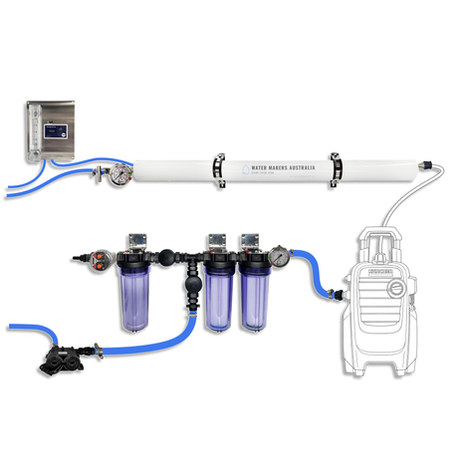
A one-membrane modular marine watermaker with 80 L/h nominal output, remote stainless control panel, standard consumables and direct Australian support.
Explore →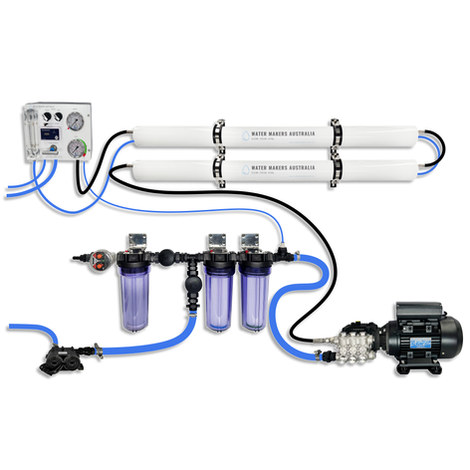
A two-membrane modular watermaker with 140 L/h nominal output, aimed at families and liveaboards that want more water per run.
Explore →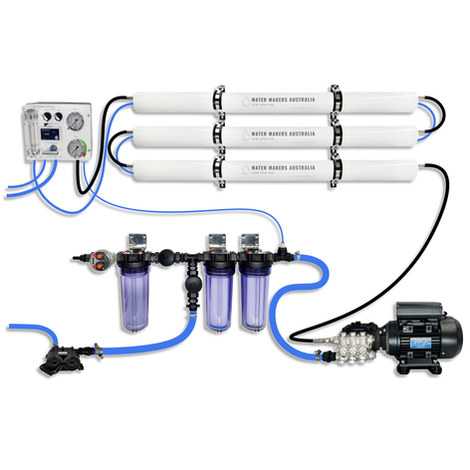
A three-membrane modular watermaker with 200 L/h nominal output and up to 240 L/h family-level marketing, for larger crews and heavy use.
Explore →