Loading this page…

Loading this page…
Sailing club
Sailing, fishing and social club for off-the-beach boats at Balnarring Beach on Western Port, based in a heritage-noted 1960 clubhouse built by volunteer working bees.
About
Sailing, fishing and social club for off-the-beach boats at Balnarring Beach on Western Port, based in a heritage-noted 1960 clubhouse built by volunteer working bees.
Service area: Balnarring Beach, VIC
Keep exploring
Begin with the building, because the building explains the club. At 1 Foreshore Road, Balnarring Beach, stands a clubhouse raised in 1960 by volunteer weekend working bees — a structure the Mornington Peninsula Shire's 2022 heritage review judges to be of local historical significance, one of the shire's earliest, largest and best-preserved do-it-yourself clubhouses. This is Westernport Yacht Club: a sailing, fishing and social club for off-the-beach boats on the shores of Western Port Bay, and a fixture of the Balnarring community for more than six decades and still counting.
The club bills itself as "the first choice on Westernport Bay" — promising Sundays afloat, fishing and a good time — and its membership structure reflects that breadth, with sailing, fishing, powerboat and purely social categories. It is a volunteer-run organisation affiliated with Australian Sailing, led by Commodore James Cooper, and its stated values — Teamwork, Responsibility, Learning, Passion, Respect — are posted where members can see them.
The sailing program is substantial: off-the-beach racing from October to April across a dozen classes, divisional series in spring and summer, and a calendar of special events that includes the Montalto Marathon, the Easter Sternchaser series, the Montalto Masters and the Bright Brewery Teams Racing Regatta. Add an accredited training centre, a fishing membership with ramp access for boats up to six metres, and live-music sessions under the Peninsula SongRiders banner, and the picture is of a club that has grown well beyond its boatshed origins while keeping those origins very much intact.
Westernport runs one of the more formally structured training operations on the bay: it is an accredited Australian Sailing Discover Sailing Centre, delivering accredited sailing courses alongside power boating and safety boat operator courses, and it assists members working toward a Marine Radio Licence. The club also holds a particular place in Victorian junior-sailing history — by its own account it was the first club in the state to run the Tackers program, which reaches its twentieth consecutive year in 2027.
The training fleet is club-owned, made up of Pacers, O'pen Bics and Optimists, and instruction is offered from age seven upward in one-on-one, small-group and public program formats. Adults are covered by learn-to-sail and discover-sailing courses plus free try-sailing events over summer, while the Australian Sailing Sailing Schools program introduces primary school children to the sport. Named coordinators run the show: Discover Sailing Principal Sue Bartholomaeus, who is also the club's SheSails representative, and Tackers Coordinator Marg Douglas.
The piece that distinguishes Westernport's pathway is the Green Fleet, a dedicated squad that bridges the gap between learning and racing, with coaches and support boats of its own, so graduates are not simply tipped into open competition. Racing itself runs October to April across classes including Sabre, Tasar, Pacer, Optimist, O'pen Bic, Laser, Impulse, RS Aero, Hobie, A-Class, Paper Tiger and Taipan.
The season offers two divisional series — Spring and Summer, up to twenty-one races of three short Sunday-afternoon contests inside the reefs — plus a ten-race Commodores Cup, usually sailed outside the reef, to decide the Club Champion. Special events such as the Montalto Marathon, the Easter Sternchaser, the Montalto Masters and the Bright Brewery Teams Racing Regatta fill the gaps, and the club regularly hosts state and national class championships.
Balnarring Beach fronts the eastern side of Western Port Bay, and the club's sailing water has a defining natural feature: a line of inshore reefs that shelters the race area. Short-course racing happens inside the reefs in protected water, while the Commodores Cup series usually heads outside the reef into more open conditions — a built-in progression from forgiving to testing that mirrors the club's training pathway.
Launching is a managed affair. Boats go in via a gated club ramp using club tractors — private vehicles are not permitted on the ramp — and tractor drivers must complete training and a competency assessment before taking the wheel. Fishing membership covers boats up to six metres, while jet skis and other personal watercraft are prohibited under the club's lease. The boat yard has its own Yard Manager, and the club maintains a patrol boat fleet, a weather station and webcams so members can check conditions before leaving home.
The club works closely with the Balnarring Beach Foreshore Committee, and camping is available through the foreshore reserve, which makes regatta weekends easy for visiting sailors. The club's jetty dates to 1968, and the setting places the clubhouse within a coastal reserve rather than a marina environment — grass, banksias and beach rather than hardstand and masts. Beyond sailing, the clubhouse doubles as a community venue, hosting Peninsula SongRiders gigs featuring high-profile artists along with community events and meetings — an unusual second life for a sailing club, and one that roots it deeply in Balnarring's social fabric.
The founding families had been on the beach for decades before there was a club. The Wilkinsons, Brains, Fethers and Williams had run private boatsheds on Balnarring Beach from the early 1920s onward, and when enthusiastic local meetings led by Jim Williams coalesced into the Westernport Yacht and Boat Club in 1960, the new club began with thirty-one members. The state's Lands Department issued a Permissive Occupancy Agreement covering foreshore land just south of present-day Foreshore Road, and the clubhouse went up that same year, built by volunteer weekend working bees under first Vice Commodore Geoff Roberts, with Norton Miller, a professional builder, alongside.
The building grew as the club did: a first-floor verandah arrived in 1961, an observation tower known as the Sailing Committee Box in 1963, and further alterations followed in 1971 and 1989, while the club's jetty was constructed in 1968. The heritage review records local historian Williams' judgement that the club's formation did much to bring together a village that, until the 1950s, had been split between its eastern and western halves — a rare documented case of a sailing club serving as social infrastructure.
Not everything survived: the original club slipway was abandoned after sand filled it. But the record has been kept — a club history was published in 1995, and the 2022 heritage review's recognition of the clubhouse formalised what members already knew about their volunteer-built home. The competitive story continues to accrete: club member Ant Richards claimed the 2026 Taipan State Titles, the club hosted the Sabre State Titles in 2026, and the Taipan Nationals are scheduled for Balnarring in 2027. Sixty-odd years on, the working bees' handiwork still houses a busy club.
American River (Kangaroo Island, SA) is a small, sheltered inlet and township on the north‑eastern side of Kangaroo Island that acts as a calm staging point for cruising the eastern part of the island and for short hops through Backstairs Passage. It’s distinctive for its protected anchorage inside Eastern Cove and the adjacency of Pelican Lagoon — a shallow, ecologically important lagoon with sanctuary zoning — which shapes how and where boats can move. The area suits sheltered day sailing, weekend cruising and short coastal passages; it’s appropriate for trailer sailors, small cruisers and a

Use ramps and beaches with respect for local conditions: check ramp layout, tide and swell, wind direction, vehicle access and crowding; prepare boat and crew before you launch or retrieve; and follow local signage, courtesy and safety practices. Specifics vary by ramp and beach, so confirm details for the exact site before you go.
Explore →
Look for a friendly club with beginner-focused training, accessible facilities and boats, a supportive community, clear safety practices, and opportunities to progress at your own pace.
Explore →
Write a one‑page plan with the who/what/when/where/how of your trip, keep a copy on board and leave the main copy with a responsible person ashore (and optionally with your club, marina office or local volunteer rescue service).
Explore →
Pick a stable, simple, forgiving dinghy with a single sail or basic sloop rig, affordable handling and easy maintenance—ideally one with a local class or school nearby so you can access coaching and spare parts.
Explore →
A practical guide for new sailors on picking the right Australian sailing club: training, boat access, racing, social fit, costs and the key questions to ask before joining.
Explore →A practical guide to the coastal weather systems that affect sailing along Western Australia's coast, focusing on the Fremantle Doctor, local sea breezes, and linked coastal phenomena. Explains how these systems form, when they tend to occur, how they influence boat handling and passage planning, common mistakes, and a
Explore →A practical guide for recreational sailors planning voyages to Esperance and the Recherche Archipelago: what to expect, key planning considerations, common anchorages, safety and communications, equipment recommendations and sensible steps for a successful trip in this remote southern WA cruising area.
Explore →A practical guide for recreational sailors planning visits to Albany and King George Sound. Covers the main anchorage areas, typical local weather patterns, tidal and current considerations, navigational hazards, on-the-water etiquette and a pre-departure checklist to help you plan a safe passage and enjoyable stopover
Explore →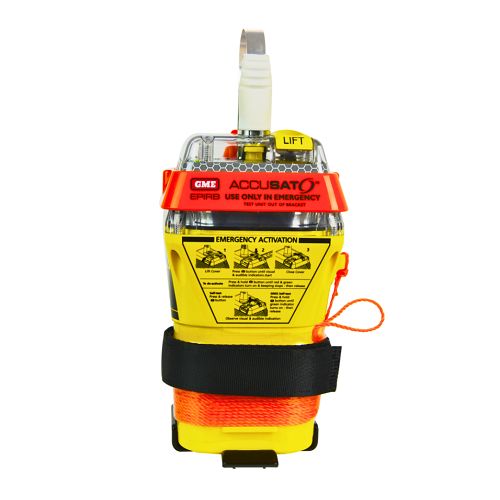
A 10‑year battery EPIRB with integrated GNSS (supports GPS and Galileo), infrared strobe and 121.5 MHz homing signal. Approved for worldwide COSPAS‑SARSAT operation.
Explore →Burke Yachtsman Gear Bag 40L - Shop Now Zip Pay | Tamar Marine Skip to content 59 – 63 Holbrook Street, Invermay Online Shop Open 24/7 Products search Contact us 1300 MARINE $ 0.00 0 Cart Burke Yachtsman Gear Bag 40L $ 79.90 Colour Choose an option Black Blue Black Blue Clear - Burke Yachtsman Gear Bag 40L quantity + Add to cart Enquire about this product SKU BAGB-Y24/BLACK* Category Bags - Sail & Gear A Burke classic and customer favourite, the Yachtsman’s Gear Bag is built tough to handle wet, salty conditions while keeping your gear dry and protected. Made from double coated waterproof…
Explore →
Self-contained, battery-powered plug‑and‑play autopilot designed for standard hydraulic steering systems.
Explore →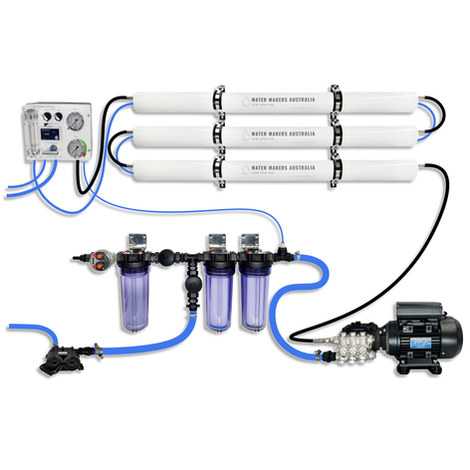
A three-membrane modular watermaker with 200 L/h nominal output and up to 240 L/h family-level marketing, for larger crews and heavy use.
Explore →