Loading this page…

Loading this page…
Sailing club
Whitsunday Sailing Club is a waterfront yacht club at 11 Ocean Road, Airlie Beach, occupying a point position on Pioneer Bay. The club combines an active racing and cruising programme (twilight, offshore and off‑the‑beach sailing), community learn‑to‑sail courses and a commercial maritime training arm. Facilities include a restaurant and bar open seven days, event and function spaces, marina berths, swing moorings, boat storage and a dinghy harbour and launching area.
About
Whitsunday Sailing Club is a waterfront yacht club at 11 Ocean Road, Airlie Beach, occupying a point position on Pioneer Bay. The club combines an active racing and cruising programme (twilight, offshore and off‑the‑beach sailing), community learn‑to‑sail courses and a commercial maritime training arm. Facilities include a restaurant and bar open seven days, event and function spaces, marina berths, swing moorings, boat storage and a dinghy harbour and launching area.
Service area: Airlie Beach and the Whitsunday region (Pioneer Bay and surrounding Whitsunday Islands)
Keep exploring
Whitsunday Sailing Club is a waterfront sailing club in Airlie Beach offering organised sailing programs (twilight racing, offshore and off‑the‑beach events), club membership, a restaurant/bar and event spaces. The club webpage also describes marina berths and swing moorings, member-only boat storage on site, and on-site maritime/learn-to-sail training and related facilities.
What sets Whitsunday Sailing Club apart from most Australian clubs is that training here runs on two tracks: a community learn-to-sail pathway and a commercial maritime school. The Whitsunday Maritime Training Centre, established in 1998 as the club's commercial division, delivers maritime training courses for people working toward careers on the water, and in 2021 the club began construction of the North Australian Maritime Training Academy to expand that operation further.
Alongside it sits the conventional pathway — Tackers 1, 2 and 3 introduces children aged seven to twelve, while Start Sailing 1 and 2 caters for adults and teenagers. Racing, though, is the heartbeat. Twilight races run weekly and are open to members and visiting yachts alike; offshore races run roughly twice a month, all year round; and cruising events thread through the islands.
The off-the-beach scene is equally busy, supported by rigging and storage facilities, a dinghy harbour and a launching area the club describes as one of the best protected sailing areas on the Queensland coast. Then there are the regattas. Airlie Beach Race Week has anchored the calendar since 1990, the 2021 edition spanning Multihull Racing, Cruising, Non-Spinnaker, Trailable Yacht and WETA trimaran divisions — the Extreme 40 Back in Black taking Multihull Division 1 in that year's opener.
The Sail Airlie Easter Regatta hosts the North Queensland Laser Championship and a Sabot traveller series within the CQ Challenge between Central Queensland clubs, drawing classes from 29ers and A Class catamarans to Optimists and Sabots, with competitors aged from seven into their sixties. Club volunteers also help deliver state, national and international competitions.
The address tells the story: 11 Ocean Road, Airlie Beach, right on the point, with views across Pioneer Bay. The sailing waters are the bay itself and, beyond it, the Whitsunday Islands within the Great Barrier Reef region — cruising ground that draws bareboat charterers from around the world and gives the club's offshore fleet an extraordinary backyard. As general context, this stretch of the North Queensland coast offers trade-wind sailing through the cooler months, island anchorages within day-sail reach, and shelter options in most wind directions, which helps explain why the club's weekend racing and cruising program runs year-round.
Back at base, the waterfront facilities are those of a substantial regional club: a restaurant and bar open seven days, trading from 10am until late with the restaurant serving from 11.30am to 8pm; event spaces and function rooms; a marina and hardstand; and the dinghy harbour and launching area that underpin the off-the-beach program. The point position means the clubhouse catches both the breeze and the evening light, and the weddings and functions side of the operation trades happily on the waterfront views and sunsets.
For visiting sailors the combination is practical as well as scenic: arrive by road or by water, tie up at the marina, launch a dinghy from the harbour, and race on waters where the islands themselves form the course marks. Few Queensland clubs can offer a racing sailor breakfast at the clubhouse and an afternoon beat toward island scenery in quite the same breath. Airlie Beach itself is the jumping-off point for island holidays, which keeps a steady stream of visiting sailors and charter crews walking past the clubhouse door.
The club's own account dates its beginning to 1971, when it was founded to promote sailing in the Whitsundays — a time when Airlie Beach was still more fishing village than tourism town. The defining leap came in 1990, when the club and Don Algie launched Airlie Beach Race Week, an event that has since grown into a major annual regatta and festival of sailing.
Eight years later, in 1998, the club established the Whitsunday Maritime Training Centre as its commercial training division, giving the operation a professional dimension and a revenue stream unusual among volunteer-run clubs. The off-the-beach tradition took formal shape in 2009 with the first running of what became the annual Sail Airlie Easter Regatta. December 2020 brought a governance milestone: Heather Sutton was sworn in as the club's first female Commodore, with Leo Rodriguez serving as club president at the time.
Board member Terry Archer, reflecting at that year's AGM, spoke to the growth the club had seen across its fifty years. The official fiftieth birthday was celebrated on 2 April 2021, deliberately timed to coincide with the Easter Regatta. That same year the club commenced construction of the North Australian Maritime Training Academy, expanding its maritime training footprint, and it pressed ahead with Airlie Beach Race Week despite COVID lockdowns — Event Chairman Ross Chisholm noting that interstate sailors still made the trip north.
From a 1971 founding to a half-century celebration on its own waterfront, the arc the club describes is one of steady, self-built growth.
Adelaide’s metropolitan coast fronts the eastern side of Gulf St Vincent and mixes short, sheltered bay sailing around Holdfast Bay and the Patawalonga with more exposed, open-water sailing north toward Outer Harbour and along the Le Fevre Peninsula. The area suits a wide range of activity — sheltered day sails, club and trailer-sailer racing, short coastal cruising into the Fleurieu and Yorke Peninsula, and launch-and-home-port racing — but demands local knowledge about shipping channels, tidal flows in the Port River/Outer Harbour approaches, and seasonal wind patterns.

Use ramps and beaches with respect for local conditions: check ramp layout, tide and swell, wind direction, vehicle access and crowding; prepare boat and crew before you launch or retrieve; and follow local signage, courtesy and safety practices. Specifics vary by ramp and beach, so confirm details for the exact site before you go.
Explore →
Rig and de-rig a small dinghy by following a consistent, step-by-step sequence: prepare the boat on shore, fit spars and foils in a stable order, control sails and running rigging so lines don’t tangle, check fittings and safety gear, and reverse the process when coming ashore—always working with a partner when possible and staying aware of wind and tide.
Explore →
Maybe — it depends. In NSW you often need registration and a boat operator licence for motorised vessels, but many small trailerable sailing dinghies without engines don’t require boat registration or a licence. Check the specific rules for your craft, trailer and engine.
Explore →
Write a one‑page plan with the who/what/when/where/how of your trip, keep a copy on board and leave the main copy with a responsible person ashore (and optionally with your club, marina office or local volunteer rescue service).
Explore →
A practical, Australia-focused guide for planning and sailing around the Whitsunday Islands: weather and seasons, navigation and anchoring, moorings and parks, provisioning and charters, safety and common mistakes, plus checklists and next steps.
Explore →
A practical guide for new sailors on picking the right Australian sailing club: training, boat access, racing, social fit, costs and the key questions to ask before joining.
Explore →A practical guide for recreational sailors planning visits to Albany and King George Sound. Covers the main anchorage areas, typical local weather patterns, tidal and current considerations, navigational hazards, on-the-water etiquette and a pre-departure checklist to help you plan a safe passage and enjoyable stopover
Explore →A practical guide for recreational sailors planning day sails or short cruises around Batemans Bay, Broulee and the Clyde River. Covers local conditions, safe approaches, anchorages, launching, tides, common hazards, and checklists for trip planning and on-water decisions.
Explore →Burke Yachtsman Gear Bag 40L - Shop Now Zip Pay | Tamar Marine Skip to content 59 – 63 Holbrook Street, Invermay Online Shop Open 24/7 Products search Contact us 1300 MARINE $ 0.00 0 Cart Burke Yachtsman Gear Bag 40L $ 79.90 Colour Choose an option Black Blue Black Blue Clear - Burke Yachtsman Gear Bag 40L quantity + Add to cart Enquire about this product SKU BAGB-Y24/BLACK* Category Bags - Sail & Gear A Burke classic and customer favourite, the Yachtsman’s Gear Bag is built tough to handle wet, salty conditions while keeping your gear dry and protected. Made from double coated waterproof…
Explore →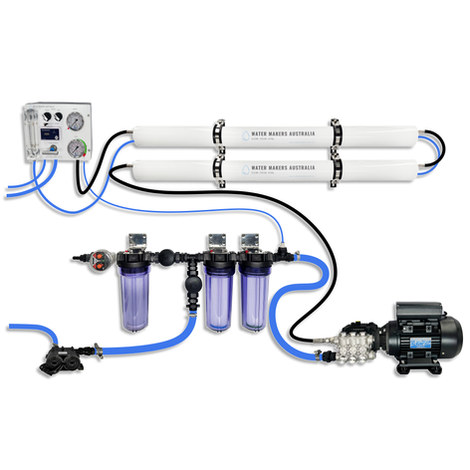
A two-membrane modular watermaker with 140 L/h nominal output, aimed at families and liveaboards that want more water per run.
Explore →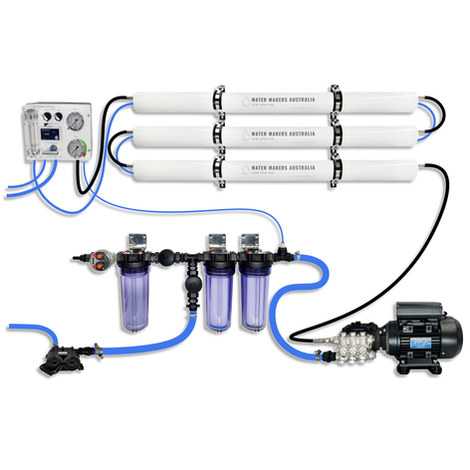
A three-membrane modular watermaker with 200 L/h nominal output and up to 240 L/h family-level marketing, for larger crews and heavy use.
Explore →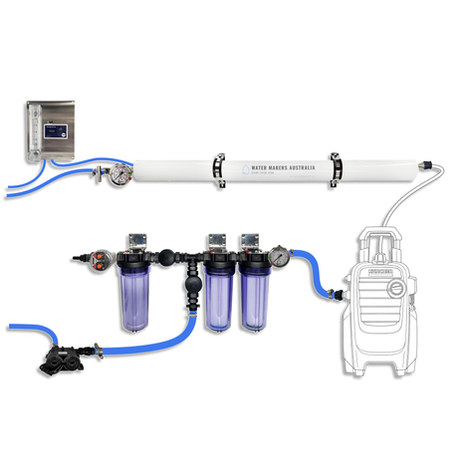
A one-membrane modular marine watermaker with 80 L/h nominal output, remote stainless control panel, standard consumables and direct Australian support.
Explore →