Loading this page…

Loading this page…
Sailing club
Woollahra Sailing Club is a sailing club based in Rose Bay (Sydney Harbour) offering organised club sailing, junior and youth programs, learn-to-sail courses and holiday camps, coaching and private lessons, windsurfing and foiling activities, junior pathway programs (Tackers, Green Fleet, Optimist pathway), powerboat courses, social events and venue hire. The club operates from premises at 2 Vickery Ave, Rose Bay and publishes office hours and a calendar of races and events.
About
Woollahra Sailing Club is a sailing club based in Rose Bay (Sydney Harbour) offering organised club sailing, junior and youth programs, learn-to-sail courses and holiday camps, coaching and private lessons, windsurfing and foiling activities, junior pathway programs (Tackers, Green Fleet, Optimist pathway), powerboat courses, social events and venue hire. The club operates from premises at 2 Vickery Ave, Rose Bay and publishes office hours and a calendar of races and events.
Service area: Rose Bay, NSW
Keep exploring
Woollahra Sailing Club is a sailing club based in Rose Bay (Sydney Harbour) offering organised club sailing, junior and youth programs, learn-to-sail courses and holiday camps, coaching and private lessons, windsurfing and foiling activities, junior pathway programs (Tackers, Green Fleet, Optimist pathway), powerboat courses, social events and venue hire. The club operates from premises at 2 Vickery Ave, Rose Bay and publishes office hours and a calendar of races and events.
The depth of Woollahra's training menu sets it apart. Beyond the standard Tackers introduction for seven-to-eleven-year-olds, the club runs Green Fleet and Green Adventure groups, a Teens program for twelve-to-seventeen-year-olds, adult learn-to-sail, private coaching, learn-to-windsurf, and — most distinctively — a structured Pacer Pathway and Pacer Racer program that carries sailors from their first course into club racing on a proper one-design keelboat-style dinghy. A Junior and Youth Academy and an Optimist pathway feed the performance end, where dedicated training squads prepare sailors for the Olympic classes the club races: ILCA, 29er, 49er and FX, Moth, WASZP and Finn.
Holiday camps have been part of the club's DNA since the first ones ran over the Christmas-New Year break of 1964. Today's versions run year-round from nine to three, split into seven-to-twelve and twelve-to-seventeen age groups, mixing dinghy sailing with kayaking, stand-up paddleboarding, beach games, powerboat rides and windsurfing for the teens, with NSW Active Kids vouchers accepted. In-school programs, first aid courses, theory nights and Try Sailing days widen the net further, and the club's "Opti Chicks" event — which drew Olympian Evie Haseldine as guest speaker in 2024 — works to keep girls in the sport.
Racing is organised to match the fleet structure: separate Spring and Summer series for Optimists, a General Fleet, and a high-performance Moth/WASZP/49er/FX division, plus a Winter Series that in 2024 featured the NB Sail Sports Optimist Iceberg Series alongside interclubs against Royal Sydney Yacht Squadron and Hunters Hill. Winter warning signals run from 8am for the foiling fleets and 10am for the rest. The event hosting record is formidable: Sail Sydney, the 2025 Australian 420 and 470 Championships, NSW WASZP and Finn state titles, and the 2026 East Coast Championships — 156 Optimists and more than thirty support RIBs over the King's Birthday long weekend.
Rose Bay is a gift to a sailing school. The bay is broad and largely sheltered, giving beginner fleets and Optimists protected water close to the beach, while the wider harbour — with its championship courses — lies just beyond the point. The club sits at 2 Vickery Avenue, which it styles by the older name Pannerong, directly on the foreshore in Lyne Park, only a few kilometres east of the city. Boats rig on the hardstand and grass and launch off the beach; facilities include a wharf and crane, boat racks, member storage, the café and the members' lounge. The club acknowledges the Birrabirragal people as traditional custodians.
The ground itself carries history: before it was a park it was the Rose Bay Flying Boat Base, and the RAAF's old officers' canteen served as the clubhouse from 1958 until 1980. The current building is a substantial terracotta-brick structure cut through by a long sloping pane of glass, set back from the water to leave room for a public walkway; the café was refurbished in 2014 with bi-fold doors and an awning opening the interior to the bay view. The wharf and crane owe much to the Sydney 2000 Olympics, when overseas squads adopted the club as their training base; in December 1999 sailors from 23 nations camped here, and the fees paid by the New Zealand, British, Italian and Swedish federations largely paid for the upgrades.
The wind that runs the place is Sydney's summer north-easterly, which typically fills in over the coastal suburbs between late morning and early afternoon and builds through the day — the reliable workhorse for afternoon dinghy racing. But the harbour keeps sailors thinking: ferry and shipping traffic, tide and the shifty topography of the surrounding headlands make Rose Bay a more tactical venue than its sheltered looks suggest. One civic quirk: the City2Surf road closures each August cut access to the club for a day, forcing the sailing school to pause while half of Sydney runs past.
The club was founded on 8 May 1953 at a meeting of Moth Class enthusiasts from the Woollahra municipality, with Victor Friezer elected first President and Henry Arthur appointed Club Captain. Early racing was modest — Sunday mornings, rarely more than seven or eight boats on short courses in Rose Bay — and the first base was a shed beside the local police station. In December 1958 the club crossed the bay into the disused officers' canteen of the former flying boat base, leased from Woollahra Council.
Growth came in steps. Sailing camps began over the 1964 Christmas break, a teaching format the club says still shapes its camps today. The 1968 annual regatta was a landmark, pulling 509 entries spread across 27 classes. When Lyne Park redevelopment loomed in the late 1970s, the club secured a special lease running to 2021 and built a new clubhouse — construction began in 1980 on a footprint pushed back from the water's edge so a public walkway could run along the shore — and membership climbed sharply after the move. An earlier shift in 1974, from the old weatherboard canteen to a central site, had already sent numbers soaring.
The turn of the century put Rose Bay on the world sailing map. Ahead of Sydney 2000 the club hosted training teams from 23 nations, and Olympic training fees funded the wharf renovation and new crane. Woollahra has hosted the Olympic classes regatta now called Sail Sydney, which began life as the Sydney International Regatta, an ISAF Grade 1 event, since at least the mid-2000s; the 2024 edition drew more than 220 boats and took in the NSW 420 state championship and the Kite Foil nationals.
General Manager Diane Vukelic has called it the pinnacle of the club's year. Recent honours tell the same story: finalist for the 2022 NSW and ACT Club of the Year, the 2021 SailGP women's invitational camp, and lifetime memberships presented in 2024 to founding president Victor Friezer, Ross Barratt and Stan Bland — a bridge from the Moth sailors of 1953 to the foiling generation of today.

Plan to transit Sydney Heads and northern NSW estuary entrances to take advantage of favourable tidal streams or slack water; account for local acceleration over shoals, eddies, wind-on-current effects and river discharge, and always check the latest local observations and tide/stream products before departure.
Explore →
Usually not for a small sailing dinghy. In NSW a boat driving licence is needed only to drive at 10 knots or more, or to drive a personal watercraft, and a vessel must be registered if it has an engine of 4 kW or more, is 5.5 m or longer, or needs a mooring licence or marina berth. A trailer towed on public roads needs its own registration.
Explore →
Plan as a chain of conservative daily legs tied to your boat’s real-world fuel and speed in the expected sea state, with confirmed primary and alternate anchorages/berths, fuel legs and back-up fuel options, and a documented emergency/diversion plan (comms, tow and med-evac). Build tidal and weather gates into each leg and carry chart and comms redundancy.
Explore →
Expect the usual IALA-B lateral system (red and green), cardinal and isolated-danger marks, safe-water and special marks, plus harbour-specific fairway buoys, leading/transit marks and exclusion or speed‑limit buoys. Check local harbour charts and Notices to Mariners for exact positions and light characteristics before entry.
Explore →
A concise, practical guide to the points of sail and how to trim sails effectively for common Australian conditions. Learn the basics of wind angles, sail shape, telltales, reefing considerations and simple steps to improve boat speed and balance.
Explore →
A practical, Australia‑focused introduction to sailing: key terms, common boat types, basic manoeuvres, where to learn, licence and club options, and planning your first trips with safety and local conditions in mind.
Explore →
A practical step‑by‑step guide to planning a safe, realistic coastal sailing passage in Australian waters: choosing a route, estimating distance and time, checking weather and tides, fuel and daylight planning, identifying safe harbours and anchorages, and preparing backup plans.
Explore →
A practical guide for new sailors on picking the right Australian sailing club: training, boat access, racing, social fit, costs and the key questions to ask before joining.
Explore →
Push-to-talk radio that uses 4G mobile networks where there is coverage and a built-in 16-channel analog radio where there is none, with GPS and SOS. Sold as a two-pack.
Explore →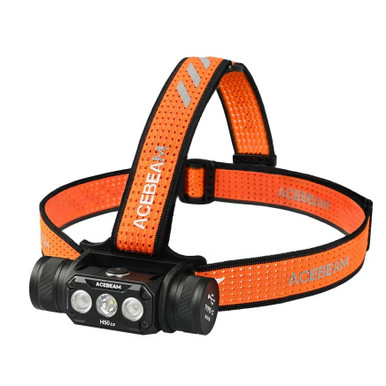
A 2000 lumen headlamp with spot and flood beams, rated IP68 and submersible to 2 metres, with a 141 metre beam and up to 30 hours on low.
Explore →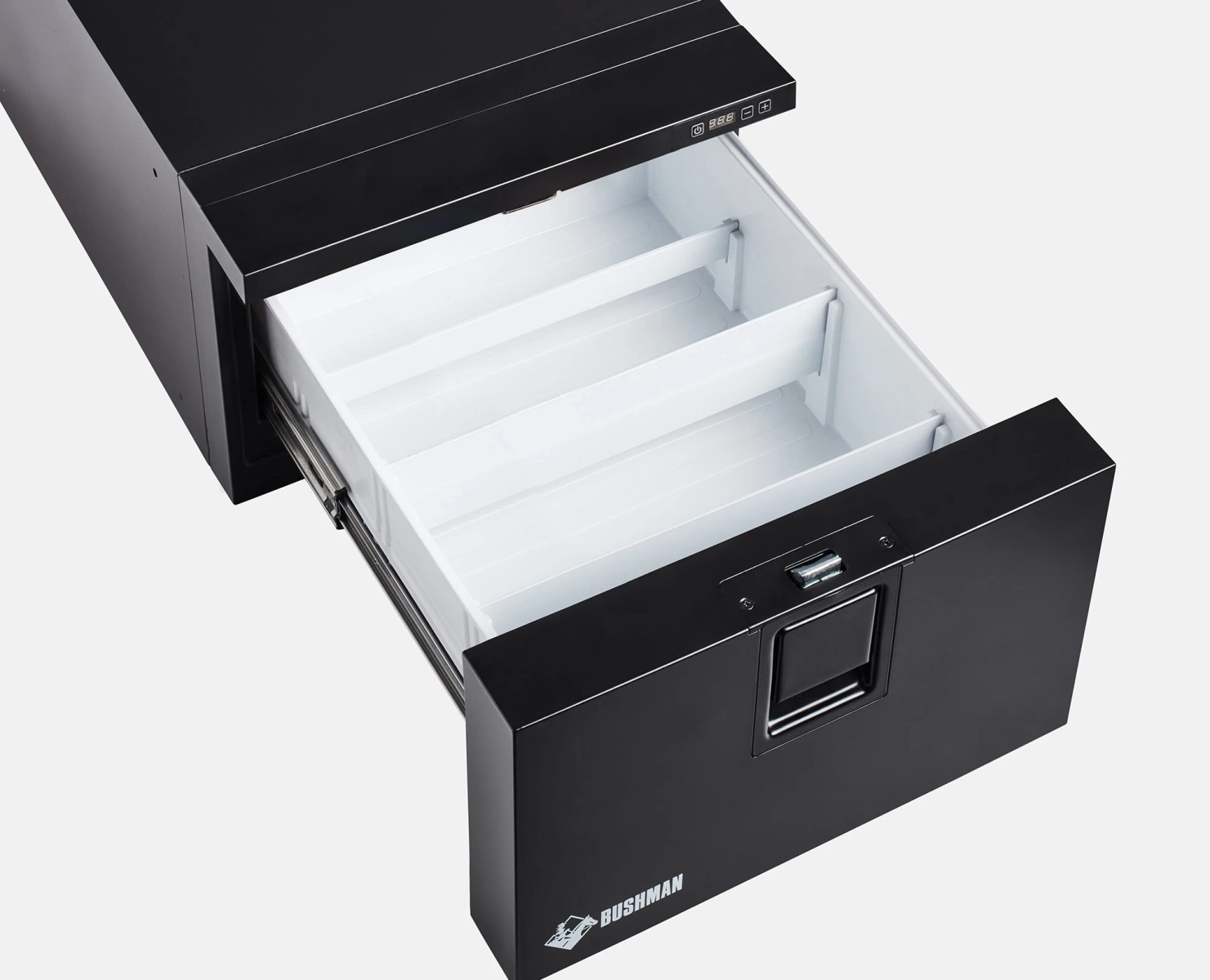
A 40 litre 12/24 V drawer fridge with a Secop Danfoss BD50K compressor, a 35 litre drawer tub, freezing to minus 10 degrees in up to 40 degree heat and a seven-year compressor warranty.
Explore →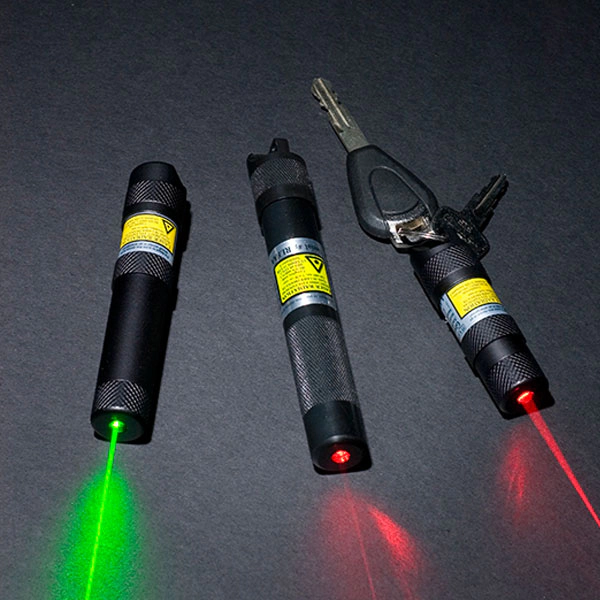
Hand-held, non-flammable laser signalling devices for day and night use, in red, green and Magnum versions, waterproof to 24 m and running for 5 to 72 hours on a battery.
Explore →