Loading this page…

Loading this page…
Sailing club
Wyndham Yacht Club is a small, keelboat-focused yacht club based at Wyndham Harbour on the north‑western shore of Port Phillip. Formed in April 2018, the club’s purpose is to introduce people from Melbourne’s western suburbs to sailing on Port Phillip through an open, social programme that blends club racing, social sails and newcomer trials.
About
Wyndham Yacht Club is a small, keelboat-focused yacht club based at Wyndham Harbour on the north‑western shore of Port Phillip. Formed in April 2018, the club’s purpose is to introduce people from Melbourne’s western suburbs to sailing on Port Phillip through an open, social programme that blends club racing, social sails and newcomer trials.
Service area: Wyndham Harbour, Port Phillip
Keep exploring
Wyndham's program structure reflects its identity as a keelboat club for learners and converts, and its most distinctive feature is how deliberately it lowers the drawbridge for newcomers. The Sail Pass — a temporary membership that lets curious locals come sailing without a full commitment — sits at the front of the offering, funnelling first-timers onto members' boats in a fleet the website pictures as small trailerable keelboats such as Rose of Wyndham (sail number WH87) and James of Wyndham (G88).
Formal instruction is delivered in partnership rather than in-house. The club does not currently operate its own accredited Discover Sailing Centre or junior squad structure; instead, Smooth Sailing School — a commercial, Australian Sailing-accredited provider — runs courses at Wyndham Harbour. Its published offerings cover the full beginner arc: Tackers introduces children aged seven to twelve to the basics, OutThere Sailing caters to teenagers, and adult Start Sailing courses take grown-ups from their first tack onward, with example programs such as an October-to-November course block advertised for the harbour.
For a club without a clubhouse training room of its own, this arrangement keeps nationally recognised tuition available locally.
The club's own calendar turns on the sailing season. Opening day falls in mid-October — for the 2025/26 season, the club flagged Sunday 12 October as the first event and sail — and the months that follow mix club racing, social sails and training opportunities. Because membership mixes veterans with raw beginners, crewing aboard other people's keelboats functions as an informal training pathway in itself, and the Australian Sailing insurance coverage that comes with membership applies across club events. It is a lean program by design, built around getting west-of-Melbourne people onto Port Phillip rather than running an academy.
Wyndham Yacht Club's home port is Wyndham Harbour at 50 Quay Boulevard, Werribee South, on Port Phillip's north-western shoreline — roughly half an hour from the Melbourne CBD and neatly positioned between the established sailing centres of Williamstown and Geelong. For members coming from Point Cook, Werribee and surrounding suburbs, it is the closest serious boating infrastructure to home.
The harbour itself does much of the club's heavy lifting. The marina provides 150 secure berths, floating berths for personal watercraft, a round-the-clock fuel dock on the water, space to store trailers, and a maintenance yard capable of handling vessels up to ten tonnes. Local press described Wyndham Harbour in 2021 as the largest marina in the nation — a claim carried by the Wyndham Star Weekly rather than the club itself. The precinct around the marina includes the 3030 Waterfront bar and restaurant and even a mini-golf course, giving families somewhere to gather before and after a sail.
The sailing waters are the broad, relatively sheltered reaches of north-western Port Phillip, which Smooth Sailing School characterises as protected waters suited to all abilities. That suits a young club teaching newcomers: conditions are generally kinder than the more exposed southern bay, and the harbour's breakwaters give a forgiving run in and out. The club keeps members informed through its own online weather page, acknowledging how quickly bay conditions can turn.
Wyndham Harbour is also a multi-use marine venue. It hosts rounds of the Australian Offshore Superboat Championships, with powerboats racing at speeds reported up to 135 km/h — a reminder that the club shares its home waters with a busy events calendar and a working marina rather than having the place to itself.
There is no long chronicle to recount here, and the club does not pretend otherwise. Wyndham Yacht Club was formed in April 2018 with a stated purpose: opening up Port Phillip sailing to people in Melbourne's west. That makes it, by a wide margin, among the most recently formed sailing clubs in the state — a status its 2018 founding makes plain without any embellishment.
The founding logic was geographic. Between the historic clubs around Williamstown and Hobsons Bay to the north and the Geelong fleet to the south-west, the booming Wyndham corridor — Point Cook, Werribee South and their neighbours — had no keelboat club of its own, despite the region's rapid population growth and the arrival of Wyndham Harbour's marina infrastructure. The new club stepped into that space, recruiting a membership that, by its own cheerful admission, ranges from seasoned hands to people who had never set foot on a yacht.
Public documentation of the club's first years is sparse. No founders' names, major hosted regattas or notable members have been published, and the club's online footprint is modest — a website, a Facebook page and an Instagram account, plus contact through its secretary's email and phone. What can be traced is steady institutional recognition: the club appears in Australian Sailing's affiliated club list, and in December 2025 the state General Manager's report on a 75-plus-club visitation program recorded a stop at Wyndham, placing the young club alongside Victoria's oldest institutions in the governing body's rounds.
Photographs on the club's own site show named boats such as Rose of Wyndham and James of Wyndham flying Wyndham Harbour sail numbers — evidence of a small but genuine racing fleet taking shape. For a club still in its first decade, the story so far is less about milestones than about momentum.
A practical cruising guide for the Moyne River port at the mouth of the Moyne River on Victoria’s south-west coast. It explains harbour geometry, seasonal conditions, principal sailing zones, anchorages, visitor facilities, known local hazards (bar, reefs, strong currents, surf and commercial traffic), regulatory controls and realistic experiences for day sailors, trailer-sailors and coastal cruisers. The guide draws on local port plans, state boating authorities, the yacht club’s visiting-boat practice and regional marine management documents.

Many pets can enjoy sailing but suitability comes down to temperament, physical fitness and how you introduce them. Do a calm, staged assessment and get a vet check before you take them offshore.
Explore →
Plan as a chain of conservative daily legs tied to your boat’s real-world fuel and speed in the expected sea state, with confirmed primary and alternate anchorages/berths, fuel legs and back-up fuel options, and a documented emergency/diversion plan (comms, tow and med-evac). Build tidal and weather gates into each leg and carry chart and comms redundancy.
Explore →
Plan the trip by setting a clear route and timeline, checking tides and currents for your passage times, identifying safe anchorages/harbours as escape options, and building a conservative margin for delays and weather changes.
Explore →
Use ramps and beaches with respect for local conditions: check ramp layout, tide and swell, wind direction, vehicle access and crowding; prepare boat and crew before you launch or retrieve; and follow local signage, courtesy and safety practices. Specifics vary by ramp and beach, so confirm details for the exact site before you go.
Explore →
A practical guide for new sailors on picking the right Australian sailing club: training, boat access, racing, social fit, costs and the key questions to ask before joining.
Explore →Practical guide for recreational sailors planning a coastal cruise from Sydney north to the Queensland border. Covers route options, weather and tidal considerations, planning checklists, common hazards, anchorages and practical examples for a safe, enjoyable trip.
Explore →A concise, practical introduction to the essential parts of a recreational sailing boat for beginners in Australia. Covers hull, deck, rigging, sails, steering, below-decks spaces and safety equipment, with simple explanations, common mistakes and a pre-decast checklist to help new sailors communicate and get underway.
Explore →
A practical, Australia‑focused introduction to sailing: key terms, common boat types, basic manoeuvres, where to learn, licence and club options, and planning your first trips with safety and local conditions in mind.
Explore →Burke Yachtsman Gear Bag 40L - Shop Now Zip Pay | Tamar Marine Skip to content 59 – 63 Holbrook Street, Invermay Online Shop Open 24/7 Products search Contact us 1300 MARINE $ 0.00 0 Cart Burke Yachtsman Gear Bag 40L $ 79.90 Colour Choose an option Black Blue Black Blue Clear - Burke Yachtsman Gear Bag 40L quantity + Add to cart Enquire about this product SKU BAGB-Y24/BLACK* Category Bags - Sail & Gear A Burke classic and customer favourite, the Yachtsman’s Gear Bag is built tough to handle wet, salty conditions while keeping your gear dry and protected. Made from double coated waterproof…
Explore →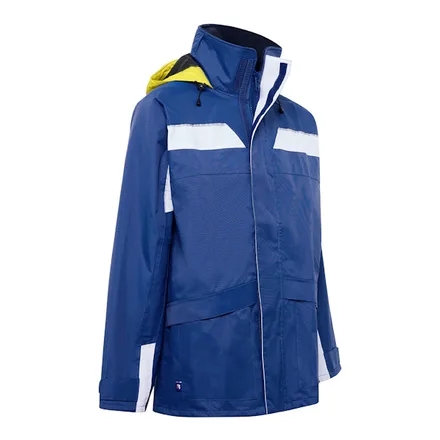
Burke Super Dry Jacket in Blue. Product codes shown: DRY228-XS, DRY228-S, DRY228-M, DRY228-L, DRY228-XL, DRY228-XXL. Available sizes listed: XS, S, M, L, XL, XXL.
Explore →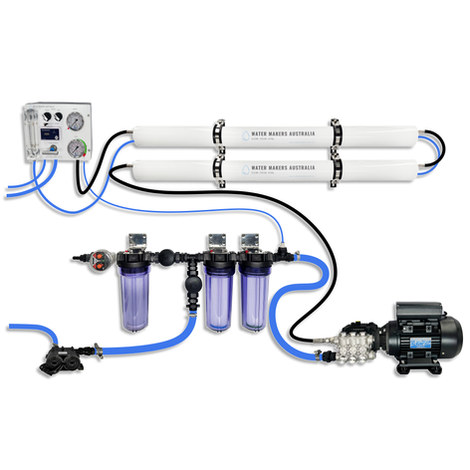
A two-membrane modular watermaker with 140 L/h nominal output, aimed at families and liveaboards that want more water per run.
Explore →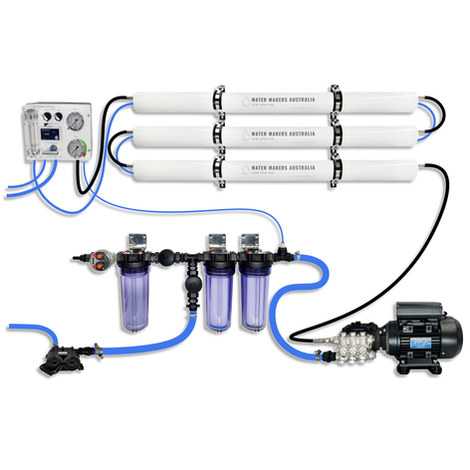
A three-membrane modular watermaker with 200 L/h nominal output and up to 240 L/h family-level marketing, for larger crews and heavy use.
Explore →