Loading this page…

Loading this page…
Sailing club
Wynnum Manly Sailing Club (WMSC) is a small, friendly, Australian Sailing–affiliated yacht racing club based at the Wynnum Manly Yacht Club harbour precinct in Manly, Queensland. The club focuses on organised keelboat racing on Moreton Bay, runs a busy Sunday pursuit-racing programme and a season of regattas and short-handed series, and welcomes visiting skippers via SailPass and SailSys entry.
About
Wynnum Manly Sailing Club (WMSC) is a small, friendly, Australian Sailing–affiliated yacht racing club based at the Wynnum Manly Yacht Club harbour precinct in Manly, Queensland. The club focuses on organised keelboat racing on Moreton Bay, runs a busy Sunday pursuit-racing programme and a season of regattas and short-handed series, and welcomes visiting skippers via SailPass and SailSys entry.
Service area: Manly (Brisbane bayside), Moreton Bay
Keep exploring
Wynnum Manly Sailing Club (WMSC) is a friendly, inclusive sailing club organising yacht racing on Moreton Bay. The club runs a regular Sunday afternoon race series (SAGS), short‑handed events and regattas, welcomes women & girls and offers beginner-friendly options including SailPass introductory membership. WMSC operates from the premises of Wynnum Manly Yacht Club at 542 Royal Esplanade, Manly, QLD and publishes event entry and safety information for competitors.
Sunday afternoon is when this club shows its hand. SAGS — Sunday Afternoon Go Sailing — sends a fleet away in friendly pursuit-style racing on most Sundays of the year, with the briefing called at 11:45am at the Wynnum Manly Yacht Club grounds. The staggered-start pursuit format keeps things sociable, and the entry door is deliberately wide: visiting skippers and crew need an Australian Sailing number plus membership of an affiliated club, or they can simply purchase a one-day SailPass and join in.
What the club does not operate is its own learn-to-sail school; its training page instead directs newcomers toward Australian Sailing's national course listings, the honest position for a body that exists to race rather than teach. In general terms, anyone around the Manly area wanting structured beginner instruction would usually enrol with an accredited sailing centre elsewhere in greater Brisbane, then graduate to a racing outfit like this one.
Beyond SAGS, the calendar is remarkably busy. The Founders Trophy sends four divisions through two passage races across two days in honour of the club's founding members, with entries welcomed from all clubs. The Hart Cup and M2M carry yachts from Manly to Mooloolaba on Good Friday and back again on Easter Monday. Single-handers and two-up crews get their own Ullman Sails Short-Handed Series of seven races, with a handicap adjustment for those sailing solo — a series one local couple reportedly used as a stepping stone from SAGS toward a two-handed cruise up the Queensland coast.
Four Manly-based clubs — QCYC, RQYS, MBBC and WMSC — rotate hosting duties for the Kingfisher Bay Resort Night Series, and the best-performing yacht across eight selected events collects the Club Championship. Women's sailing is treated as a genuine priority: a Lady Skippers Race, a nine-event Women's Club Championship, peer-to-peer Gangway workshops and active promotion of SheSails all sit on the program.
Racing unfolds across Waterloo Bay and the wider reaches of Moreton Bay, off the Brisbane bayside suburb of Manly, with the fleet reaching open water through Manly Boat Harbour. That harbour is described as one of Queensland's largest small-craft havens, and the scale of the local sailing scene is such that the club's racing on the bay is formally gazetted as aquatic events by Maritime Safety Queensland — a reminder that this is one of the busier recreational waterways in the state.
Moreton Bay's geography explains much of the appeal. It is a semi-enclosed stretch of water shielded by Moreton and North Stradbroke Islands, which take the edge off ocean swell while letting dependable summer sea breezes funnel through. Tidal streams around the harbour entrance add a tactical wrinkle that rewards local knowledge, and the protected expanse inside the islands gives race committees room to set courses in most conditions. For a pursuit-racing club whose whole model depends on getting mixed fleets around the cans safely and enjoyably, it is close to ideal terrain.
Ashore, the social centre of gravity is the Wynnum Manly Yacht Club clubhouse and patio in the harbour precinct, where post-race debriefs and regatta hospitality happen. Belonging to WMSC carries one practical obligation: members are also required to hold membership of WMYC, though non-boat-owners need not take a full membership category. The club also takes part in Manly Combined Clubs racing, a coordinated program among the harbour's several sailing organisations, so the local calendar knits together rather than colliding. Between the sheltered bay, the big harbour infrastructure and a genuinely collaborative local scene, Manly gives this small racing club an outsized stage.
The story begins with earthworks rather than yachts. Construction of Manly Boat Harbour got under way in the late 1950s, and on the back of that new infrastructure the Wynnum Manly Yacht Club was established in 1962 as an all-boat club serving the bayside. Among its early members were three sailors with an appetite for something beyond ordinary handicap racing: Stan Davey, Mick Patterson and Rod Florence.
In 1976 they launched a teams event modelled on the Admiral's Cup, and Patterson sweetened the contest with an extraordinary donation from his family collection — a sterling silver cup made in England in 1890, first presented for a rifle-shooting competition on St Helena Island, the one-time penal colony out in the bay. The St Helena Cup was born.
Two decades later, in 1997, a group of WMYC sailors incorporated Wynnum Manly Sailing Club as an Australian Sailing-affiliated body dedicated to providing safe racing. The new club gradually assumed management of the St Helena Cup, which continued to grow into its position as the flagship fixture; teams of three yachts now contest it over two days, with Multihull and Cruising divisions alongside and shore-side hospitality handled by WMYC. In 2025 the regatta celebrated its fiftieth anniversary, a remarkable run for an event built around a piece of Victorian silverware.
The relationship between the two Wynnum Manly organisations has remained close throughout, and a joint presentation dated May 2026 shows the Sailing Club and Yacht Club formally exploring unification — a neat bookend, if it proceeds, for a club created by yacht club members nearly three decades earlier. Through every chapter, the thread has been the same: Moreton Bay sailors organising their own racing, on their own bay, to a standard that keeps visitors coming back.
Bathurst Harbour (Port Davey system), in south‑west Tasmania, is a vast, almost land‑locked estuarine harbour inside the Southwest National Park and World Heritage Area. It offers a remote, sheltered anchoring environment protected from the Roaring Forties, but demands careful planning, an awareness of marine‑reserve rules, and a willingness to operate in shallow, tannin‑stained waters. Best suited to experienced coastal cruisers and small expedition yachts prepared for self‑sufficiency, Bathurst Harbour is more a place to linger and explore on foot and by tender than a port of call for busy,

Pick a stable, simple, forgiving dinghy with a single sail or basic sloop rig, affordable handling and easy maintenance—ideally one with a local class or school nearby so you can access coaching and spare parts.
Explore →
Plan the trip by setting a clear route and timeline, checking tides and currents for your passage times, identifying safe anchorages/harbours as escape options, and building a conservative margin for delays and weather changes.
Explore →
Use ramps and beaches with respect for local conditions: check ramp layout, tide and swell, wind direction, vehicle access and crowding; prepare boat and crew before you launch or retrieve; and follow local signage, courtesy and safety practices. Specifics vary by ramp and beach, so confirm details for the exact site before you go.
Explore →
Yes — South Australian coastal waters include marine parks, aquatic reserves, harbour bylaws and local council restrictions that can affect anchoring, fishing, mooring and access; check the relevant state agencies, local councils and Notices to Mariners for location-specific rules and permit requirements.
Explore →
A practical guide for new sailors on picking the right Australian sailing club: training, boat access, racing, social fit, costs and the key questions to ask before joining.
Explore →
A practical guide to the safety equipment commonly carried on recreational sailing boats in Australia: lifejackets, EPIRBs/PLBs, flares, radios, fire extinguishers, liferafts, jacklines, first-aid and how state requirements influence what you must carry.
Explore →
A practical guide to Queensland’s top sailing areas, what to expect from each region, seasonal and safety considerations, suggested itineraries and useful planning checklists for recreational sailors.
Explore →
A practical step‑by‑step guide to planning a safe, realistic coastal sailing passage in Australian waters: choosing a route, estimating distance and time, checking weather and tides, fuel and daylight planning, identifying safe harbours and anchorages, and preparing backup plans.
Explore →Burke Yachtsman Gear Bag 40L - Shop Now Zip Pay | Tamar Marine Skip to content 59 – 63 Holbrook Street, Invermay Online Shop Open 24/7 Products search Contact us 1300 MARINE $ 0.00 0 Cart Burke Yachtsman Gear Bag 40L $ 79.90 Colour Choose an option Black Blue Black Blue Clear - Burke Yachtsman Gear Bag 40L quantity + Add to cart Enquire about this product SKU BAGB-Y24/BLACK* Category Bags - Sail & Gear A Burke classic and customer favourite, the Yachtsman’s Gear Bag is built tough to handle wet, salty conditions while keeping your gear dry and protected. Made from double coated waterproof…
Explore →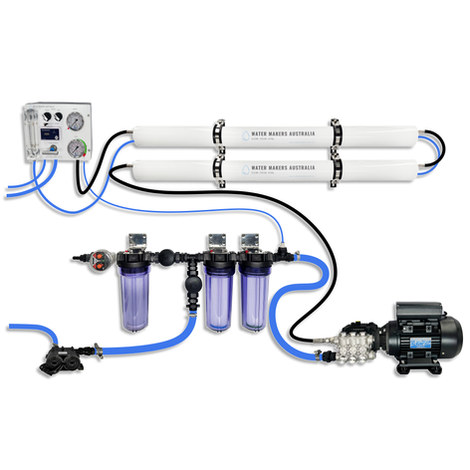
A two-membrane modular watermaker with 140 L/h nominal output, aimed at families and liveaboards that want more water per run.
Explore →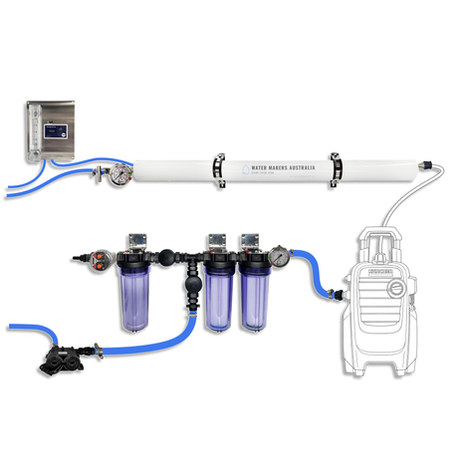
A one-membrane modular marine watermaker with 80 L/h nominal output, remote stainless control panel, standard consumables and direct Australian support.
Explore →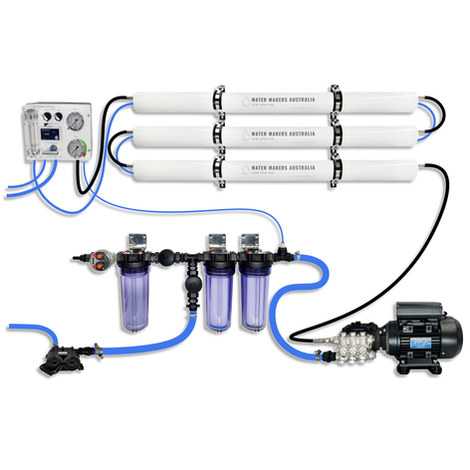
A three-membrane modular watermaker with 200 L/h nominal output and up to 240 L/h family-level marketing, for larger crews and heavy use.
Explore →