Loading this page…

Loading this page…
Sailing club
Yarrawonga Yacht Club is a family-focused sailing and watersports club on the Victorian shore of Lake Mulwala at River Road, Yarrawonga. The volunteer-run club supports dinghy and multihull sailing, radio-controlled yachts, and a range of paddling sports (dragon boat, outrigger canoe, kayaking and paddleboarding). Club activities centre on weekend sailing and social events, and the site provides direct lawn-to-water launching, concrete ramps and foreshore camping for visiting regattas.
About
Yarrawonga Yacht Club is a family-focused sailing and watersports club on the Victorian shore of Lake Mulwala at River Road, Yarrawonga. The volunteer-run club supports dinghy and multihull sailing, radio-controlled yachts, and a range of paddling sports (dragon boat, outrigger canoe, kayaking and paddleboarding). Club activities centre on weekend sailing and social events, and the site provides direct lawn-to-water launching, concrete ramps and foreshore camping for visiting regattas.
Service area: Lake Mulwala (Yarrawonga, Victoria)
Keep exploring
Rather than adopting an off-the-shelf national syllabus, the club wrote its own junior pathway — five graded levels taking eight-to-fourteen-year-olds from their first rigging lesson through to racing and two-up crewing. Courses run as six ninety-minute sessions on Saturday mornings across summer, priced at a family-friendly $70, and the club supplies Optimist dinghies for the opening three levels so nobody needs to buy a boat to begin.
The parallel adult stream, open from age fifteen, teaches on Hobie Wave catamarans or Pacers and offers time aboard members' trailable yachts; its stated goal is delightfully pragmatic, aiming to turn parents into crews for their own children. No Tackers or Discover Sailing Centre branding appears in club material — these courses are local inventions. Competition opportunities peak at the two marquee regattas.
The Australia Day fixture, five races across two days, is pitched as a laid-back reunion after the Christmas Nationals and sits conveniently central to Melbourne, Sydney, Canberra and Adelaide; recent editions have doubled as state titles, including the 2025 Victorian championship for the Explorer 16 class. The Anzac Day regatta has likewise incorporated the Victorian Impulse championship and features on the RS Aero national travellers circuit. Foreshore camping makes both events affordable weekends away.
Perhaps the clearest proof of the club's breadth: it hosted the 2016 national championships of the RC Laser class, confirming the radio-controlled fleet as serious competitors in their own right. The learn-to-sail operation is backed by local sponsors, including the Ken Yap Golden Inn at Mulwala Water Ski Club and Whitworths Marine and Leisure, which helps keep course fees at the accessible end of the scale.
You will find the clubhouse at 87 River Road, Yarrawonga, where a reclaimed foreshore block gives the club permanent frontage on Lake Mulwala with water at the doorstep twelve months a year. The lake itself is the asset — one of the Murray system's great impoundments, spread across the state line and big enough to offer genuine open-water sailing well beyond most inland venues. Practical arrangements are generous.
Boats launch straight off the clubhouse lawns, or from a pair of concrete ramps, one an all-weather facility dropping into the protected Chinamans Island lagoon, which also carries moorings; trailable yachts lie in a sheltered mooring ground nearby. When regattas arrive, the site converts into camping ground and boat park combined: powered grassed sites for tents and caravans at the shoreline, twin off-the-beach launching bays with sandy bottoms, and a working canteen.
The water in front of the clubhouse suits novices particularly well, remaining only waist deep for roughly forty metres offshore — beginners can stand, right a boat and try again. The club does not publish wind statistics for its courses, though lake weed has historically been controlled by the Murray-Darling Basin Authority. Non-sailing visitors are catered for too: a two-kilometre return walking track to Chinamans Island departs from the club grounds and crosses wetlands celebrated locally for birdwatching.
The twin towns of Yarrawonga and Mulwala, facing each other across the lake, form one of the Murray's busiest holiday districts, so visiting sailors find accommodation, dining and supplies within minutes of the boat park.
A weekend away started it all. Tom Hanrahan and Don Forbes travelled to Lake Boga near Mildura, watched the yachts racing there, and returned determined to replicate the scene; on 5 September 1938 their new club was constituted, Lake Boga Yacht Club passing across Moth Class Association contacts and organisational know-how. That same year, with the lake newly cleared, John Wilson's boat made the first sail on it.
Foundation families included the Hargraves, the Briggs, Harry Haebich, William Pretty, William Boyd, Charles French, John Grant and Stan Victor. Hanrahan, an accountant by trade, kept the books for about fifteen years, while volunteers raised a first clubhouse beside the Yarrawonga bridge under a 125-pound contract with builder Norman Hallett. War shut the club almost at once — it recessed after September 1939 and only stirred again when the Mulwala Explosives Factory's manager sought recreation for his workforce, an intervention that lifted membership beyond sixty.
The post-war club was remarkably industrious. Alec Ross, formerly of Royal St Kilda, brought in the international Penguin dinghy and secured fleet charter number 29 from its American headquarters in February 1948, with local builders turning out Penguins in Yarrawonga and Albury. W. F. Tuttle financed six locally built Moths across 1950–51, and evening-class boatbuilding at Yarrawonga High School and Wangaratta later produced Fireballs and Mirrors.
Staging the 1958 Australian Moth Championship "gave the club a great name in sailing", as the club history puts it. The 1968 ANA Regatta — today's Australia Day event — attracted 121 starters, and in 1969–70 the club quit the bridge foreshore for its present River Road site, celebrating seventy-five years there in 2013.
A detailed cruising guide to Brunswick Heads and the Brunswick River on the far north coast of New South Wales. Covers river and harbour geography, seasonal wind and swell patterns, principal sailing areas and anchorages, approach issues at the bar, shore facilities, local hazards and the legal/regulatory environment, plus suggested day sails, weekend cruises and island circuits suitable for a range of recreational craft.

Look for a friendly club with beginner-focused training, accessible facilities and boats, a supportive community, clear safety practices, and opportunities to progress at your own pace.
Explore →
Before your first sail in South Australian waters check the weather and tide, make sure the boat and safety equipment are fit for the trip, confirm local rules and any area-specific hazards, and tell someone your plan.
Explore →
Write a one‑page plan with the who/what/when/where/how of your trip, keep a copy on board and leave the main copy with a responsible person ashore (and optionally with your club, marina office or local volunteer rescue service).
Explore →
Use ramps and beaches with respect for local conditions: check ramp layout, tide and swell, wind direction, vehicle access and crowding; prepare boat and crew before you launch or retrieve; and follow local signage, courtesy and safety practices. Specifics vary by ramp and beach, so confirm details for the exact site before you go.
Explore →
A practical, Australia-focused guide for planning and sailing around the Whitsunday Islands: weather and seasons, navigation and anchoring, moorings and parks, provisioning and charters, safety and common mistakes, plus checklists and next steps.
Explore →Practical guide for recreational sailors planning passage on the Hawkesbury River: how to plan around tides, choose anchorages, read local conditions and prepare the boat and crew for a safe, comfortable trip.
Explore →
A practical guide for new sailors on picking the right Australian sailing club: training, boat access, racing, social fit, costs and the key questions to ask before joining.
Explore →A practical guide for recreational sailors planning visits to Albany and King George Sound. Covers the main anchorage areas, typical local weather patterns, tidal and current considerations, navigational hazards, on-the-water etiquette and a pre-departure checklist to help you plan a safe passage and enjoyable stopover
Explore →Burke Yachtsman Gear Bag 40L - Shop Now Zip Pay | Tamar Marine Skip to content 59 – 63 Holbrook Street, Invermay Online Shop Open 24/7 Products search Contact us 1300 MARINE $ 0.00 0 Cart Burke Yachtsman Gear Bag 40L $ 79.90 Colour Choose an option Black Blue Black Blue Clear - Burke Yachtsman Gear Bag 40L quantity + Add to cart Enquire about this product SKU BAGB-Y24/BLACK* Category Bags - Sail & Gear A Burke classic and customer favourite, the Yachtsman’s Gear Bag is built tough to handle wet, salty conditions while keeping your gear dry and protected. Made from double coated waterproof…
Explore →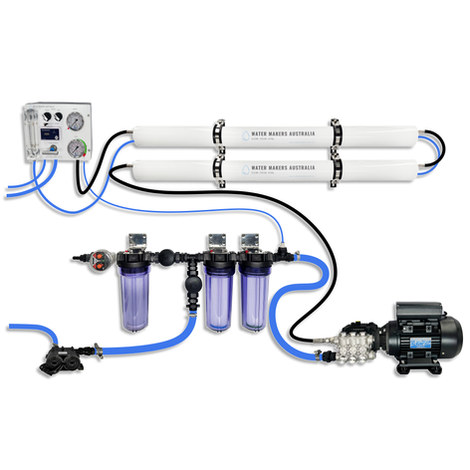
A two-membrane modular watermaker with 140 L/h nominal output, aimed at families and liveaboards that want more water per run.
Explore →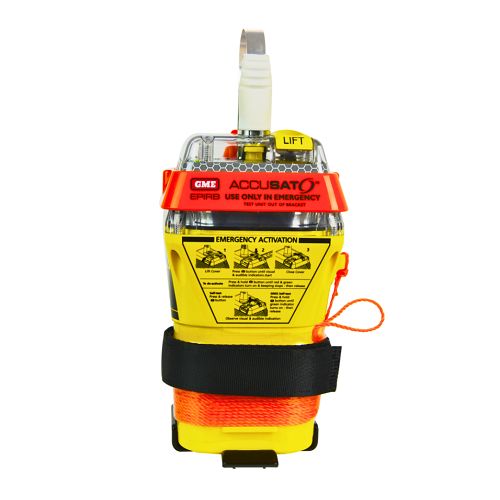
A 10‑year battery EPIRB with integrated GNSS (supports GPS and Galileo), infrared strobe and 121.5 MHz homing signal. Approved for worldwide COSPAS‑SARSAT operation.
Explore →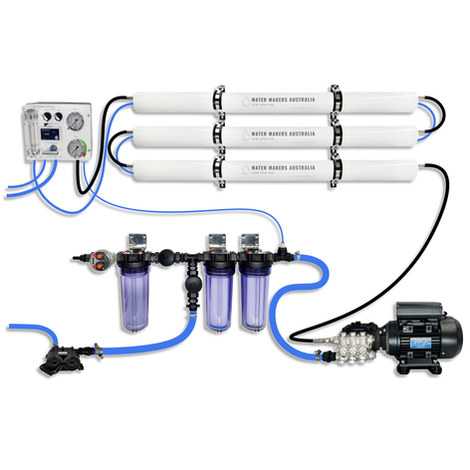
A three-membrane modular watermaker with 200 L/h nominal output and up to 240 L/h family-level marketing, for larger crews and heavy use.
Explore →