
Boatbuilding · In conversation
Before the first coat: An interview with Boatcraft Pacific
Edward from Boatcraft Pacific talks about making Bote-Cote in Australia, the glue joints that let timber boats down and the repairs owners can tackle themselves.
Edward

“Anyone can do their own repairs, and we are huge advocates of this, but it all depends on how much time and effort you are willing to put into it.”
What's the story behind Boatcraft Pacific? How did the business start, and how did you come to specialise in marine epoxies, adhesives, coatings and boatbuilding materials?
Boatcraft Pacific originally started as an offshoot of a smaller relationship by the owner at the time, Dr. Bruce McConkey, that was set up to reformulate and revise the Bote-Cote range of Marine Epoxy Systems. The business was started in Queensland after Dr. McConkey moved from Victoria for warmer weather, and this enabled him to focus on creating a strong identity for the brands and expanding the products we can offer. A natural extension of that is the other materials necessary to build a wooden boat, plywood, timber, fibreglass, fasteners and more, all so that you only really have to visit one place to get everything you need for your project.
Boatcraft has been operating for more than 30 years and manufactures its own products here in Australia. How has the business evolved, and what has kept you committed to Australian manufacturing?
As the decades have gone on, the range has expanded to include a wider range of more specialised products to meet certain needs, and in turn the business has grown to take advantage of the newer advancing technology that has appeared. Business will always need to evolve, and to a certain extent we haven't needed to upgrade the processes all that much over the decades besides the safety aspects.
I won't lie, Australian manufacturing is hard, and over the years it has become even harder. Doing the right thing by our customers one of the reasons we keep doing it though, to be able to say with confidence that "Bote-Cote is safer to work with" and mean it, to hear all the stories of the thousands of projects people have undertaken, and maintained because of the products, and have kids be able to use it to do their year 12 projects, or take part in our rough and ready boatbuilding competitions, it's everything this whole process is here for.
For someone who has never used your products, what does Boatcraft Pacific actually cover? From someone repairing a small fibreglass dinghy to a builder constructing a complete timber yacht.
The products we provide are for the Boatbuilding, Woodworking and Craft market, where Epoxy Resin and Polyurethane Adhesives and Surface Coatings can be used. Our products support the little guy who wants to get started building a kit boat from scratch with no experience, maintain a boat they already have, or just have something weird that they think our products can be used for. On the broad side, we provide all the materials, instructions, and assistance where we can, to help them get over the line. Our biggest offering is the personal assistance, we have over 100 years of boatbuilding, epoxy and polyurethane knowledge between our team and I can guarantee at least one of us has done or talked with someone about the thing the next customer will ask about, and if we don't know, we all can learn together.
Bote-Cote is probably the product most Australian boatbuilders associate with Boatcraft. What's the story behind its development, and what makes it different from conventional marine epoxy systems?
Bote-Cote originally was developed in the United States of America around the same time as another prolific Epoxy System in the 5:1 ratio, largely using the same chemistry at the time, it was suited to protect the vessels on the great lakes from the constant attack of icy water in the winter, which would freeze the moisture in the wood, cracking and destroying the hull.
The creator was involved with several enterprises, but eventually ended up in Australia around the 1970s, bringing Bote-Cote with him. After a time he sold off the IP and it languished with an industrial coatings manufacturer before the IP rights were purchased by the above mentioned Dr. Bruce McConkey, and the rest is as explained above.
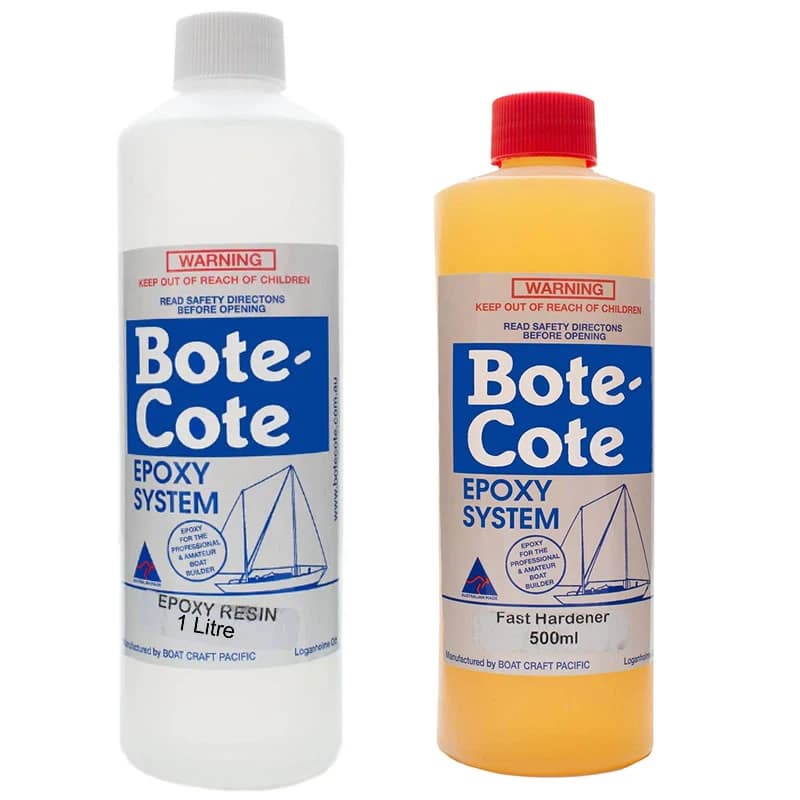
We like to say "Bote-Cote is Safer to Work", because it is, the product has been reformulated since it's original version to be more safer and better suited to the Australian condition, and the 2:1 ratio of Bote-Cote means that it is simpler to mix, and a consistent working time that can be count on.
These factors combined lower the barrier of entry to our customers, it means less strict PPE, though we still do recommend it, and less mucking about to get the job done right.
You place considerable emphasis on making epoxy safer and easier to use, including reducing issues such as amine blush. What should boat owners understand about epoxy chemistry, and what are the biggest misconceptions about working with it?
Epoxy is a chemical combination of multiple items, but on the whole it is a two part system or a formulated Epoxy Resin, and an Epoxy Curative. There are so many different types of epoxy out there, and the chemistry is a closely guarded secret.
Traditionally a lot of the older formulation epoxy systems were made with quite harsh amines, which can cause a sensitisation over time, whereby the body absorbs the vapours given off, these then accumulate in the bloodstream, and after a time, you develop an allergic reaction to it.
Bote-Cote was re-formulated to remove these harmful amines, and as a result, several customers who had since become sensitised, have become able to work on the boats they love again.
Amine Blush is a reaction with carbon dioxide and moisture in the air when Epoxy cures, this only occurs with Amine type curatives, and especially when there is an overabundance of unreacted material. This is however easy to remove with warm soapy water and a scotch-brite pad before rinsing with clean water and drying with a clean towel.
Let's say someone has bought an older fibreglass cruising yacht and discovers a few cracks, damaged laminate or areas of suspected osmosis. How would you recommend they approach the repairs, and at what point should they involve a professional?
Anyone can do their own repairs, and we are huge advocates of this, but it all depends on how much time and effort you are willing to put into it.
Osmosis is caused by the travel of salt water through the hull and reacting with chemicals on the inside, this can happen when the hull is damaged, or the gelcoat is thin.
First you would need to inspect the area where the osmosis is, hammer around to see if there is soft spots and establish a border for the repair. It may be necessary to drill into the substrate to determine the severity of the damage, if it is plywood underneath, it may be necessary to replace the entire section, if it is fibreglass, simple repair work may do the job.
In most cases if it is small enough, simply grinding away, sealing up where the damage was, and filling and fairing before overcoating and finishing is all that is necessary.
Timber boats are another important part of your business. What are the most common mistakes people make when restoring or maintaining a wooden boat, particularly when it comes to moisture, sealing and preventing rot?
One of the most important steps to take when restoring a wooden boat is understanding what was on it before you got to it. For very old traditional wooden boats, these may have been sealed with oils that have become very deeply saturated into the wood grain. For some cases it may not be possible to bond with epoxy, and traditional techniques need to be retained for the restoration process.
For most cases, understanding exactly what you need to do, and doing it right, not cheaply is important. There is the common phrase, the lazy man pays twice as much, and this can be especially true for boats, but often times it just gets passed onto the next person.
Some of the most common things I've seen are just not sealing timber, floors, hatches, bulkheads, or drilling through and securing previously sealed material without then re-sealing the fastener holes, these then become new incursion points for water.
A good ethos when using plywood, if you don't need to shape or bend it, seal the whole panel, and then cut it to shape, that way you only have to seal the edges of what you are fitting in place when you get to that step, the tops and bottoms are already done.
Another one is not pre-sealing glue joints, especially on end grain material, where the adhesive then wicks in and away from the joint, leaving a weak structural bond, prone to failure.
I could go on, but you get the point.
Your Aquacote range uses water-based coatings rather than traditional solvent-based paints. What are the practical advantages, and are there applications where conventional marine coatings still make more sense?
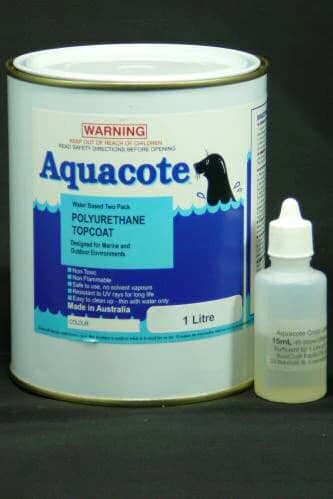
The first practical advantage is the cleanup. Being a water-based system, Aquacote is super easy to work with, you can thin it down with water, and clean your equipment with water, no odorous cleaning chemicals needed besides white vinegar for the Epoxy hi-build primer system. Secondly, the durability of polyurethanes means that it lasts a substantially longer time that other marine coatings, even in the harsh Australian conditions, and the more coats that are applied, the harder the coating becomes, we have had several customers and even staff who have used it and been shocked when an accidental meeting with a piece of harbour infrastructure has left the wharf coming off worse than the boat.
In some cases other coatings make sense, and we refer our customers to those if we believe that it will do the right job for them.
Antifouling is one of the biggest ongoing expenses for boat owners. You've developed Cop-R-Bote as an alternative approach. How does it work, what makes it different, and what sort of service life should an owner realistically expect?
Cop-R-Bote is a hard Epoxy Foul Release Surface Coating that has been specifically designed to be the technological descendant of the traditional copper plating method of yore. A high loading of copper particles suspended in epoxy, 70% by weight of mix, allow a strong presences of a naturally defensive material to act as a biocidal barrier without poisoning the environment and leaving material in its wake.
The long lasting epoxy system also means that the time between re-applications is drastically reduced, we have had reports of up to 7 years in some cases though each environment and vessels experiences are different, besides regular maintenance, beaching or trailering and rubbing back the hull with a scotch-brite every few months, using the boat is the best way to keep the hull in tip top condition.
The reduced slipping fees, increased durability, and overall reduction in foul build-up means that customers who use the Cop-R-Bote product, have on the whole a lot more money in their pocket, and a more comfortable time on the water for longer.
Surface preparation seems to be where many DIY repairs succeed or fail. What's the most common mistake you see people make before applying epoxy, adhesives or coatings?
As they say Preparation Prevents Poor Performance, it is the key to success, the biggest thing we see people doing is using solvents as a cleaning agent when preparing the surface. We find that solvents can be dirty, they contain other contaminants, and also do a rather poor job at actually removing oils and grease from surfaces completely, rather they simply smear the last little bit all over it, leading to adhesion issues.
By all means, use solvents to remove very difficult material, but make sure to then clean that off with warm soapy water and flush with clean water afterwards, and we recommend not to use a tack cloth or a microfibre cloth, as they can deposit particulate back onto the newly cleaned surface.
After this, keying the surface is necessary, not too high grit as well, #240 maximum, but preferably under that, the higher the grit, the smaller the particle size, which can then clog the surface, creating adhesion issues as well.
After that, clean it again, then you are ready to apply Epoxy or Polyurethane.
For new material that isn't going to be clear coated, a simple sand is sufficient, followed by a wipe away with a clean dry cloth.
Australian conditions can be particularly demanding, with high temperatures, humidity, intense UV and saltwater exposure. How much do those conditions influence the products you develop and the advice you give customers?
Our products have been specifically formulated for the Australian Environment. That being said we do have a wide range of climates here in this big wide land, so it is necessary to choose the correct version of the product for what you are doing. In winter, we recommend reducing use of Epoxy, unless you can control the temperature of the environment you are working in, or stopping altogether if you are anywhere the mercury drops below 10 on a regular basis.
We have introduced UV stabilisers into our formulations that enable our Epoxy and Polyurethanes to stay as clear as possible for longer, retaining the original look and quality from when they were applied, and this has once again meant that our customers can enjoy their time on the water for longer.
You also supply marine plywood, fibreglass, composite materials and boatbuilding plans. Are Australians still building their own boats from scratch? What types of projects are people taking on today?
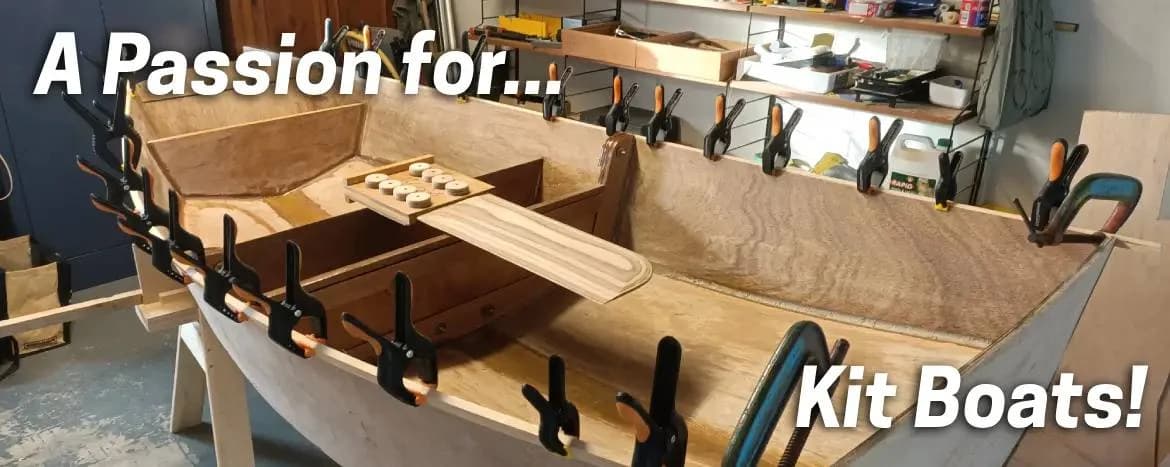
Yes, we do still get a lot of customers who are building their own boats, a majority are older customers who have built many before, but we are seeing a larger percentage of newer and younger customers breaking into their first DIY project with a small kit boat or woodworking project who come to us as a first point of call or referral from another boatbuilder they know. We also get a lot of model builders, boats planes and otherwise who use our products and the word of mount marketing from them is invaluable.
A lot of yacht owners want to do more maintenance themselves but don't necessarily have the confidence. Which jobs do you think a reasonably practical owner can safely tackle, and which repairs are best left to experienced boatbuilders?
As mentioned above with the Osmosis issue, a lot of the maintenance can be done by the owners without issue, it just depends on how much time and money they want to spend on it. If they want to take the time to learn about how to maintain their own boat, they will undoubtedly come off a lot happier over time when they take on longer voyages without needing professional assistance.
However, for severe structural issues that require 2 or more people or tasks that require hauling out of very large vessels, we recommend to go to a professional to ensure that you are able to have the work done well and timely.
As a manufacturer and supplier, what changes are you seeing in the marine industry? Are customers moving towards different materials, more environmentally conscious products or new boatbuilding techniques? And what's on the horizon for Boatcraft Pacific?
We have seen a huge shift in the desire for customers to use more Eco oriented materials, to make sure that what we are producing isn't contributing to the great mass of pollution we are currently seeing in our oceans, and we are doing our best each day to try to achieve that. The developments of new adhesives technology and construction techniques has enabled the creation of reinforcement panels that require much less material than ever before with much more strength and rigidity, enabling lighter and more maneuverable craft, and the desire to return to a handwork approach to boatbuilding has meant that we must always remember how to do the things that got us to where we are today, otherwise we risk losing some of our most iconic vessels to the ravages of time.
Anything we didn't ask that you'd want Australian boat owners, restorers or amateur boatbuilders to understand about Boatcraft Pacific and the products you make?
I think we covered most things, the last thing I'll say is that it doesn't ever hurt to just take a wander on the website, you may find something you never knew you needed until you stumbled across it, and if you ever feel like you don't know where to start with a project, just start, the first step is always the hardest, but every other one after that just falls into place.