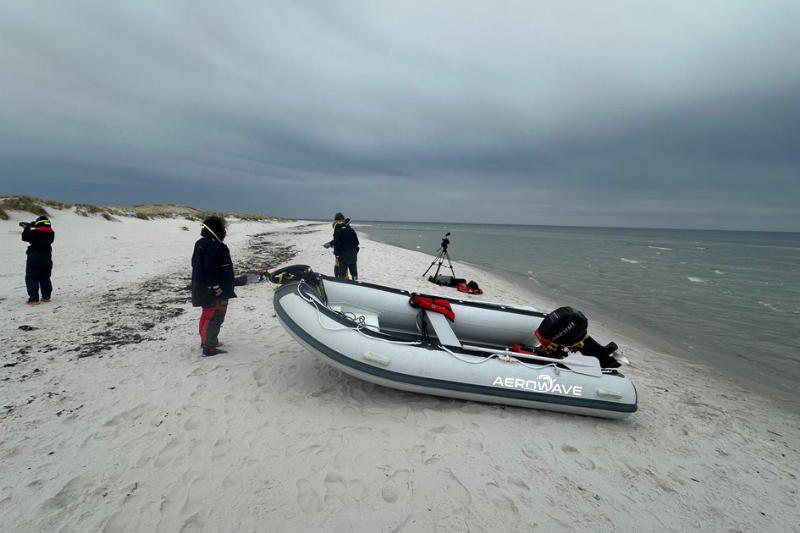
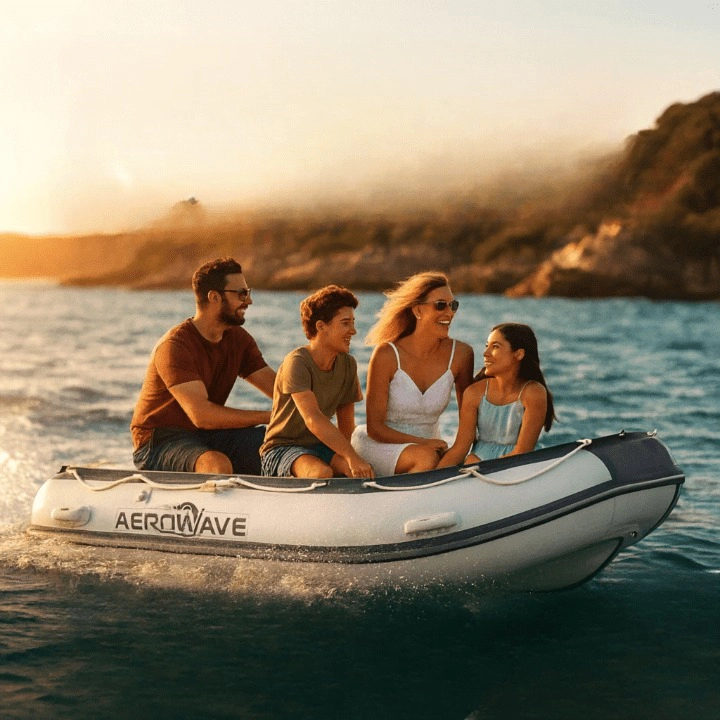
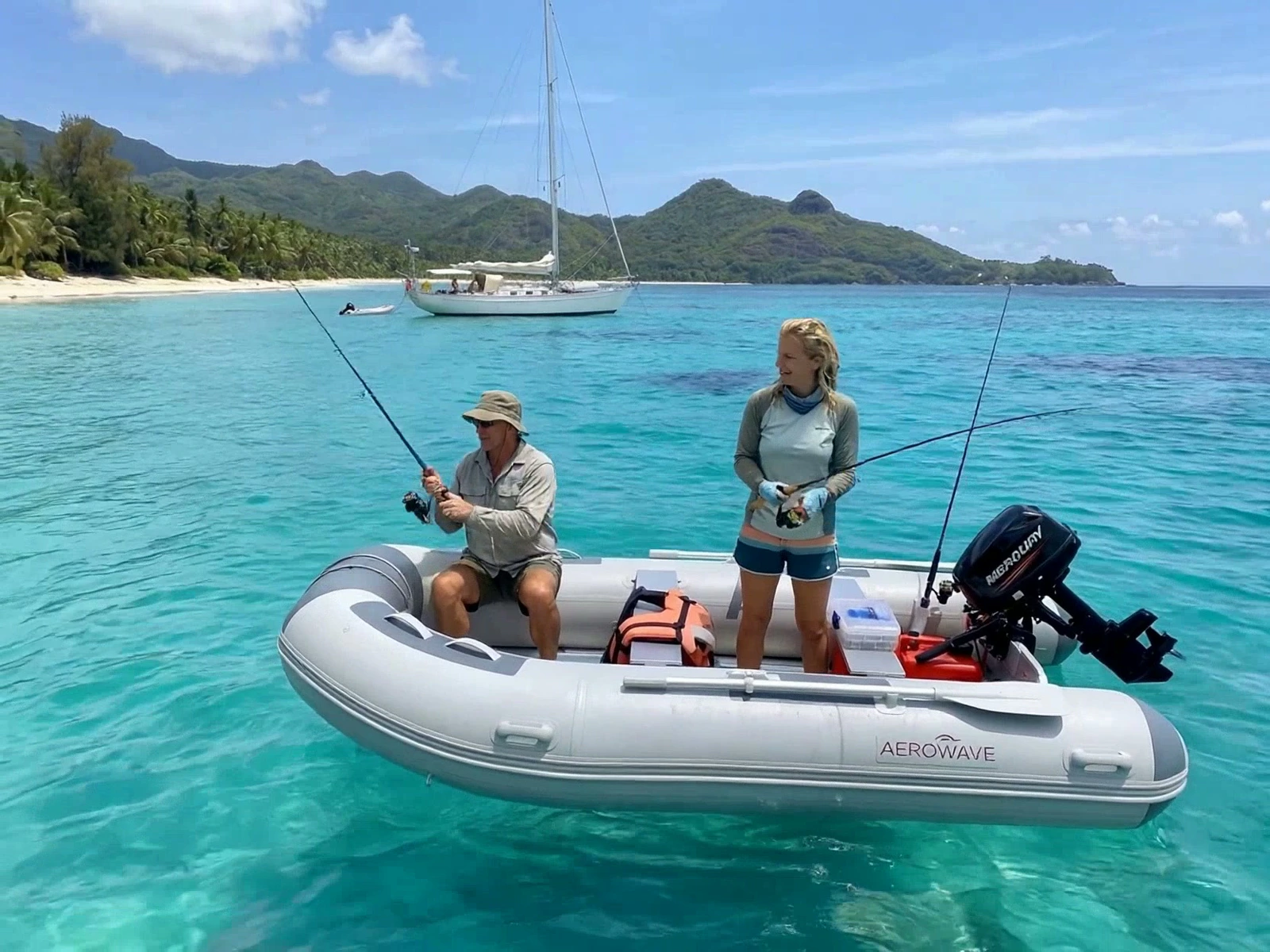
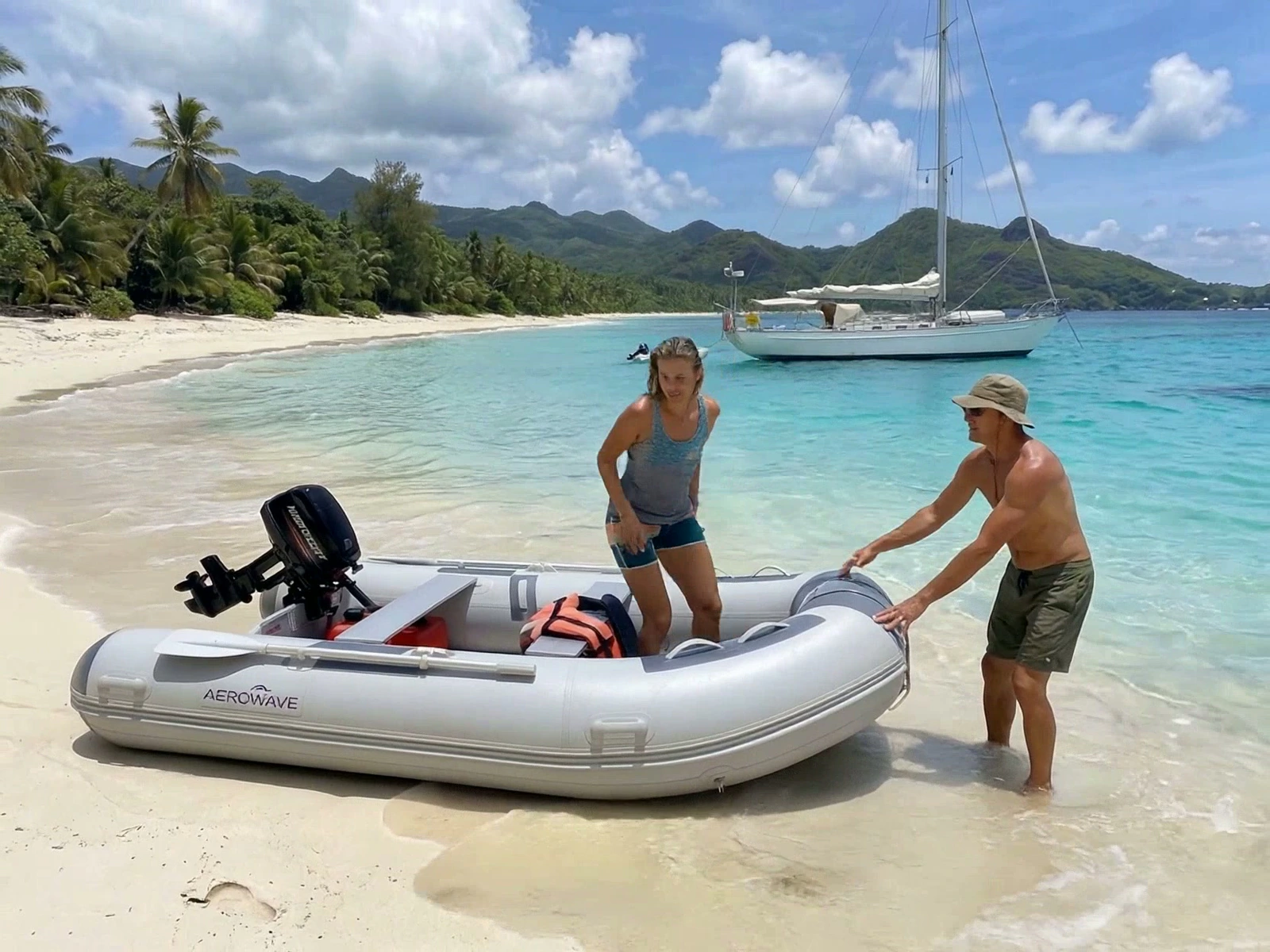
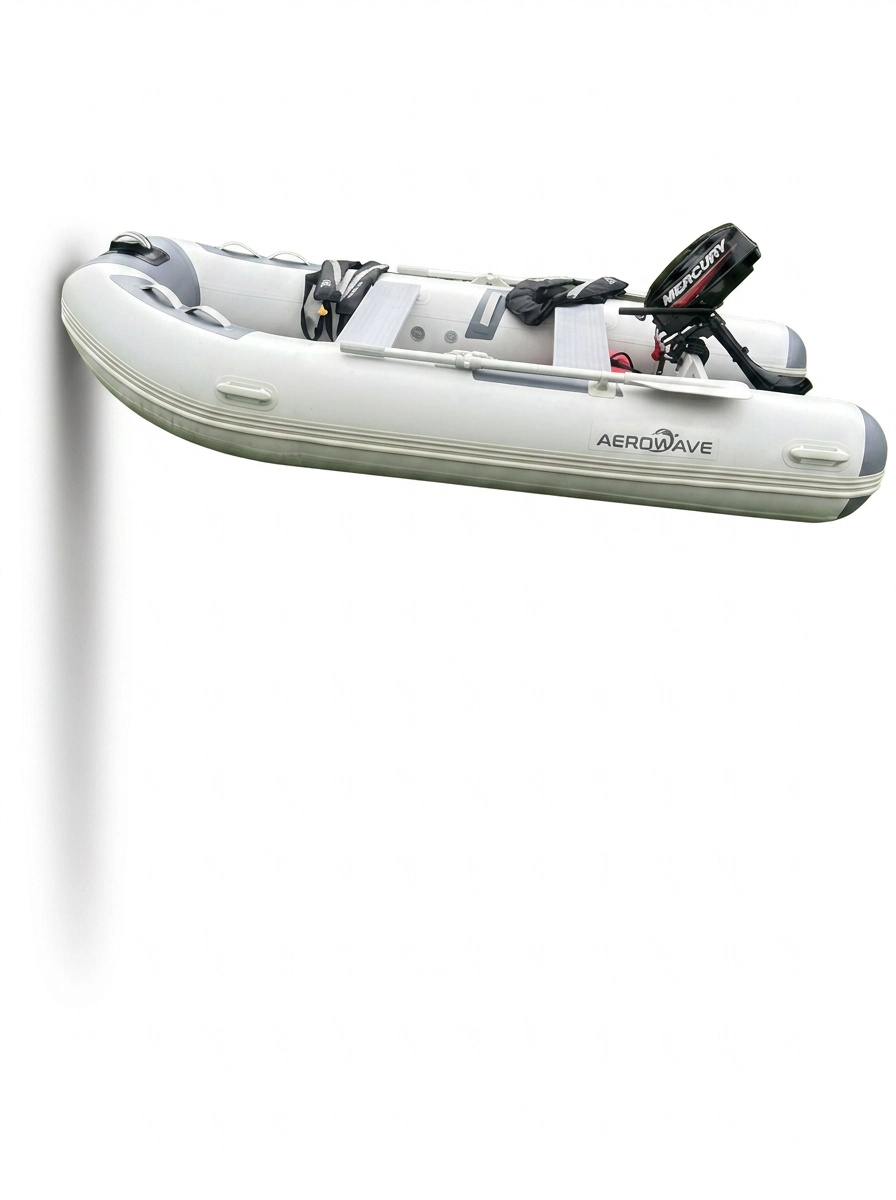
At anchor the dinghy is how you get ashore, carry water and shopping, lay a second anchor and visit other boats. A bad one makes cruising a chore. Choose it by where you will keep it, because that limits everything else.
Start with stowage
- On davits: the easy life at anchor, and room for a RIB. Adds weight and windage aft and is no place for a dinghy in big following seas.
- On the foredeck: secure at sea. Needs a hoisting method and a dinghy short enough to clear the mast and the windlass.
- Deflated in a locker: the choice for boats under about 10 metres. Limits you to a roll up or air deck inflatable.
- Towed: fine for short hops in flat water. Never on passage.
The types
| Type | Good at | Weak at | Suits |
|---|---|---|---|
| Roll up inflatable, slatted floor | Small, light, cheap, stows anywhere | Wet, slow, will not plane | Small boats, short trips ashore |
| Air deck inflatable | Light, planes with a small outboard, stows in a bag | Floor can puncture, less rigid | Most cruising boats without davits |
| RIB, aluminium or fibreglass hull | Fast, dry, tough, carries loads | Heavy, needs davits or deck space | Liveaboards and long dinghy runs |
| Rigid dinghy | Rows and tows well, lasts decades, no punctures | Less stable, less load, hard on topsides | Sheltered waters, people who like to row |
PVC or Hypalon
- PVC is cheaper and lighter. In strong sun it lasts roughly 5 to 10 years, less if left uncovered in the tropics.
- Hypalon type fabric costs much more and commonly lasts 15 years or longer in the same sun.
- If the boat lives north of about Brisbane or you plan to cruise the tropics, Hypalon or a good cover pays for itself.
Size
A dinghy about 2.7 to 3.1 metres suits most couples. Go by the capacity plate, not by length: it gives the maximum people, load and engine power.
Calculator
Dinghy load
Check a trip against the capacity on the builder's plate.
- 298 kg
- 75%
- Within the limit
Outboards
- 2.5 to 3.5 hp: light enough to lift with one hand, will not plane. Fine for short runs.
- 6 to 10 hp: planes a loaded air deck or small RIB. The usual cruising choice. Weighs 25 to 40 kg, so plan how you lift it.
- 15 hp and up: for larger RIBs. Needs a crane or davit to handle.
- Electric outboards are quiet, clean and light, with no fuel to carry. Range is limited, commonly 10 to 20 miles at slow speed, and they need charging capacity aboard.
Calculator
Outboard size to plane
A rule of thumb for the power needed to get a loaded inflatable on the plane.
- 260 kg
- 21.7 hp
- This load will not plane within the plate limit
Calculator
Tender fuel range
How far the fuel in the tender tank goes.
- 1.4 L/h
- 8.8 h
- 70 nm
Security
Dinghies and outboards are the most stolen items in cruising. Lock the outboard to the transom, lock the dinghy to the dock with stainless cable or chain, and lift it out of the water at night in areas with a theft problem. Mark the engine and tubes with the boat's name.
Safety
Most serious accidents in cruising happen in the dinghy, not on the yacht. Wear the kill cord, carry lifejackets, a light, oars, an anchor and a handheld VHF, and do not overload it coming back from the pub.
The parts that matter when you compare
- Tube diameter: bigger tubes are drier and carry more. Around 40 to 45 cm suits a 2.7 to 3.1 metre dinghy.
- Number of air chambers: three is normal. Each should hold the boat up alone.
- Floor: slatted, air deck, aluminium panels, or a rigid hull.
- Transom: marine ply sealed and capped, or aluminium. Check its rated engine weight as well as power.
- Lifting points: three or four strong eyes, through bolted, if it will go on davits or a halyard.
- Rub strake and keel guard: they take the wear from docks and beaches.
- Weight: decide the limit you can lift first, then shop inside it.
Weights to plan around
| Item | Typical weight |
|---|---|
| 2.3 m roll up | 20 to 25 kg |
| 2.7 m air deck | 30 to 40 kg |
| 2.9 m aluminium RIB | 45 to 60 kg |
| 3.2 m fibreglass RIB | 65 to 85 kg |
| 2.5 hp four stroke | 13 to 17 kg |
| 6 hp four stroke | 25 to 28 kg |
| 9.9 hp four stroke | 37 to 42 kg |
| 15 hp four stroke | 45 to 52 kg |
| 1 kW class electric outboard with battery | 15 to 20 kg |
Check the maker's figure for the model you are pricing.
Electric outboards, honestly
- For runs of a kilometre or two at displacement speed they are excellent: instant start, no fuel smell, light enough to hand up.
- They will not plane a loaded dinghy unless you move to large, expensive units.
- Range falls sharply with speed. Half throttle goes roughly three times as far as full throttle.
- Plan how the battery gets charged: a few hundred watt hours a day from solar is realistic.
Rowing
Every tender should row well enough to get home. Check the oars are long enough to use, the rowlocks are solid and there is a seat at the right height. Inflatables row badly into wind; that is a reason to anchor closer in, not to skip the oars.
What to carry in it
- Lifejackets for everyone, worn in any chop or at night.
- Kill cord, attached to the driver.
- Oars or paddles, a bailer, a pump.
- A small anchor and line.
- A white light at night, as the rules require.
- A handheld VHF or a phone in a dry pouch.
- A patch kit and a spare shear pin or propeller nut.
Looking after it
- Rinse and dry before bagging. Sand in the folds cuts fabric.
- Inflate to pressure in the cool of the morning and let some out in midday heat.
- Use a UV cover, or chaps, in the tropics.
- Clean with soap and water. Solvents and silicone sprays damage tubes and stop patches sticking.
- Keep the bottom clean. Weed grows in a week in warm water.
Common questions
Do I need to register my tender? Rules differ by state and depend on engine power. Many states exempt a tender used only between the yacht and shore. Check your state's current rule.
Can I tow the dinghy on passage? No. Towed dinghies flip, fill and break their painters in any sea. Lift it aboard.
How long does an inflatable last? PVC 5 to 10 years in Australian sun, Hypalon type 15 or more, both longer with a cover.
Two stroke or four stroke? New outboards sold in Australia are four stroke or direct injection, because of emission standards. Older two strokes are lighter and simple, and still common second hand.
Tutorials
Step by step guides are listed at the top of this page and in the sidebar: choosing a tender, patching an inflatable, servicing an outboard, lifting and stowing, and launching and landing through surf.