Loading this page…

Loading this page…
Sailing club
Fremantle Sailing Club is one of Australia's largest ocean sailing clubs, with more than 3,500 members at Success Harbour in South Fremantle. It runs keelboat and dinghy racing, a busy cruising section, learn-to-sail for kids, youth and adults, Safety and Sea Survival courses, a marina and boatyard, and a clubhouse restaurant and function centre — and it is the home club of Olympic champion Matt Wearn.
About
Fremantle Sailing Club is one of Australia's largest ocean sailing clubs, with more than 3,500 members at Success Harbour in South Fremantle. It runs keelboat and dinghy racing, a busy cruising section, learn-to-sail for kids, youth and adults, Safety and Sea Survival courses, a marina and boatyard, and a clubhouse restaurant and function centre — and it is the home club of Olympic champion Matt Wearn.
Service area: Fremantle, WA
Keep exploring
Fremantle Sailing Club (FSC) is at 151 Marine Terrace, South Fremantle, at Success Harbour, just south of Fremantle's historic Fishing Boat Harbour. With more than 3,500 members it is one of Australia's largest ocean clubs, and it caters for almost every kind of sailor: keelboat and dinghy racing, an active cruising section, and a Sailing Academy with learn-to-sail courses and Safety and Sea Survival training.
Marina facilities include wet pens, swing moorings, shore power, liveaboard options, fuel, trailer boat and tender storage, launching ramps and accommodation for visiting vessels, plus a boatyard with registered contractors. The clubhouse has a restaurant and hosts functions from weddings to conferences. See other clubs nearby on our Fremantle sailing clubs page.
FSC's Sailing Academy runs learn-to-sail courses for every age. Learn to Sail Kids is a fun, active program for 7 to 12 year olds who are new to sailing; Learn to Sail Youth is a social, outdoors program for 13 to 17 year olds; and Learn to Sail Adults is an introduction to keelboat sailing on boats up to nine metres long, with three to six people aboard. Courses run in the school holidays and across the summer and winter seasons, and are booked online. The academy also runs the Safety and Sea Survival course for sailors heading offshore.
After the basics, there are plenty of ways to keep learning. The cruising section holds monthly Sunday afternoon sails, a Wednesday twilight sail through summer, and weekend cruises to Rockingham and Mindarie, with longer trips to Geographe Bay and the Abrolhos Islands. Keelboat and dinghy racing series run through the year for those who want to compete.
The club is at Success Harbour in South Fremantle, a short walk from the cafés and heritage streets of Fremantle. From the harbour, boats head straight out into Gage Roads and the open Indian Ocean, with Rottnest Island about 18 kilometres offshore — a favourite destination for day sails and weekend cruises.
Summer afternoons bring the famous south-westerly sea breeze known as the Fremantle Doctor, which can build quickly; our guide to Western Australian weather for sailors explains what to expect. For local pilotage, see our guide to sailing Fremantle harbour. On shore, FSC offers wet pens, swing moorings, fuel, storage, launching ramps and a boatyard, and visiting yachts can arrange a berth.
Sailing in Fremantle goes back to the 1870s, when local merchants and seafarers recognised the area's ideal conditions, and the first regatta was held in May 1872. Early clubs came and went — the North Fremantle Sailing Club, formed in 1897, merged with the Fremantle Yacht Club in 1902, but both had disbanded by 1908. A meeting in 1919 established the modern Fremantle Sailing Club.
Its first real home was a redundant customs shed that the council relocated to Scott Street in 1923. In 1939 the club bought two blocks of land on Louisa Street for £105, and after the Second World War members moved and renovated an ex-Army building on the site; the clubhouse, with a dance hall and kitchen that helped pay the bills, opened in November 1947.
The construction of the Fishing Boat Harbour in 1962 disrupted the club but gave it harbour access, and the 1979 Parmelia Yacht Race spurred the development of Success Harbour. Premier Sir Charles Court unveiled a plaque marking the opening of the new clubhouse in December 1979. Today FSC has more than 3,500 members and has produced Olympic medallists, including Matt Wearn, gold medallist at the 2020 and 2024 Games.
Apollo Bay is a small working harbour on Victoria’s Great Ocean Road where sheltered inshore sailing meets the Southern Ocean. The character is a mix of protected harbour berths and an exposed open coast: pleasant day-sails and sheltered weekend cruising inside the bay, with demanding coastal passages immediately offshore where south‑westerly swell and strong winds from the Southern Ocean dominate. It suits coastal cruisers, trailer sailors who launch at the ramp, and experienced coastal sailors who understand bar and swell behaviour; it is not a casual open‑ocean anchorage for unprepared or

Look for a friendly club with beginner-focused training, accessible facilities and boats, a supportive community, clear safety practices, and opportunities to progress at your own pace.
Explore →
Expect very different seasonal systems across Western Australia: the south‑west (Perth to Albany) has a strong summer afternoon sea breeze (the “Fremantle Doctor”) and winter westerly fronts, while northern WA follows a wet/dry monsoonal cycle with strong seasonal onshore winds, thunderstorms and cyclone risk in the wet season. Local headlands, estuaries and tidal flows often change what you actually feel on the water, so learn the local timing and sheltered venues first.
Explore →
Legal safety equipment for recreational boats in South Australia depends on the type, size and where you operate; you must check the current SA government requirements for your vessel. Independently of legal minimums, carry a sensible set of recommended items (lifejackets, means of communication, signaling, fire protection, anchor and basic tools) and make them usable and maintained.
Explore →
Do a seasonal inspection and servicing routine that focuses on hull and antifouling, through-hulls and seacocks, rigging and sails, engine and fuel systems, electricals and batteries, safety gear and bilge systems. Tailor exact tasks to your boat type, age and where you sail in South Australia, and follow manufacturer and marine service advice for anything technical.
Explore →
A practical, Australia‑focused introduction to sailing: key terms, common boat types, basic manoeuvres, where to learn, licence and club options, and planning your first trips with safety and local conditions in mind.
Explore →
A concise, practical guide to the points of sail and how to trim sails effectively for common Australian conditions. Learn the basics of wind angles, sail shape, telltales, reefing considerations and simple steps to improve boat speed and balance.
Explore →
A practical guide for new sailors on picking the right Australian sailing club: training, boat access, racing, social fit, costs and the key questions to ask before joining.
Explore →A concise, practical introduction to the essential parts of a recreational sailing boat for beginners in Australia. Covers hull, deck, rigging, sails, steering, below-decks spaces and safety equipment, with simple explanations, common mistakes and a pre-decast checklist to help new sailors communicate and get underway.
Explore →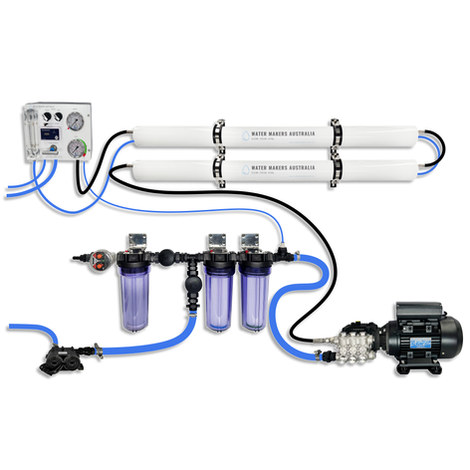
A two-membrane modular watermaker with 140 L/h nominal output, aimed at families and liveaboards that want more water per run.
Explore →Burke Yachtsman Gear Bag 40L - Shop Now Zip Pay | Tamar Marine Skip to content 59 – 63 Holbrook Street, Invermay Online Shop Open 24/7 Products search Contact us 1300 MARINE $ 0.00 0 Cart Burke Yachtsman Gear Bag 40L $ 79.90 Colour Choose an option Black Blue Black Blue Clear - Burke Yachtsman Gear Bag 40L quantity + Add to cart Enquire about this product SKU BAGB-Y24/BLACK* Category Bags - Sail & Gear A Burke classic and customer favourite, the Yachtsman’s Gear Bag is built tough to handle wet, salty conditions while keeping your gear dry and protected. Made from double coated waterproof…
Explore →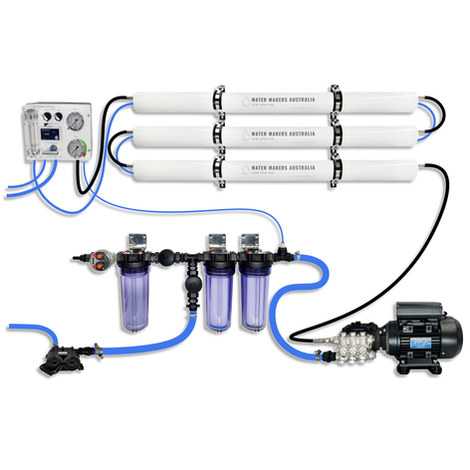
A three-membrane modular watermaker with 200 L/h nominal output and up to 240 L/h family-level marketing, for larger crews and heavy use.
Explore →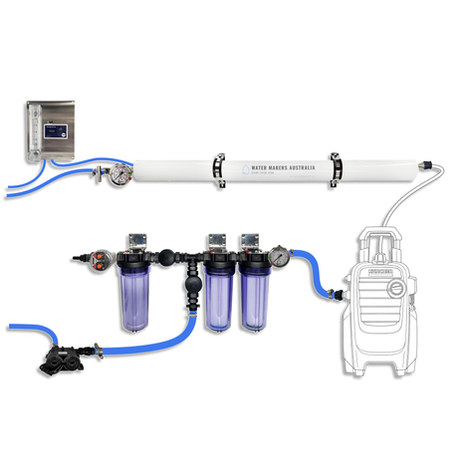
A one-membrane modular marine watermaker with 80 L/h nominal output, remote stainless control panel, standard consumables and direct Australian support.
Explore →