Loading this page…

Loading this page…
Sailing club
Greenwich Sailing Club is a family-focused dinghy club on the Greenwich foreshore of Sydney Harbour (Manns Point). Established in 1938, GSC runs Sunday afternoon racing (September–March), holiday learn-to-sail courses and ongoing junior development using classes such as Optimists, O’pen Skiffs, Flying 11s, Lasers and 29ers. The clubhouse sits in a park with a balcony that overlooks the sailing area between Goat Island and Cockatoo Island, letting parents watch races from the club.
About
Greenwich Sailing Club is a family-focused dinghy club on the Greenwich foreshore of Sydney Harbour (Manns Point). Established in 1938, GSC runs Sunday afternoon racing (September–March), holiday learn-to-sail courses and ongoing junior development using classes such as Optimists, O’pen Skiffs, Flying 11s, Lasers and 29ers. The clubhouse sits in a park with a balcony that overlooks the sailing area between Goat Island and Cockatoo Island, letting parents watch races from the club.
Service area: Manns Point / Greenwich foreshore, Sydney Harbour
Keep exploring
One suburb, two sailing clubs — and the confusion is understandable. Greenwich Sailing Club at Manns Point, established in 1938, is not the Greenwich Flying Squadron at Bay Street Wharf, founded fourteen years earlier. The distinction is worth making plainly: where the Squadron pairs yacht racing with a Sabot junior program, Greenwich Sailing Club is an amateur off-the-beach dinghy club administered by the sailors themselves alongside their families and friends, with junior sailing at the centre of everything it does. The two neighbours coexist happily, but they are different institutions with different histories.
GSC describes itself as friendly and family-oriented, drawing members from all over Sydney, and its rhythm is simple: Sunday-afternoon racing from September to March, with the club open from ten in the morning and briefing around one. The Sunday fleets tell the club's story — Optimists and O'pen Skiffs for the juniors, Flying 11s, Lasers and 29ers further up the age ladder — and a busy social program rounds out the season. Membership spans beginners through to the most competitive racers, and the club reports its sailors regularly compete at state, national and world championship regattas while it routinely hosts interclub events.
Its physical setting flatters the family model. The clubhouse stands in a park at Manns Point with a panorama of the sailing area stretching from Goat Island around to Cockatoo Island, and parents can watch entire junior races unfold from the balcony. The club credits that watch-everything setting with introducing generations of Sydneysiders to the sport while holding its membership base over the long term.
The hook at Greenwich Sailing Club is value wrapped into the learn-to-sail package itself: holiday courses bundle expert instructor tuition, use of a boat, and membership for the remainder of the season. A child who signs up for a three-day Tackers 1 intensive in the January holidays doesn't just finish a course — they arrive already belonging to the club, with Sunday racing waiting for them. It's a clever piece of retention design for a volunteer-run organisation.
The program runs on the Tackers model as an accredited Australian Sailing Discover Sailing Centre, open to children over seven who can swim fifty metres. Tackers 1 — "Having Fun" — is the January holiday intensive; Tackers 2, "Tips and Tricks", fills ten Sunday-morning sessions from February to April; and Tackers 3, "Going Fast", runs the same format from October to December. Rather than leaving families to guess what comes next, the club publishes a Junior Sailing Pathways document mapping the route from Tackers into its racing classes.
That route leads somewhere concrete. Sunday afternoon racing from September to March fields Optimists for the youngest racers, O'pen Skiffs, then Flying 11s, Lasers and 29ers as sailors grow, with group coaching arranged seasonally for the senior classes. Historically the ladder ran through Manly Juniors and Flying Ants before the Tasar became the senior class in the 1970s, and the club's long experience moving kids through exactly this progression shows: it states a strong training emphasis as a defining trait, and its sailors regularly appear at state, national and world championship regattas.
Interclub events hosted at Manns Point give home sailors big-fleet starts without leaving their own balcony-visible race course.
Manns Point juts into Sydney Harbour on the Greenwich foreshore, a short distance from where the Lane Cove River enters, with access via O'Connell Street, and the sailing stage it commands is the reach between Goat Island and Cockatoo Island — upper harbour water shared with some of Sydney's oldest racing traditions. From the clubhouse the view sweeps a claimed 180 degrees across the sailing area, running from the city skyline around to Cockatoo Island, and that sightline is more than decoration: it makes the clubhouse a place where parents and supporters can follow an entire race from the balcony, something few Sydney clubs can offer.
The facilities match the family-dinghy brief. The clubhouse grew out of an old harbourside quarry site and sits in a park setting, with rigging areas, a good launching ramp, spare boat storage and ample free parking — the unglamorous essentials that determine whether a Sunday with two kids and an Optimist is a pleasure or a slog. Evening gatherings gravitate to the balcony, and the hall, seating up to 120 with its own kitchen, is hired out for weddings, birthdays and anniversaries, quietly underwriting the club's finances.
The water itself suits the program. The Lane Cove River mouth and the upper-harbour reach offer protected-enough conditions for seven-year-olds in Optimists while staying open to the harbour's summer sea breezes for the 29ers and Lasers. Courses sit within sight of the balcony, so a capsize drill, a Green Fleet start or a tight 29er finish all play out in front of the clubhouse crowd. For a club whose identity rests on families watching their children learn, the venue could hardly be better arranged.
Greenwich Sailing Club opened its doors in 1938 under the name Greenwich 16-foot Sailing Club, announced in the Sydney Morning Herald on Monday 26 September that year. The first clubhouse was built the same year beside the Lane Cove River's mouth, and the early fleets reflected the era's harbour classes: 14ft Skiffs, Javelins and Manly Juniors. It arrived in a suburb that already had a sailing club — the Greenwich 12ft Flying Squadron, formed in 1924 — and the two have shared Greenwich ever since, one growing into a yacht and skiff club, the other into the family dinghy institution it remains.
The class history tracks the postwar evolution of Australian dinghy sailing. Juniors raced Manly Juniors, intermediates moved through Flying Ants and Flying Elevens, and in the 1970s the Tasar arrived as the senior class, typically drawing ten to twelve boats weekly and sailed by family combinations spanning teenagers to retirees. A small Mistral sailboard fleet and 29ers also featured in later years. Along the way the club shed "16-foot" from its name, becoming simply Greenwich Sailing Club.
The defining physical change came in 1968, when the club moved to its present Manns Point site. The new clubhouse rose from an old harbourside quarry as a joint project drawing together the community, club members and local government — and its design produced something rare: a venue where an entire race can be watched from the clubhouse. That spectator's grandstand, combined with the park setting and launching facilities, underpinned the club's modern role.
It credits itself with introducing generations of Sydneysiders to sailing while holding its membership base over a long period, and today's Sunday program — Optimists through to 29ers, September to March — continues that eighty-plus-year thread unbroken.
Apollo Bay is a small working harbour on Victoria’s Great Ocean Road where sheltered inshore sailing meets the Southern Ocean. The character is a mix of protected harbour berths and an exposed open coast: pleasant day-sails and sheltered weekend cruising inside the bay, with demanding coastal passages immediately offshore where south‑westerly swell and strong winds from the Southern Ocean dominate. It suits coastal cruisers, trailer sailors who launch at the ramp, and experienced coastal sailors who understand bar and swell behaviour; it is not a casual open‑ocean anchorage for unprepared or

Look for a friendly club with beginner-focused training, accessible facilities and boats, a supportive community, clear safety practices, and opportunities to progress at your own pace.
Explore →
Open the BOM marine forecast and warnings for your specific boating area, check recent observations and gusts, scan radar/lightning for developing cells, and match forecast timing to your planned afternoon so you can reef early or delay if a shift, gusty change or thunderstorm is likely.
Explore →
Late spring to summer is usually the best time for beginners to start learning to sail in Tasmania because the weather is generally warmer, days are longer and conditions are often more settled. Expect lighter to moderate winds with regular afternoon sea breees in summer, while spring and autumn bring more changeable and sometimes stronger conditions; winter is colder, wetter and typically windier with more fronts and swell.
Explore →
Expect very different seasonal systems across Western Australia: the south‑west (Perth to Albany) has a strong summer afternoon sea breeze (the “Fremantle Doctor”) and winter westerly fronts, while northern WA follows a wet/dry monsoonal cycle with strong seasonal onshore winds, thunderstorms and cyclone risk in the wet season. Local headlands, estuaries and tidal flows often change what you actually feel on the water, so learn the local timing and sheltered venues first.
Explore →
A concise, practical guide to the points of sail and how to trim sails effectively for common Australian conditions. Learn the basics of wind angles, sail shape, telltales, reefing considerations and simple steps to improve boat speed and balance.
Explore →
A practical guide for new sailors on picking the right Australian sailing club: training, boat access, racing, social fit, costs and the key questions to ask before joining.
Explore →A concise, practical introduction to the essential parts of a recreational sailing boat for beginners in Australia. Covers hull, deck, rigging, sails, steering, below-decks spaces and safety equipment, with simple explanations, common mistakes and a pre-decast checklist to help new sailors communicate and get underway.
Explore →
A practical, Australia‑focused introduction to sailing: key terms, common boat types, basic manoeuvres, where to learn, licence and club options, and planning your first trips with safety and local conditions in mind.
Explore →Burke Yachtsman Gear Bag 40L - Shop Now Zip Pay | Tamar Marine Skip to content 59 – 63 Holbrook Street, Invermay Online Shop Open 24/7 Products search Contact us 1300 MARINE $ 0.00 0 Cart Burke Yachtsman Gear Bag 40L $ 79.90 Colour Choose an option Black Blue Black Blue Clear - Burke Yachtsman Gear Bag 40L quantity + Add to cart Enquire about this product SKU BAGB-Y24/BLACK* Category Bags - Sail & Gear A Burke classic and customer favourite, the Yachtsman’s Gear Bag is built tough to handle wet, salty conditions while keeping your gear dry and protected. Made from double coated waterproof…
Explore →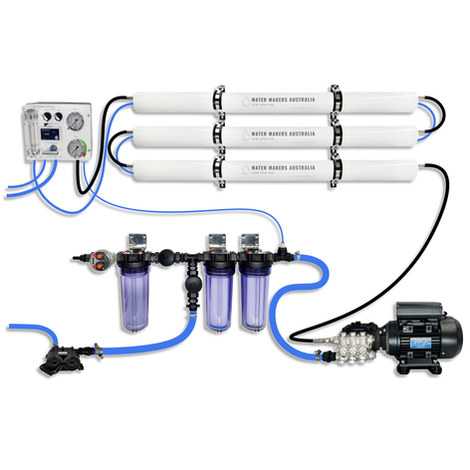
A three-membrane modular watermaker with 200 L/h nominal output and up to 240 L/h family-level marketing, for larger crews and heavy use.
Explore →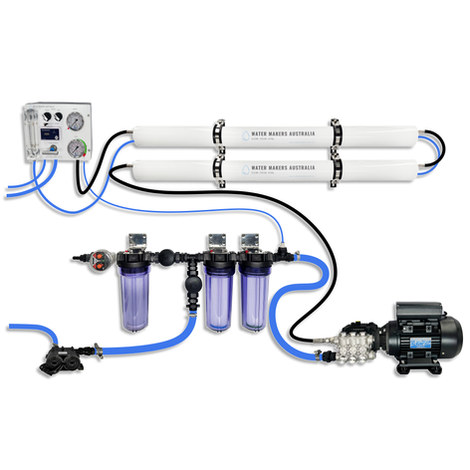
A two-membrane modular watermaker with 140 L/h nominal output, aimed at families and liveaboards that want more water per run.
Explore →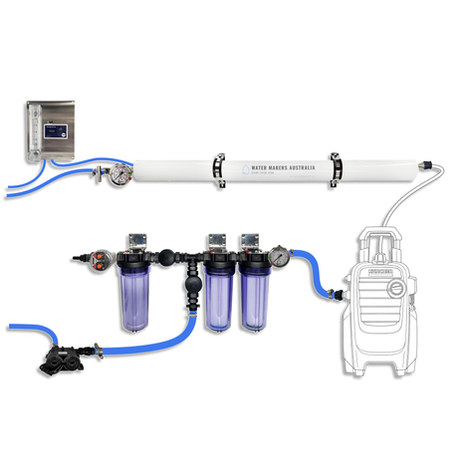
A one-membrane modular marine watermaker with 80 L/h nominal output, remote stainless control panel, standard consumables and direct Australian support.
Explore →