Loading this page…

Loading this page…
Sailing club
Small inland dinghy club at Lake Learmonth, about 20 km north-west of Ballarat, back on the water since the lake reopened to boating in November 2022 after almost a decade's closure.
About
Small inland dinghy club at Lake Learmonth, about 20 km north-west of Ballarat, back on the water since the lake reopened to boating in November 2022 after almost a decade's closure.
Service area: Lake Learmonth, VIC
Keep exploring
On 28 November 2022, the City of Ballarat reopened Lake Learmonth to recreational boating after almost a decade of closure, and the council made a point of welcoming wind-powered vessels back onto the water. For the small yacht club that carries the lake's name, it was the end of a very long wait. Lake Learmonth Yacht Club is one of the sixteen inland Victorian clubs listed by Australian Sailing's Victorian general manager, a small dinghy club based beside the township of Learmonth, about twenty kilometres north-west of Ballarat on the Sunraysia Highway.
Inland clubs like this one occupy a particular place in Australian sailing. Far from the coast and at the mercy of rainfall and water policy, they survive on loyalty rather than numbers, and their members tend to be all-rounders who race whatever floats. The documented record at Lake Learmonth fits that pattern: Explorer 16 trailer-sailers racing for a national championship, Australian Sailfish sailors photographed on the water in the mid-1970s, and Mosquito catamarans registered to the club around the turn of the century. Small classes, practical boats, and a lake that decides the terms.
The club also carries civic weight beyond its size. It sits on the lake's stakeholder reference group convened by the City of Ballarat, alongside the Friends of Learmonth, the ski club, and cycling and angling representatives — recognition that sailing has a standing claim on how this shared water is managed. Affiliated with Australian Sailing and incorporated since at least 2000, it is a quiet, persistent presence on the Ballarat district's sporting map.
Anyone researching Lake Learmonth's current program will find the public record thin: the club maintains no website or active social media of its own, and details of structured training, junior fleets or a regatta calendar simply are not published. What can be said honestly is what the club is — an affiliated Australian Sailing member club, listed by the state body among the inland Victorian clubs that run regattas, class training camps or simply sail for fun — and what its waters have demonstrably supported across the decades.
That demonstrated history is instructive for any prospective member. The club ran the Explorer 16 nationals on the lake in 1979, drawing fifteen entries from around the country, and shared hosting of the class's 1994 championship with a Williamstown club. Explorer 16s are exactly the sort of boat inland clubs nurture: an affordable, trailable sixteen-footer that a family can camp behind and race at club level without a big budget. A Ballarat Courier photograph from 1976 shows Sailfish pair Richard Milton and Chris Leyland in action on the lake, and the Mosquito catamaran class register has listed boats sailing at the club, which held Victorian class association membership in 2000.
Small inland Victorian clubs generally operate along familiar lines: a seasonal sailing program through the warmer months, informal handicap racing off a foreshore launching area, and newcomers folded into the fleet by experienced hands rather than through formal course structures. Whether Lake Learmonth currently runs that template is not documented, so the sensible step for an interested sailor is direct contact. What the record does confirm is a venue proven over decades for small-boat racing at championship level.
Lake Learmonth lies in volcanic country, a shallow sheet of water ringed on its northern, western and southern sides by the hills that mark this part of the Ballarat district. The township of Learmonth adjoins the northern shore, and the lake comes equipped with shoreline reserves, a caravan park and established angling and boating facilities — the makings of an easy weekend base for a visiting sailor. Being shallow and exposed to the western district sky, the lake responds quickly to wind; when a front moves through, the chop builds fast over the short fetch, rewarding crews who keep their boats flat and their eyes open.
What makes this venue unusual is that its water is partly managed. Morton's Cutting, a diversion channel that opens from May to November each year, can deliver up to 5,000 megalitres annually to the lake under a licence the City of Ballarat holds from Goulburn-Murray Water, recently extended to 2030. Depth here is therefore a matter of licence conditions and rainfall combined — which is precisely why recreational boating was banned on the lake from January 2013 right through to late November 2022, when above-average rain finally restored a safe operating depth.
Before reopening, the council commissioned a safety audit, repainted navigation beacons and laid access-lane buoys, work that now benefits every sailor launching here.
The lake is shared, and the club shares it in company: water-skiers and wakeboarders (a Learmonth Ski Club operates here too), jet skis, canoeists and anglers all have their seasons and lanes. For dinghy sailors the appeal is straightforward — open, obstruction-light freshwater sailing twenty minutes from Ballarat, on a lake whose return from drought has given local sailing a genuine second life.
The documented history of Lake Learmonth Yacht Club is short on founding detail and honest reporting should say so: no founding year, founders or clubhouse history could be confirmed, with the incorporated body's ABN active from 30 June 2000 — a registration milestone rather than a birthday. What is clear is that organised sailing on this lake is far older than the modern club. In 1864, a Learmonth Regatta Club was meeting at the Stag Hotel in the township, offering sixty pounds each in rowing and sailing prizes on a membership subscription of one pound.
Whether any thread connects that early club to today's is unverified, but it establishes that sails were drawing on Lake Learmonth within five years of the township being surveyed in 1859.
The lake nearly took a place in Olympic history. During preparations for the 1956 Melbourne Games, officials weighed shifting the rowing regatta away from Lake Wendouree to Lake Learmonth, fourteen miles out of Ballarat, and drew up contingency plans — evidence of how highly the venue was rated for still-water competition in that era. Two decades on, the small-boat scene was active enough for the Ballarat Courier to photograph Australian Sailfish sailors on the lake in 1976.
The club's strongest documented chapter is its championship record: the 1979 Explorer 16 national title was sailed here and won by Max Ross from a fifteen-boat fleet, and the lake shared the 1994 title with Williamstown. Mosquito catamarans appear on the class register as sailing here into the 2000s. Then came the drought years, with the lake closed to boating from 2013 to 2022 — a period during which the club presumably operated at reduced capacity, though no record confirms how. The 2022 reopening, and the club's continuing seat on the lake's stakeholder reference group, mark the start of a new chapter.
Dangar Island sits in the lower Hawkesbury River close to Brooklyn and is one of Sydney’s small, boat‑access communities. From the water it reads as a wooded, low island with sandy foreshore, a public jetty and private moorings; its position at the mouth of Cowan Creek and close to the main river channel makes it an attractive short‑cruise destination for trailer sailors, runabouts and small cruisers but also one that requires careful local knowledge and respect for resident berths, ferry operations and tidal currents.

Pick a stable, simple, forgiving dinghy with a single sail or basic sloop rig, affordable handling and easy maintenance—ideally one with a local class or school nearby so you can access coaching and spare parts.
Explore →
Expect the usual IALA-B lateral system (red and green), cardinal and isolated-danger marks, safe-water and special marks, plus harbour-specific fairway buoys, leading/transit marks and exclusion or speed‑limit buoys. Check local harbour charts and Notices to Mariners for exact positions and light characteristics before entry.
Explore →
Many pets can enjoy sailing but suitability comes down to temperament, physical fitness and how you introduce them. Do a calm, staged assessment and get a vet check before you take them offshore.
Explore →
Expect very different seasonal systems across Western Australia: the south‑west (Perth to Albany) has a strong summer afternoon sea breeze (the “Fremantle Doctor”) and winter westerly fronts, while northern WA follows a wet/dry monsoonal cycle with strong seasonal onshore winds, thunderstorms and cyclone risk in the wet season. Local headlands, estuaries and tidal flows often change what you actually feel on the water, so learn the local timing and sheltered venues first.
Explore →
A practical guide for new sailors on picking the right Australian sailing club: training, boat access, racing, social fit, costs and the key questions to ask before joining.
Explore →A concise, practical introduction to the essential parts of a recreational sailing boat for beginners in Australia. Covers hull, deck, rigging, sails, steering, below-decks spaces and safety equipment, with simple explanations, common mistakes and a pre-decast checklist to help new sailors communicate and get underway.
Explore →
A concise, practical guide to the points of sail and how to trim sails effectively for common Australian conditions. Learn the basics of wind angles, sail shape, telltales, reefing considerations and simple steps to improve boat speed and balance.
Explore →Practical guide for recreational sailors planning a coastal cruise from Sydney north to the Queensland border. Covers route options, weather and tidal considerations, planning checklists, common hazards, anchorages and practical examples for a safe, enjoyable trip.
Explore →Burke Yachtsman Gear Bag 40L - Shop Now Zip Pay | Tamar Marine Skip to content 59 – 63 Holbrook Street, Invermay Online Shop Open 24/7 Products search Contact us 1300 MARINE $ 0.00 0 Cart Burke Yachtsman Gear Bag 40L $ 79.90 Colour Choose an option Black Blue Black Blue Clear - Burke Yachtsman Gear Bag 40L quantity + Add to cart Enquire about this product SKU BAGB-Y24/BLACK* Category Bags - Sail & Gear A Burke classic and customer favourite, the Yachtsman’s Gear Bag is built tough to handle wet, salty conditions while keeping your gear dry and protected. Made from double coated waterproof…
Explore →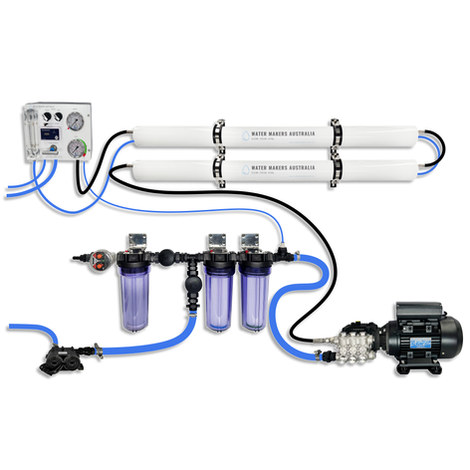
A two-membrane modular watermaker with 140 L/h nominal output, aimed at families and liveaboards that want more water per run.
Explore →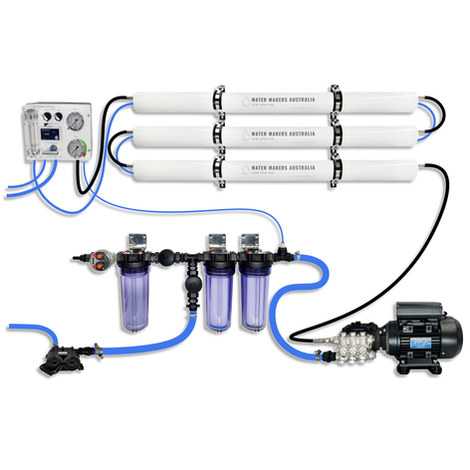
A three-membrane modular watermaker with 200 L/h nominal output and up to 240 L/h family-level marketing, for larger crews and heavy use.
Explore →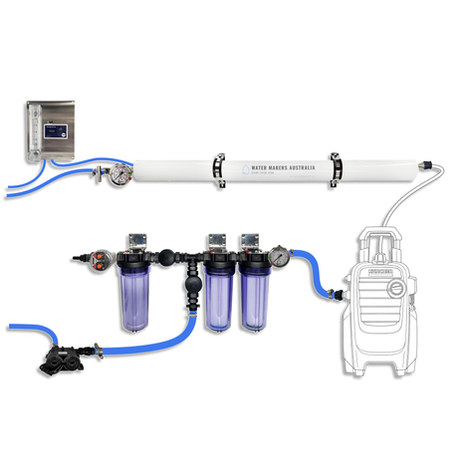
A one-membrane modular marine watermaker with 80 L/h nominal output, remote stainless control panel, standard consumables and direct Australian support.
Explore →