Loading this page…

Loading this page…
Sailing club
Midway Point Yacht Club is a community sailing club on Pittwater near Sorell, about 25 minutes east of Hobart. Founded in 1968 and built by its own members, it runs sail training, a Come and Try opening day, club racing from October to April in classes such as the NS14, B14 and Sabre, and the annual Pittwater Regatta.
About
Midway Point Yacht Club is a community sailing club on Pittwater near Sorell, about 25 minutes east of Hobart. Founded in 1968 and built by its own members, it runs sail training, a Come and Try opening day, club racing from October to April in classes such as the NS14, B14 and Sabre, and the annual Pittwater Regatta.
Service area: Midway Point, TAS
Keep exploring
Midway Point Yacht Club is based at 34 Brady Street, Midway Point, on the shores of Pittwater near Sorell. It has a long association with boating, sailing and sail training in the area, and everything at the club — from the clubhouse to the change rooms — was built by members.
The sailing season runs from October to late April, starting with an Opening Day Come and Try for newcomers, followed by pennant and trophy racing. Classes sailed include the NS14, B14 and Sabre, and the club hosts the annual Pittwater Regatta. There is a ramp and jetty on site. Contact the club on 0406 864 602 or 0400 892 129, or by email at mpycinc@icloud.com. See our Midway Point sailing clubs page for more.
The best way to start at Midway Point is the Opening Day Come and Try, held at the beginning of each season in late September. It is a relaxed chance to get out on the water, meet members and see which boats might suit you. From there the club offers sail training through the season, alongside its regular club racing.
Club racing includes pennant and trophy races from October onwards, with fleets such as the NS14, B14 and Sabre. These are all great boats for building skills, and the friendly racing makes it easy for newcomers to join in. If you are new to sailing, our beginner's guide to sailing in Australia is a handy read before your first day.
The club is at 34 Brady Street, Midway Point, on Pittwater — the sheltered stretch of water near Sorell, about 25 minutes' drive east of Hobart and on the road to the Tasman Peninsula. The club's ramp and jetty make launching straightforward, and the protected water suits training and dinghy racing.
Pittwater's big event is the annual Pittwater Regatta, which the club has run for many years. For other clubs south-east of Hobart, see Lauderdale Yacht Club on Frederick Henry Bay, or browse our Midway Point sailing clubs page.
Pittwater is a shallow tidal inlet crossed by causeways linking Midway Point to Sorell and the airport side of the bay, so keep an eye on depths and tides, especially in keelboats. The flat, sheltered water is exactly why it's such a good place for juniors and newcomers. Our FAQ on the best season to learn to sail in Tasmania explains what to expect through the year.
Local records mention two earlier attempts to start a sailing club at Midway Point, but the one that stuck began in 1968. Mac Story got things moving by knocking on doors around Midway Point and running a trophy race in February 1968, then organising a meeting in the local pine forest to form the club. He led it for its first four seasons before moving away in 1972.
Everything at the club has been built by members' hard work, from the clubhouse canteen to the change rooms and later extensions. The club celebrated its 50th anniversary in 2018, and Mac Story has been compiling a history of its first ten years, with early memorabilia displayed on the club's history wall.

Late spring to summer is usually the best time for beginners to start learning to sail in Tasmania because the weather is generally warmer, days are longer and conditions are often more settled. Expect lighter to moderate winds with regular afternoon sea breees in summer, while spring and autumn bring more changeable and sometimes stronger conditions; winter is colder, wetter and typically windier with more fronts and swell.
Explore →
Plan the crossing as a deliberate offshore passage with a chosen route that reduces exposure, a weather window that keeps wind, swell and fronts well offshore, and firm alternates and abort points — using up-to-date synoptic and high‑resolution marine forecasts plus local observations to time departure and arrival.
Explore →
In gusty, changeable Tasmanian winds, approach docks or a alongside berth slowly on a controlled angle, keep propulsion and steerage ready to counter gusts, use crew to control fenders and lines, and choose a lee side or sheltered spot where possible. Prioritise maintaining steerage and being able to power off quickly rather than trying to hold a precise position with engines idle.
Explore →
Plan to use tide and local knowledge, slow and steerable power, and deliberate positioning to work with—rather than fight—strong streams and eddies when entering or leaving Tasmanian harbours.
Explore →
A practical guide for new sailors on picking the right Australian sailing club: training, boat access, racing, social fit, costs and the key questions to ask before joining.
Explore →
A concise, practical guide to the points of sail and how to trim sails effectively for common Australian conditions. Learn the basics of wind angles, sail shape, telltales, reefing considerations and simple steps to improve boat speed and balance.
Explore →A concise, practical introduction to the essential parts of a recreational sailing boat for beginners in Australia. Covers hull, deck, rigging, sails, steering, below-decks spaces and safety equipment, with simple explanations, common mistakes and a pre-sail checklist to help new sailors communicate and get underway.
Explore →A practical, Australian-focused guide explaining how sails generate drive, the points of sail, and how to trim sails for different conditions. Includes simple explanations of aerodynamic concepts, step-by-step trim checks, common mistakes and clear next steps for practice on the water.
Explore →
Push-to-talk radio that uses 4G mobile networks where there is coverage and a built-in 16-channel analog radio where there is none, with GPS and SOS. Sold as a two-pack.
Explore →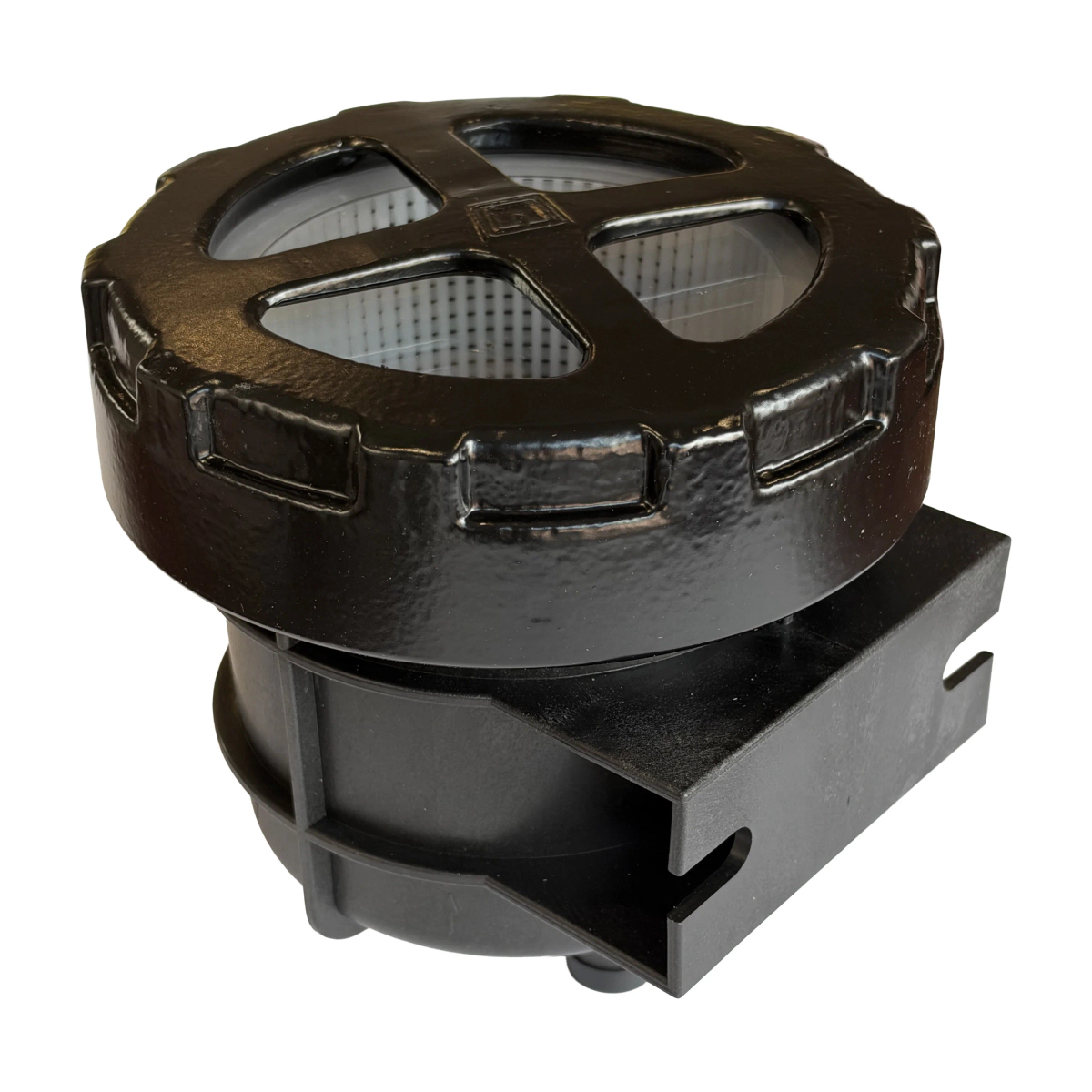
Seawater intake strainer with a clear inspection window, sold in 19 mm and 25 mm hose sizes. It catches weed and larger debris before the water reaches a watermaker feed pump.
Explore →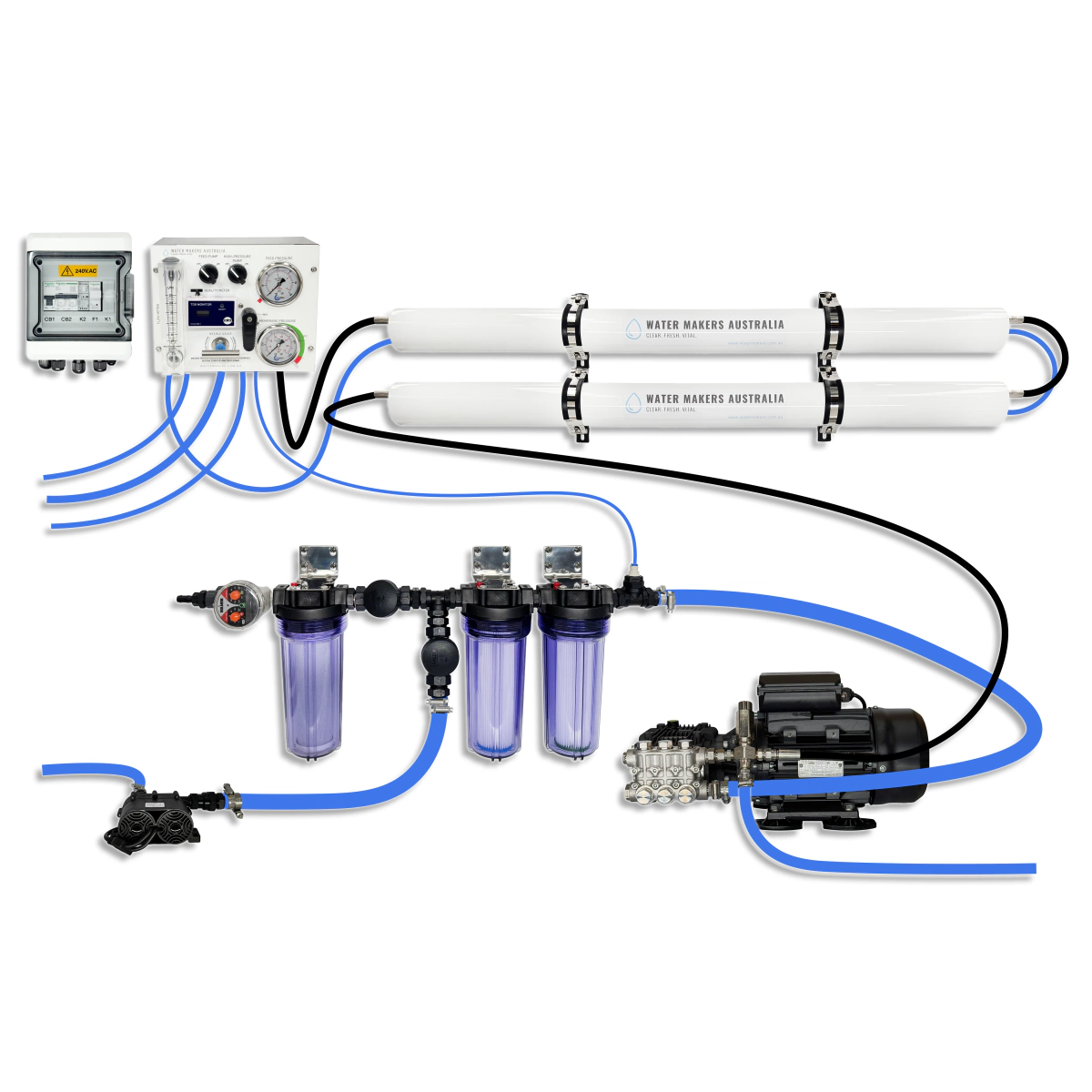
Twin-membrane 240 V reverse-osmosis watermaker producing a nominal 140 L/h, built to order in Sydney for family cruising on boats of about 11 to 18 m.
Explore →
A 142-item marine first aid kit built around the Australian Scale G requirement, with a workplace kit, a Scale G module and a handbook packed in a large waterproof box.
Explore →