Loading this page…

Loading this page…
Sailing club
Nedlands Yacht Club is a family-focused off‑the‑beach sailing club on the western foreshore of the Swan River (The Esplanade), Nedlands, Western Australia. The club runs Australian Sailing‑aligned learn‑to‑sail courses and junior training, active Sunday club racing and state, national and international regatta activity, and offers venue facilities for events and functions.
About
Nedlands Yacht Club is a family-focused off‑the‑beach sailing club on the western foreshore of the Swan River (The Esplanade), Nedlands, Western Australia. The club runs Australian Sailing‑aligned learn‑to‑sail courses and junior training, active Sunday club racing and state, national and international regatta activity, and offers venue facilities for events and functions.
Service area: The Esplanade, Nedlands — western foreshore of the Swan River (Derbal Yeragan), Perth metropolitan area
Keep exploring
Nedlands Yacht Club is an off‑the‑beach dinghy and multihull club on The Esplanade, Nedlands, on the western bank of the Swan River. It presents as a family‑focused sailing community offering accredited learn‑to‑sail courses, regular junior programs, Sunday club racing and a programme of regattas and championships.
The club operates facilities for sailing, training and events, and actively promotes junior participation and pathways into competitive fleets. The club’s official pages describe a long history of sail training and an inclusive approach to beginners and visiting sailors.
Nedlands combines volunteer‑run sailing programmes with licensed club facilities for functions and events. The club’s office provides contact points for sailing, membership and events enquiries and the site is regularly used for state and national level events.
Sail training is woven into this club's identity deeper than at almost any other Australian club — after all, back in 1980/81 Nedlands earned the nation's first Authorised Training Centre status and promptly delivered the first course of the National Training Scheme. That heritage lives on in an authorised Australian Sailing sail training program that covers every age and stage. For the youngest, Tackers courses for seven-to-twelve-year-olds run on Optimist training dinghies during school holidays — a single strand of a much wider teaching operation.
Teenagers and adults step into Australian Sailing Start Sailing 1 and 2, taught on Puffin Pacer training dinghies across six weekend mornings, while the Better Sailing course moves up a gear onto Hobie catamarans — a fitting choice for a club with a multihull pedigree stretching back to the 1960s and a Hobie 16 fleet that has produced World and National champions. The club has also advertised for a Training Coordinator to deliver the full Australian Sailing suite — Tackers, Start Sailing and Out There Sailing — together with youth coaching from green fleet through to open fleet, signalling ambitions that run well beyond beginner instruction. Powerboat and Safety Boat Operator courses feature on the calendar as well, keeping the volunteer engine room qualified.
What makes the pathway persuasive is how it lands on the water. Sundays in season pair junior training in the morning with club racing in the afternoon, so lessons flow directly into competition, and would-be sailors can sample the sport simply by turning up before 11:30am on a Sunday, when volunteers allocate visitors to boats. Few clubs anywhere can carry a member from a first Tackers session to an F18 national championship start line — Nedlands demonstrably can.
The Esplanade at Nedlands fronts one of the finest off-the-beach sailing sites in the country — that is the verdict of the club's own history, and the setting backs it up. Wide grassy rigging lawns run down to sandy beaches on the western foreshore of the Swan River, giving families and fleets room to spread out in a way cramped metropolitan clubs can only envy. Remarkably, even that beach is a member-made improvement: a dredge heading to the Narrows Bridge project dumped its spoil along the old sea wall, backfilling it, and sand excavated for local swimming pools finished the job, creating the rigging area sailors use today.
The river here offers protected, predictable water that suits both learners and racers. The main season opens in early October and wraps up at the end of April, and Sundays are the club's heartbeat — junior training occupies the morning, racing takes over in the afternoon, and the whole precinct hums from rigging lawn to finish line. Beginners are folded into the day rather than fenced off from it: arrive by 11:30 on a Sunday in season and volunteers will place you on a boat.
The class mix on this stretch of river is as broad as any in the west. Hobie 16s headline a multihull scene that also embraces open cats such as A-Class, Formula 16, Formula 18, Nacra, Hobie Tiger and Tornado — while open dinghies including Waszp, RS Quest, RS Aero and ILCA, sports boats like the Elliot 5.9, 7 and 770, and trailerable multihulls of the Corsair 750 and Ross 780 type round out the fleet. Nedlands sailors take their home form on the road as well, joining the 2026 F18 Nationals fleet at Jervoise Bay. Add the new clubhouse with its training, regatta and functions capability, and this bend of the Swan works as hard as any sailing address in Australia.
The founding moment was a stand on principle. When the Mounts Bay Yacht Club's 1952 policy barred over-21s from VJ racing, the affected sailors formed the Subiaco Yacht Club, meeting first on Garnet Rock's verandah and electing Jack LeMaistre as Commodore — a post he held for nine formative years. That first season the club was based on the Nedlands Jetty's up-river side, with the Pagoda Tearooms building made available by the Nedlands Park Hotel's Steve McHenry, and the name Nedlands Subiaco Yacht Club was adopted within the year.
Members built the first clubhouse with their own hands over twenty weekends among the riverside bamboo. It opened on 5 November 1955 — though the flag could not go up, the pole's paint being still wet — and the building now sits on the City of Nedlands heritage inventory. A further name change, to Nedlands Yacht Club, followed in 1959 once the City of Nedlands was established as the local authority, and in 1962 a new brick clubhouse opened with the help of a £12,000 council loan. Wooden catamarans of the 16-foot class were admitted in 1963, the "plastic" multihulls followed, and the decision lifted both the club's profile and its membership.
Firsts accumulated. National training-centre authorisation in 1980/81, the maiden course of the National Training Scheme, and Ann Schug's election as Australian yachting's first female flag officer each broke ground well beyond the club's boundaries. The state's sailing establishment moved in too: the Australian Yachting Federation, the Yachting Association of WA and the Ron Tough Foundation all kept offices at the club, Ron Tough himself having served twenty years as YAWA secretary with an Olympic gold medal connection to his name. From VJs and Skates in the fifties through Moths, Mirrors and Tornados to today's Waszps and F18s, the fleets have changed; the habit of leading has not.
A detailed sailing guide to the Tollgate Islands area on the NSW south coast, focused on Batemans Bay, the Clyde River entrance and nearby sheltered waters. The guide explains geography, typical conditions, principal sailing zones, anchorages and moorings, facilities ashore and practical arrival notes. It highlights local hazards — exposed heads, shifting sand, bird-protection restrictions and commercial traffic — and outlines local rules and responsible-access requirements. Several suggested sailing experiences are provided for day sailors, weekend cruisers and passagemakers, with clear notes

Expect very different seasonal systems across Western Australia: the south‑west (Perth to Albany) has a strong summer afternoon sea breeze (the “Fremantle Doctor”) and winter westerly fronts, while northern WA follows a wet/dry monsoonal cycle with strong seasonal onshore winds, thunderstorms and cyclone risk in the wet season. Local headlands, estuaries and tidal flows often change what you actually feel on the water, so learn the local timing and sheltered venues first.
Explore →
Look for a friendly club with beginner-focused training, accessible facilities and boats, a supportive community, clear safety practices, and opportunities to progress at your own pace.
Explore →
There are legal obligations in Western Australia for recreational boat owners and skippers covering vessel registration, carriage of safety equipment and general skipper responsibilities, but the exact requirements depend on vessel type, size, where you sail and whether the vessel is commercial or recreational. Check the Western Australian Department of Transport (DoT WA) and the national authority for the precise checklist that applies to your boat and voyage.
Explore →
Pick a stable, simple, forgiving dinghy with a single sail or basic sloop rig, affordable handling and easy maintenance—ideally one with a local class or school nearby so you can access coaching and spare parts.
Explore →
A concise, practical guide to the points of sail and how to trim sails effectively for common Australian conditions. Learn the basics of wind angles, sail shape, telltales, reefing considerations and simple steps to improve boat speed and balance.
Explore →
A practical guide for new sailors on picking the right Australian sailing club: training, boat access, racing, social fit, costs and the key questions to ask before joining.
Explore →Practical guide for recreational sailors navigating the Swan River and coastal waters around Perth. Covers local weather patterns, tides and currents, river navigation, launching and berthing options, safety equipment, common hazards, and step-by-step pre-departure and on-water checklists tailored to Western Australian
Explore →A practical guide to the coastal weather systems that affect sailing along Western Australia's coast, focusing on the Fremantle Doctor, local sea breezes, and linked coastal phenomena. Explains how these systems form, when they tend to occur, how they influence boat handling and passage planning, common mistakes, and a
Explore →Burke Yachtsman Gear Bag 40L - Shop Now Zip Pay | Tamar Marine Skip to content 59 – 63 Holbrook Street, Invermay Online Shop Open 24/7 Products search Contact us 1300 MARINE $ 0.00 0 Cart Burke Yachtsman Gear Bag 40L $ 79.90 Colour Choose an option Black Blue Black Blue Clear - Burke Yachtsman Gear Bag 40L quantity + Add to cart Enquire about this product SKU BAGB-Y24/BLACK* Category Bags - Sail & Gear A Burke classic and customer favourite, the Yachtsman’s Gear Bag is built tough to handle wet, salty conditions while keeping your gear dry and protected. Made from double coated waterproof…
Explore →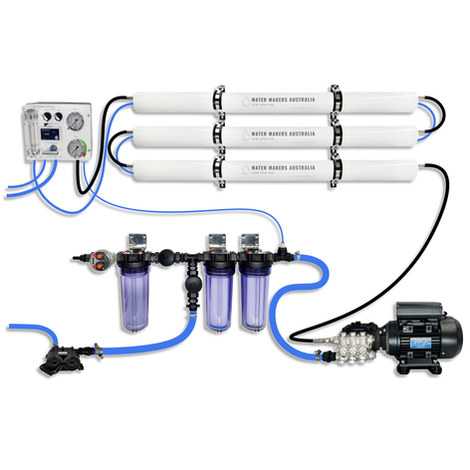
A three-membrane modular watermaker with 200 L/h nominal output and up to 240 L/h family-level marketing, for larger crews and heavy use.
Explore →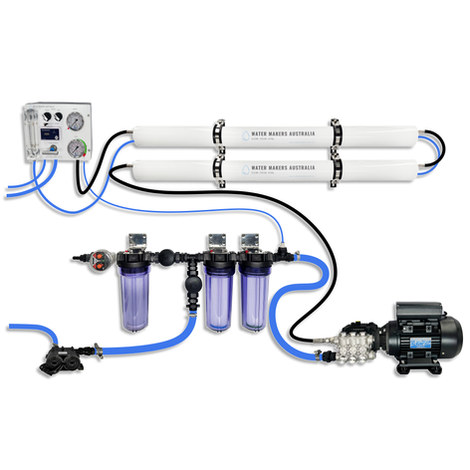
A two-membrane modular watermaker with 140 L/h nominal output, aimed at families and liveaboards that want more water per run.
Explore →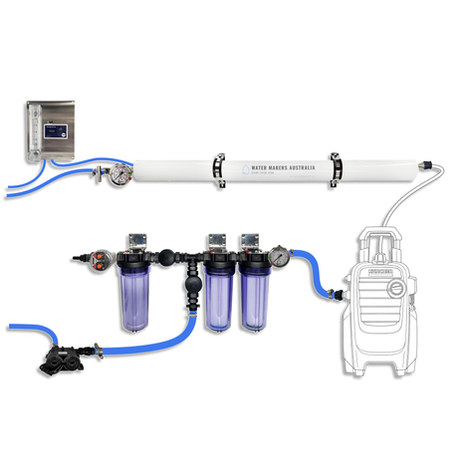
A one-membrane modular marine watermaker with 80 L/h nominal output, remote stainless control panel, standard consumables and direct Australian support.
Explore →