Loading this page…

Loading this page…
Sailing club
Port Esperance Sailing Club in Dover calls itself the southernmost yacht club in Australia. Its sailing history goes back to an 1858 regatta, and after its old clubhouse was destroyed by fire in 2020, the community rebuilt it — the new clubhouse opened in 2024. The club runs dinghy racing, cruising, learn to sail, the Easter Port Esperance Regatta and a lively winter social calendar.
About
Port Esperance Sailing Club in Dover calls itself the southernmost yacht club in Australia. Its sailing history goes back to an 1858 regatta, and after its old clubhouse was destroyed by fire in 2020, the community rebuilt it — the new clubhouse opened in 2024. The club runs dinghy racing, cruising, learn to sail, the Easter Port Esperance Regatta and a lively winter social calendar.
Service area: Dover, TAS
Keep exploring
Port Esperance Sailing Club (PESC) is based on Station Road, Dover, on Port Esperance in Tasmania's far south — about 80 minutes' drive from Hobart. It describes itself as the southernmost yacht club in Australia and is a family-oriented club that welcomes people of all ages.
The club runs regular dinghy racing, yacht cruising, sail training and learn-to-sail programs. Its big event is the Port Esperance Regatta at Easter. Between June and October there are Friday night happy hours and meals and Sunday happy hours from 3pm, plus community events such as seafood barbecues and rowing. The new clubhouse, opened in 2024, has a bar and deck, and can be hired for events. Contact the club at admin@pesc.com.au.
PESC runs sail-training and learn-to-sail programs for people of all ages, and as a family-oriented club it is a relaxed place for beginners to start. Dinghy racing gives newer sailors a chance to put their skills into practice, while members with keelboats can join the club's yacht cruising on the waters of Port Esperance and beyond.
The club also offers rowing and a strong social program that keeps members connected through the off-season. If you are planning your first cruise in southern waters, our guide to planning a safe coastal sailing trip is a good place to begin.
The club is on Station Road in Dover, on the shores of Port Esperance in Tasmania's far south. The harbour is sheltered by its surrounding islands and headlands, making it a pleasant place for dinghy sailing, while cruising yachts can explore further south or head north towards the Huon River and the D'Entrecasteaux Channel.
The rebuilt clubhouse was designed as a universal-access community space, with clubrooms, underfloor storage for boats, a bar, a commercial-standard kitchen and toilet and shower facilities. For other clubs in the south, see Port Cygnet Sailing Club and Huon Yacht Club, or browse our Dover sailing clubs page.
See our Dover sailing clubs page for more on sailing in Tasmania's far south.
Sailing at Port Esperance has a long history: club records point to a regatta held in 1858, and activities may go back even further. In 1948 the club acquired its long-time premises when William Jackson donated a 1921 building that had originally been a cold-storage shed for apples — a nod to the Huon Valley's orchard heritage.
On the night of 23 April 2020 that building was destroyed by fire, along with all of the club's sailing dinghies. With support from the Tasmanian Government, the sailing community and many local businesses and individuals — including a "buy a block" fundraising campaign — the club rebuilt. Construction began in early 2022, and the new clubhouse opened on 17 March 2024, giving Australia's southernmost yacht club a home fit for its next century.
Adelaide’s metropolitan coast fronts the eastern side of Gulf St Vincent and mixes short, sheltered bay sailing around Holdfast Bay and the Patawalonga with more exposed, open-water sailing north toward Outer Harbour and along the Le Fevre Peninsula. The area suits a wide range of activity — sheltered day sails, club and trailer-sailer racing, short coastal cruising into the Fleurieu and Yorke Peninsula, and launch-and-home-port racing — but demands local knowledge about shipping channels, tidal flows in the Port River/Outer Harbour approaches, and seasonal wind patterns.

Look for a friendly club with beginner-focused training, accessible facilities and boats, a supportive community, clear safety practices, and opportunities to progress at your own pace.
Explore →
Use ramps and beaches with respect for local conditions: check ramp layout, tide and swell, wind direction, vehicle access and crowding; prepare boat and crew before you launch or retrieve; and follow local signage, courtesy and safety practices. Specifics vary by ramp and beach, so confirm details for the exact site before you go.
Explore →
Write a one‑page plan with the who/what/when/where/how of your trip, keep a copy on board and leave the main copy with a responsible person ashore (and optionally with your club, marina office or local volunteer rescue service).
Explore →
Before your first sail in South Australian waters check the weather and tide, make sure the boat and safety equipment are fit for the trip, confirm local rules and any area-specific hazards, and tell someone your plan.
Explore →A practical guide for recreational sailors planning voyages to Esperance and the Recherche Archipelago: what to expect, key planning considerations, common anchorages, safety and communications, equipment recommendations and sensible steps for a successful trip in this remote southern WA cruising area.
Explore →
A practical, Australia‑focused introduction to sailing: key terms, common boat types, basic manoeuvres, where to learn, licence and club options, and planning your first trips with safety and local conditions in mind.
Explore →
A practical guide for new sailors on picking the right Australian sailing club: training, boat access, racing, social fit, costs and the key questions to ask before joining.
Explore →
Practical guidance for recreational sailors in Australia on assessing swell, tide and wind, choosing the safest time to cross a coastal bar, preparing crew and gear, and making the decision to go or turn back.
Explore →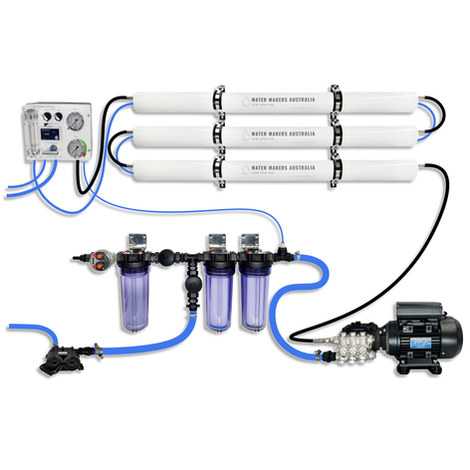
A three-membrane modular watermaker with 200 L/h nominal output and up to 240 L/h family-level marketing, for larger crews and heavy use.
Explore →Burke Yachtsman Gear Bag 40L - Shop Now Zip Pay | Tamar Marine Skip to content 59 – 63 Holbrook Street, Invermay Online Shop Open 24/7 Products search Contact us 1300 MARINE $ 0.00 0 Cart Burke Yachtsman Gear Bag 40L $ 79.90 Colour Choose an option Black Blue Black Blue Clear - Burke Yachtsman Gear Bag 40L quantity + Add to cart Enquire about this product SKU BAGB-Y24/BLACK* Category Bags - Sail & Gear A Burke classic and customer favourite, the Yachtsman’s Gear Bag is built tough to handle wet, salty conditions while keeping your gear dry and protected. Made from double coated waterproof…
Explore →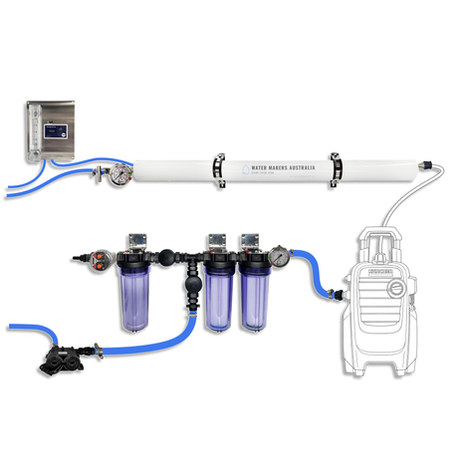
A one-membrane modular marine watermaker with 80 L/h nominal output, remote stainless control panel, standard consumables and direct Australian support.
Explore →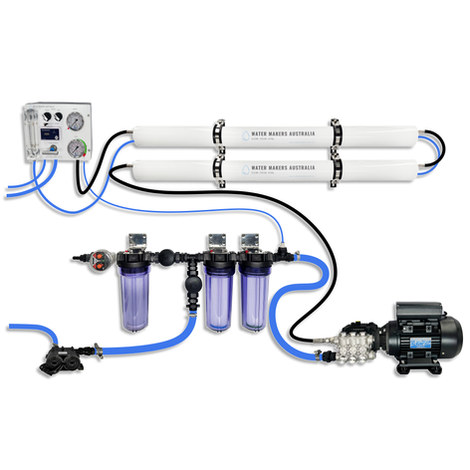
A two-membrane modular watermaker with 140 L/h nominal output, aimed at families and liveaboards that want more water per run.
Explore →