Loading this page…

Loading this page…
Sailing club
Royal Motor Yacht Club Woollahra is a Rose Bay / Point Piper club marina with 256 fixed berths, 38 swing moorings, 19 club moorings and 11 casual visitor berths on a 300 m floating breakwater.
About
Royal Motor Yacht Club Woollahra is a Rose Bay / Point Piper club marina with 256 fixed berths, 38 swing moorings, 19 club moorings and 11 casual visitor berths on a 300 m floating breakwater.
Service area: Rose Bay, Sydney Harbour
Keep exploring
The Royal Motor Yacht Club of NSW sits at 21 Wunulla Road, Point Piper, on the western corner of Rose Bay on Sydney Harbour. Its marina has 256 fixed berths, 38 swing moorings and 19 club moorings, protected by a 300-metre floating breakwater with 11 casual visitor berths, and permanent and casual berths are available.
The clubhouse has a waterfront restaurant and bar open Wednesday to Sunday for lunch and dinner, a members-only gym with trained fitness instructors, and The Beachouse function rooms for events. The office is open weekdays from 8am to 4pm and weekends from 9am to 4pm on (02) 9327 6828. See other clubs nearby on our Rose Bay sailing clubs page.
The Royal Motor Yacht Club is focused on boating and marina life rather than a sailing school, and it does not publish a learn-to-sail program. If you want to learn to sail nearby, Woollahra Sailing Club runs dinghy sailing on Rose Bay itself, and the Cruising Yacht Club of Australia and Royal Prince Edward Yacht Club are close by for keelboat sailing. Our guide to sailing Sydney Harbour is a great introduction to the local waters.
Wunulla Road runs along the shore at the south-western corner of Rose Bay, and the club sits at the point where the residential streetscape of Point Piper meets the public foreshore of Rose Bay Park. Navigation into the bay is simple: deep water right up to the mooring field, no bar, no bridge, with the only cautions being the density of moored and berthed boats and the seaplane operations at Lyne Park to the east. The club's berths lie in the lee of the peninsula, well protected from the north-easter that roughens the outer bay on summer afternoons.
Small-craft traffic is constant: rowing shells use the shoreline 'runway' in all weather, dragon boats train midweek, and kayaks launch from the beach and storage pavilion in Rose Bay Park. Rose Bay ferry wharf and the Lyne Park playground are a ten-minute walk east, and Double Bay's village shops lie just beyond. The club's own history threads through Sydney's motor boating story: from the Rose Bay parent club grew the Pittwater branch that became the Royal Motor Yacht Club Broken Bay, and the royal warrant granted in the late 1920s still anchors the club's identity.
Membership draws heavily from the surrounding peninsula suburbs, where waterfront houses with private jetties line Wunulla Road, and the bar on a summer Friday is as much neighbourhood institution as yacht club. Visiting skippers should remember the 4-knot zone around the marinas and the give-way etiquette around seaplanes and rowers. Cranbrook School sits directly opposite on New South Head Road, and its rowing sheds feed the morning traffic of eights along the seawall.
On Wunulla Road at the western corner of Rose Bay, the Royal Motor Yacht Club occupies one of the most envied waterfront positions in the eastern suburbs, its floating marina spread across the bay in front of a clubhouse that looks north over the water to the harbour heads. The club is the original seat of royal motor yachting in New South Wales: the Motor Yacht Club of NSW was established at Rose Bay in the 1920s, received royal patronage under King George V, and seeded the famous Broken Bay branch at Newport in 1927.
Now trading as the Royal Motor Yacht Club NSW at Point Piper, it remains first and foremost a members' powerboat club, with around 90 floating berths accommodating vessels to roughly 20 metres and 18 swing moorings beyond. The scale of the marina relative to the clubhouse is striking; from the promenade the rows of cruisers dominate this end of the bay. Inside, the club runs the familiar licensed-club formula: restaurant and bar trading Wednesday to Sunday, a gym, function spaces hired out through Zest Waterfront Venues for weddings and corporate events, and parking alongside Wunulla Road.
Its neighbours define the precinct: Point Piper Marina 150 metres to the south, Rose Bay Marina beyond it, and Woollahra Sailing Club across the bay. For motor boat owners who want a social club attached to their berth rather than a purely commercial marina, this is one of Sydney's longest-established options. The royal warrant, granted when the club was barely a few seasons old, still anchors its identity.
Batemans Bay and the Clyde River form a classic NSW South Coast cruising region where a sheltered, tidal estuary meets a short, island‑dotted entrance to the Tasman Sea. It’s distinctive for easy access from Canberra, a mix of river and bay sailing, a compact marina and mooring network, and a river entrance (the Clyde River bar) that can change rapidly. The area suits day sails, weekend cruising, trailer‑boat exploration and sheltered coastal passages; offshore or long‑passage plans require careful timing and local knowledge. Preparation for tidal flow, variable southerly swells and shallow, s

Write a one‑page plan with the who/what/when/where/how of your trip, keep a copy on board and leave the main copy with a responsible person ashore (and optionally with your club, marina office or local volunteer rescue service).
Explore →
Pick a protected bay, estuary or river reach where you can rig, launch and arrive on calm water within a short, sheltered transit; choose a site with a good ramp or jetty, clear recovery options and a nearby sailing club, marina or commercial operator for local knowledge and help.
Explore →
Look for a friendly club with beginner-focused training, accessible facilities and boats, a supportive community, clear safety practices, and opportunities to progress at your own pace.
Explore →
Do a seasonal inspection and servicing routine that focuses on hull and antifouling, through-hulls and seacocks, rigging and sails, engine and fuel systems, electricals and batteries, safety gear and bilge systems. Tailor exact tasks to your boat type, age and where you sail in South Australia, and follow manufacturer and marine service advice for anything technical.
Explore →A practical guide for recreational sailors planning visits to Albany and King George Sound. Covers the main anchorage areas, typical local weather patterns, tidal and current considerations, navigational hazards, on-the-water etiquette and a pre-departure checklist to help you plan a safe passage and enjoyable stopover
Explore →
A practical, Australia-focused guide for planning and sailing around the Whitsunday Islands: weather and seasons, navigation and anchoring, moorings and parks, provisioning and charters, safety and common mistakes, plus checklists and next steps.
Explore →A practical guide for recreational sailors planning day sails or short cruises around Batemans Bay, Broulee and the Clyde River. Covers local conditions, safe approaches, anchorages, launching, tides, common hazards, and checklists for trip planning and on-water decisions.
Explore →
A practical guide for new sailors on picking the right Australian sailing club: training, boat access, racing, social fit, costs and the key questions to ask before joining.
Explore →Burke Yachtsman Gear Bag 40L - Shop Now Zip Pay | Tamar Marine Skip to content 59 – 63 Holbrook Street, Invermay Online Shop Open 24/7 Products search Contact us 1300 MARINE $ 0.00 0 Cart Burke Yachtsman Gear Bag 40L $ 79.90 Colour Choose an option Black Blue Black Blue Clear - Burke Yachtsman Gear Bag 40L quantity + Add to cart Enquire about this product SKU BAGB-Y24/BLACK* Category Bags - Sail & Gear A Burke classic and customer favourite, the Yachtsman’s Gear Bag is built tough to handle wet, salty conditions while keeping your gear dry and protected. Made from double coated waterproof…
Explore →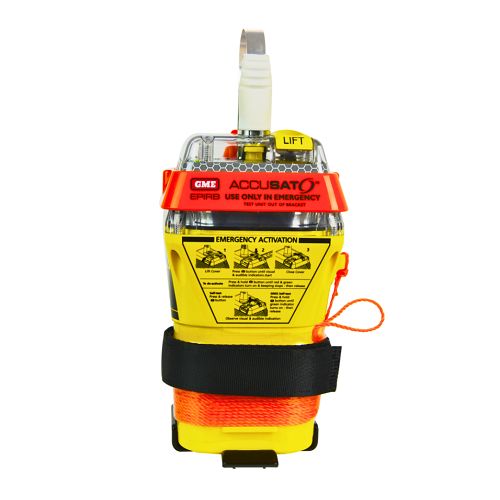
A 10‑year battery EPIRB with integrated GNSS (supports GPS and Galileo), infrared strobe and 121.5 MHz homing signal. Approved for worldwide COSPAS‑SARSAT operation.
Explore →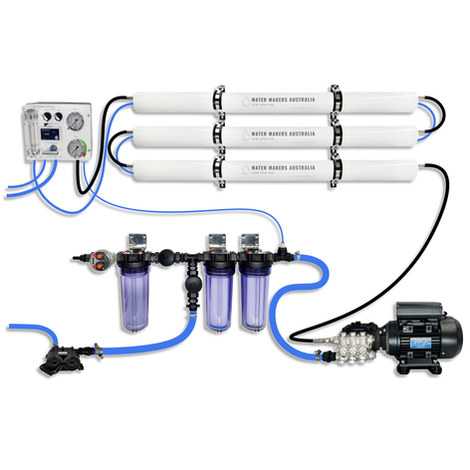
A three-membrane modular watermaker with 200 L/h nominal output and up to 240 L/h family-level marketing, for larger crews and heavy use.
Explore →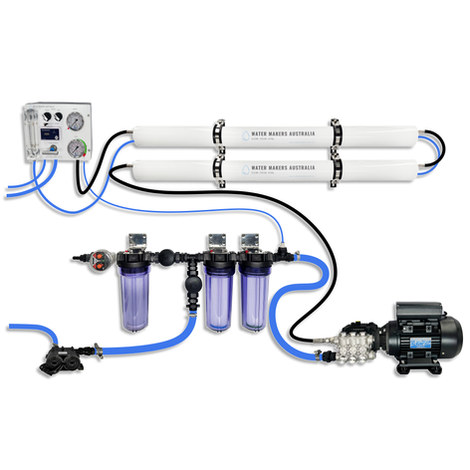
A two-membrane modular watermaker with 140 L/h nominal output, aimed at families and liveaboards that want more water per run.
Explore →