Loading this page…

Loading this page…
Sailing club
Royal Sydney Yacht Squadron (RSYS) is a private members’ yacht club based at 33 Peel Street, Kirribilli on Sydney Harbour. Established in 1862, the Squadron runs an extensive year‑round sailing programme for keelboats and dinghies, hosts national and international regattas, operates a Sailing Academy with youth and adult learn‑to‑sail pathways, and maintains waterfront maintenance, hauling and fuelling facilities for members.
About
Royal Sydney Yacht Squadron (RSYS) is a private members’ yacht club based at 33 Peel Street, Kirribilli on Sydney Harbour. Established in 1862, the Squadron runs an extensive year‑round sailing programme for keelboats and dinghies, hosts national and international regattas, operates a Sailing Academy with youth and adult learn‑to‑sail pathways, and maintains waterfront maintenance, hauling and fuelling facilities for members.
Service area: Sydney Harbour
Keep exploring
Founded in 1862, the Royal Sydney Yacht Squadron is one of Australia's oldest and most storied yacht clubs. It sits at Wudyong Point in Kirribilli, with Sydney Harbour on its doorstep and the Opera House and Harbour Bridge practically next door.
Private members yacht club on Sydney Harbour (Kirribilli) offering an extensive club program and waterfront facilities. The Squadron runs a year-round sailing program and Academy with learn-to-sail and performance pathways, organises regattas and events, and provides dining, accommodation and function spaces. Waterfront services include an 18-tonne travel lift, jib and mast cranes, fuel (diesel and premium unleaded), pump-out, storage for one-design vessels, a members' workshop and access to a range of onsite marine contractors. The club also provides yacht repair services including haul-out/slip work, antifouling application, topsides polishing, prop maintenance and through-hull checks.
As a private members' club, access is generally through membership or an invitation, so contact the Squadron before visiting. Nearby, our Kirribilli marinas and Sydney Harbour pages cover berths and services around the harbour.
The RSYS Sailing Academy delivers Discover Sailing and youth pathways (including Tackers and junior development programs), keelboat courses and ancillary courses that support members and non-members to learn sailing skills and progress to performance squads and competitive racing.
Junior sailing isn't new here: the Squadron's youth program dates back to 1960, and dinghy classes like the Optimist and the Laser (now ILCA) have long been its backbone. The idea is a clear pathway. Young sailors start in small boats, progress into squads and racing, and many move on to keelboats and offshore crews. Adults get a similar ladder, from introductory keelboat courses through to crewing in the club's harbour racing.
Looking at other options around Sydney? Browse sailing courses on YouSail.
The Squadron fronts Sydney Harbour (Port Jackson) at Kirribilli, with immediate access to busy harbour waters used for club racing, twilight series and major regattas. Its Kirribilli waterfront includes pontoons, slipways, a travel lift and hardstand.
Wudyong Point sits on the harbour's north shore, beside Kirribilli House. That puts it right on the main harbour, a short sail from the Bridge and from racecourses running east toward the Heads. The harbour is a demanding place to race: the breeze bends around headlands and high-rises, tides run through the narrows, and ferries and commercial shipping have right of way. Local knowledge counts for a lot.
New to the harbour? Our Sydney Harbour sailing guide covers the rules, hazards and best anchorages.
Nineteen yachtsmen met in the office of William Walker MLC on 8 July 1862 to found "the Australian Yacht Club". A royal warrant followed on 27 June 1863, and the club became the Royal Sydney Yacht Squadron. The Prince of Wales, later King Edward VII, was its first patron; Prince Philip, Duke of Edinburgh, later held the role. William Walker served as the first Commodore, and James Reading Fairfax held the post across several terms between 1881 and 1913.
In January 1903 the Squadron moved to its current grounds at Wudyong Point, Kirribilli. A few quirky relics tell the story of those years, including an archway of whale jawbones from the Twofold Bay whaling station. In 1904 the Squadron and Royal Prince Alfred Yacht Club donated what became the Sayonara Cup, after Alfred Gollin's Sayonara from Victoria beat the Sydney representative Bona off the Heads. It became a perpetual challenge trophy between royal yacht clubs in Australia and New Zealand.
The Squadron's best-known chapter is the America's Cup. In 1962 a syndicate led by Sir Frank Packer challenged under the RSYS burgee with Gretel. She won the second race, the first time the Americans had been beaten in a Cup race since the 1930s, and lost the fourth by just 26 seconds before going down 4–1. Gretel II challenged again in 1970 at Newport, Rhode Island, also losing 4–1. The club's centenary history, Sydney Sails, appeared in 1962, and its archive today holds more than 2,500 artefacts, artworks and trophies.

Plan to transit Sydney Heads and northern NSW estuary entrances to take advantage of favourable tidal streams or slack water; account for local acceleration over shoals, eddies, wind-on-current effects and river discharge, and always check the latest local observations and tide/stream products before departure.
Explore →
Before the season: confirm seaworthiness — hull, rig, engine, electrics, sails and safety gear — and replace or service wearable items. After the season: wash, dry and protect gear, service consumables and record what you did so the boat’s ready and reliable next season.
Explore →
Legal requirements can change — check Transport for NSW for the current rules. As a practical baseline for coastal day sailing from NSW shores: keep the right number and type of lifejackets for everyone, have a means of calling for help, show navigation lights if you’ll be out after dusk, and carry basic items to manage a man‑overboard or abandon‑ship situation. Add anchor, bilge/bailer, sun/protection and basic repair kit as recommended items.
Explore →
Plan as a chain of conservative daily legs tied to your boat’s real-world fuel and speed in the expected sea state, with confirmed primary and alternate anchorages/berths, fuel legs and back-up fuel options, and a documented emergency/diversion plan (comms, tow and med-evac). Build tidal and weather gates into each leg and carry chart and comms redundancy.
Explore →
A practical guide for new sailors on picking the right Australian sailing club: training, boat access, racing, social fit, costs and the key questions to ask before joining.
Explore →A practical, step‑by‑step guide for recreational sailors on Sydney Harbour covering navigation, local weather and tides, safe anchoring, berthing, common routes, rules of the road, and useful checklists tailored to Australian conditions.
Explore →Practical guide for recreational sailors planning a coastal cruise from Sydney north to the Queensland border. Covers route options, weather and tidal considerations, planning checklists, common hazards, anchorages and practical examples for a safe, enjoyable trip.
Explore →A concise, practical introduction to the essential parts of a recreational sailing boat for beginners in Australia. Covers hull, deck, rigging, sails, steering, below-decks spaces and safety equipment, with simple explanations, common mistakes and a pre-sail checklist to help new sailors communicate and get underway.
Explore →
The original BoatEye360 full-colour low-light camera: the same 0.0001 lux sensor as the V2 in a larger 316L stainless housing, with HDMI and analog output, at a lower price.
Explore →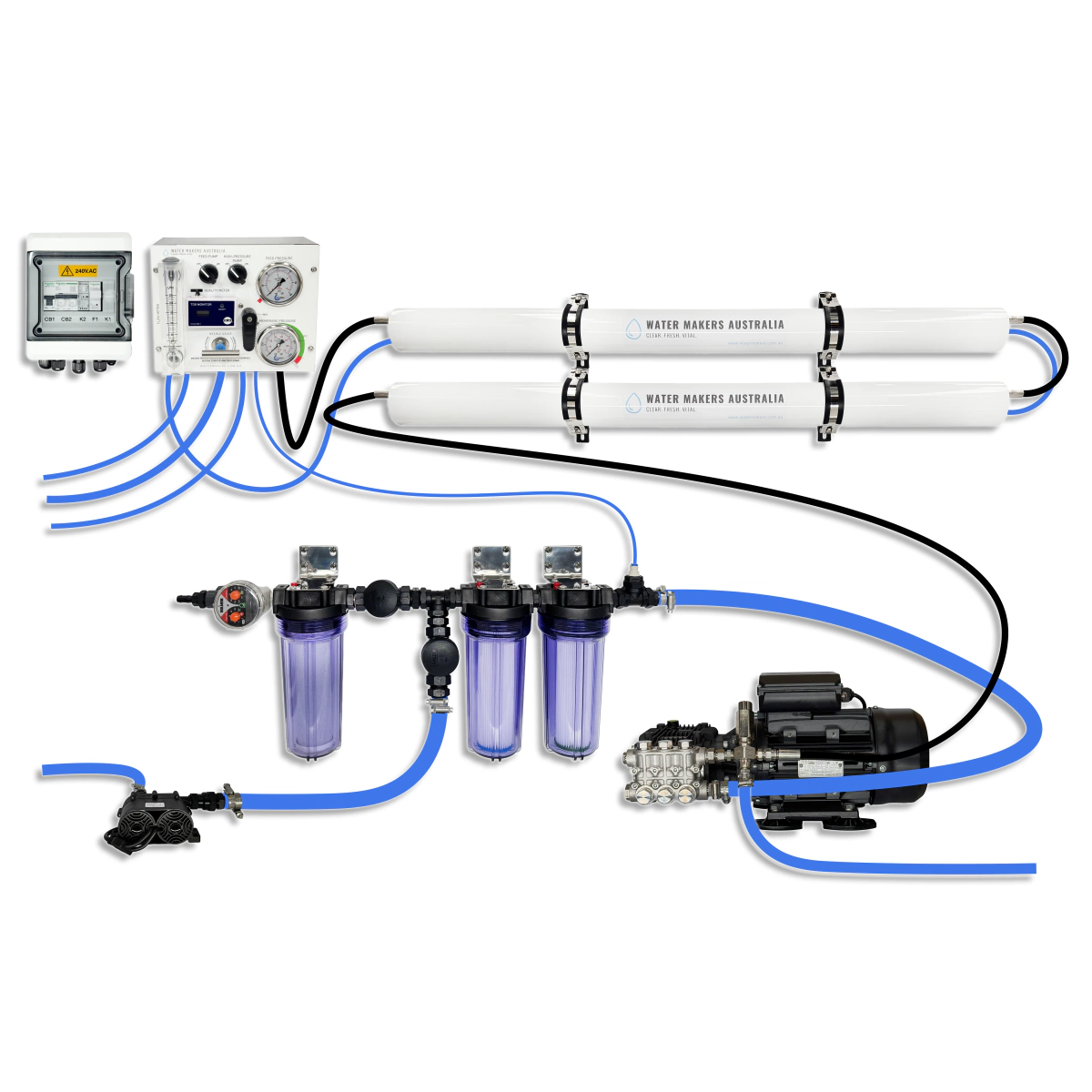
Twin-membrane 240 V reverse-osmosis watermaker producing a nominal 140 L/h, built to order in Sydney for family cruising on boats of about 11 to 18 m.
Explore →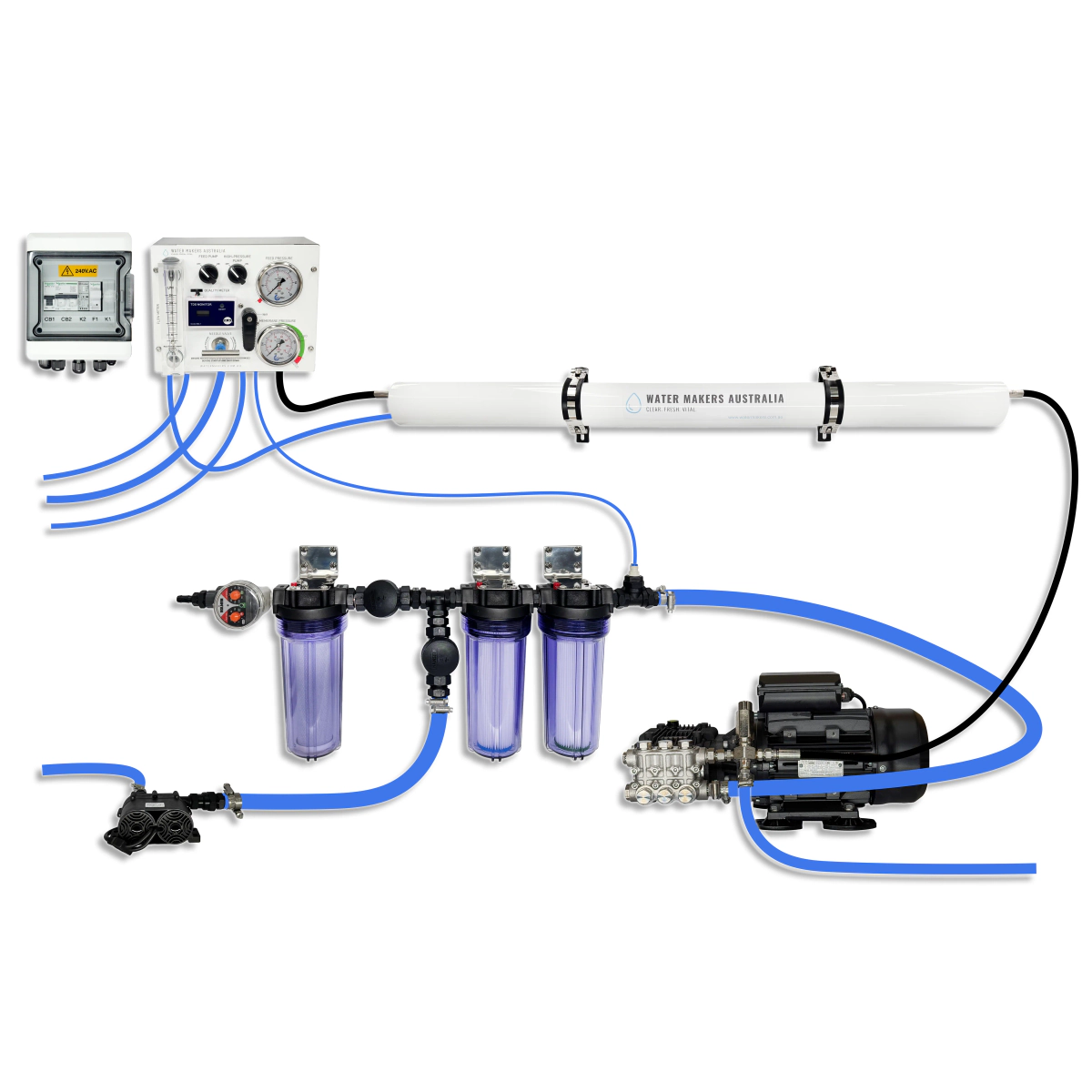
Single-membrane 240 V reverse-osmosis watermaker producing a nominal 80 L/h, built to order in Sydney for cruising boats of about 10 to 15 m with a generator or inverter.
Explore →
Push-to-talk radio that uses 4G mobile networks where there is coverage and a built-in 16-channel analog radio where there is none, with GPS and SOS. Sold as a two-pack.
Explore →