Loading this page…

Loading this page…
Sailing club
Sandgate Yacht Club is a community-focused sailing club based on Cabbage Tree Creek at 95 Allpass Parade, Shorncliffe (Bramble Bay / Moreton Bay), Queensland. Founded 14 February 1912, the club runs regular keelboat and dinghy racing across the September–April season, provides cost-free sail training and junior development, supports inclusive sailing for people with disability, and maintains a long local rescue and safety tradition. The clubhouse overlooks Moreton Bay and the club launches boats from a private ramp and pontoon onto Bramble Bay race areas.
About
Sandgate Yacht Club is a community-focused sailing club based on Cabbage Tree Creek at 95 Allpass Parade, Shorncliffe (Bramble Bay / Moreton Bay), Queensland. Founded 14 February 1912, the club runs regular keelboat and dinghy racing across the September–April season, provides cost-free sail training and junior development, supports inclusive sailing for people with disability, and maintains a long local rescue and safety tradition. The clubhouse overlooks Moreton Bay and the club launches boats from a private ramp and pontoon onto Bramble Bay race areas.
Service area: Shorncliffe / Bramble Bay (Moreton Bay), Queensland
Keep exploring
Sandgate Yacht Club is a local yacht and sailing club based in Shorncliffe, QLD. The club runs regular racing programs and event series (summer and winter series, club championships, trophy races and state-level events), coordinates race operations (start boat, course setting and race officers), offers crew/skipper matchmaking support and occasional coaching, and hosts community activities such as post-race BBQs.
Free tuition is the thread that sets Sandgate's training story apart. The club provides sail training at no cost, an arrangement that has introduced large numbers of young sailors to the sport over the decades, and it pairs that entry-level generosity with genuine competitive ambition, preparing crews to campaign at state, national and even international regattas.
No Discover Sailing Centre or Tackers accreditation is advertised, and the club makes no claim to either; what it offers instead is coaching and mentorship delivered inside a working race program, which for many sailors has proved an effective route into the sport. Members also give their time to help people with disability build sailing skills and on-water experience, an inclusive strand the club lists among its core activities. The racing structure that supports all of this is admirably simple.
Through the season, which runs from September to April, racing takes place every second Sunday, with a minimum of two races on each race day, so learners quickly accumulate starts and finishes. Flying Fifteens and 505s form the core fleets, but every class is made welcome, which keeps the door open to sailors arriving with their own boats. Race management is handled from the MV Cape Moreton, backed by a rescue boat, and that safety cover draws on a rescue tradition at the club stretching back to 1912.
As general context, community clubs that train sailors outside the formal accredited-centre system typically rely on exactly this mix of volunteer coaches, club boats and regular low-pressure racing, and newcomers are usually advised to make contact before a race day so the club can match them with a boat, a fleet and the right level of guidance.
Everything at Sandgate begins with Bramble Bay. The clubhouse stands at 95 Allpass Parade in Shorncliffe, roughly a 15-minute drive north of Brisbane Airport, on Cabbage Tree Creek's northern bank near the creek mouth, with the bar and clubhouse rooms looking out over Moreton Bay. From the club's private launching ramp and adjoining pontoon it is a short sail to the race course, which is laid on Bramble Bay, the northern arm of Moreton Bay, usually off Nudgee Beach a little south of the creek entrance.
Regulars rate the sailing area highly for practical reasons: it is free of moored craft and heavy boat traffic, so courses can be set square in any wind direction, and when the afternoon sea breeze fills in across the shallow bay it kicks up a strong swell that makes for fast, demanding spinnaker runs. Back on shore the facilities are compact but complete: modern showers, a grassed rigging area where crews can prepare their boats in comfort, and a fenced hardstand for secure boat storage. The setting carries its history visibly.
The Allpass Parade waterfront has been a boating precinct for well over a century, and the club shares the creek with sibling organisations that grew from the same soil, including the volunteer marine rescue service that began life as the club's own rescue arm. For sailors coming from further afield, the appeal is straightforward: sheltered creek-side launching, an uncrowded race course minutes away, sea-breeze sailing through the warmer months and a clubhouse verandah positioned to watch the afternoon breeze march across the bay.
It is a practical, unpretentious base that has served the same stretch of water continuously since 1912.
Grief fixed the founding date: 14 February 1912. Three months earlier, on 11 November 1911, two sailors drowned when their boat capsized during an ad hoc event near the mouth of the Brisbane River, and the shock pushed the bayside community into action. A public meeting followed, and the new club was established to bring order and safety to sailing on Bramble Bay. The decades that followed brought repeated reinvention.
A 1965 merger joined the club with the Sandgate 16 Foot Skiff Club, itself dating from 1944, to create the Sandgate Sailing Club, and the same period saw land reclamation reshape the Cabbage Tree Creek waterfront where the clubhouse now stands. A further renaming in 1969 produced Sandgate Yacht Club, a body that catered for sail and power boating alike and took formal responsibility for sea rescue.
That rescue work eventually outgrew the club: on 26 February 1987 the arm became Sandgate Air Sea Rescue Inc, which later took the name Volunteer Marine Rescue Brisbane and continues today as a separate organisation sharing the creek precinct. Following the demerger of these activities, the sailing club itself was re-established and formally incorporated on 21 April 1988, the structure under which it operates now.
The full sweep of this story, reaching back to the earliest organised sailing on the bay, was captured by George Lestor in his compiled volume History of the Sandgate Sailing Clubs: 1897-1990, a title that reflects how deeply the club's roots run in the district. Through amalgamation, reclamation, rescue service and rebirth, the constant has been the water itself: Bramble Bay, only minutes under sail from the clubhouse, where the club's founders first decided that sailing should be organised, taught and watched over rather than left to chance.
Apollo Bay is a small working harbour on Victoria’s Great Ocean Road where sheltered inshore sailing meets the Southern Ocean. The character is a mix of protected harbour berths and an exposed open coast: pleasant day-sails and sheltered weekend cruising inside the bay, with demanding coastal passages immediately offshore where south‑westerly swell and strong winds from the Southern Ocean dominate. It suits coastal cruisers, trailer sailors who launch at the ramp, and experienced coastal sailors who understand bar and swell behaviour; it is not a casual open‑ocean anchorage for unprepared or

Use ramps and beaches with respect for local conditions: check ramp layout, tide and swell, wind direction, vehicle access and crowding; prepare boat and crew before you launch or retrieve; and follow local signage, courtesy and safety practices. Specifics vary by ramp and beach, so confirm details for the exact site before you go.
Explore →
Expect very different seasonal systems across Western Australia: the south‑west (Perth to Albany) has a strong summer afternoon sea breeze (the “Fremantle Doctor”) and winter westerly fronts, while northern WA follows a wet/dry monsoonal cycle with strong seasonal onshore winds, thunderstorms and cyclone risk in the wet season. Local headlands, estuaries and tidal flows often change what you actually feel on the water, so learn the local timing and sheltered venues first.
Explore →
Write a one‑page plan with the who/what/when/where/how of your trip, keep a copy on board and leave the main copy with a responsible person ashore (and optionally with your club, marina office or local volunteer rescue service).
Explore →
Before your first sail in South Australian waters check the weather and tide, make sure the boat and safety equipment are fit for the trip, confirm local rules and any area-specific hazards, and tell someone your plan.
Explore →
A practical, Australia-focused guide for planning and sailing around the Whitsunday Islands: weather and seasons, navigation and anchoring, moorings and parks, provisioning and charters, safety and common mistakes, plus checklists and next steps.
Explore →A practical guide for recreational sailors planning passages to, from or around Eden and Twofold Bay. Covers sheltered anchorages, shore facilities, local weather and tidal considerations, preparing for Bass Strait conditions and a focused equipment and safety checklist.
Explore →
A practical guide for new sailors on picking the right Australian sailing club: training, boat access, racing, social fit, costs and the key questions to ask before joining.
Explore →
Practical guidance for recreational sailors planning day trips or short cruises in Moreton Bay — local weather patterns, tides, safe anchorages, common hazards, equipment checklists and sensible trip planning for islands such as Moreton, North Stradbroke and the smaller bayside islands.
Explore →Burke Yachtsman Gear Bag 40L - Shop Now Zip Pay | Tamar Marine Skip to content 59 – 63 Holbrook Street, Invermay Online Shop Open 24/7 Products search Contact us 1300 MARINE $ 0.00 0 Cart Burke Yachtsman Gear Bag 40L $ 79.90 Colour Choose an option Black Blue Black Blue Clear - Burke Yachtsman Gear Bag 40L quantity + Add to cart Enquire about this product SKU BAGB-Y24/BLACK* Category Bags - Sail & Gear A Burke classic and customer favourite, the Yachtsman’s Gear Bag is built tough to handle wet, salty conditions while keeping your gear dry and protected. Made from double coated waterproof…
Explore →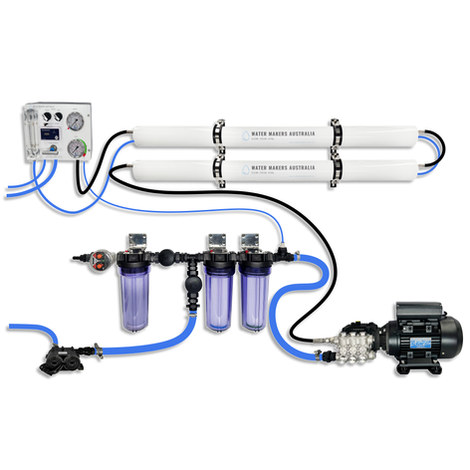
A two-membrane modular watermaker with 140 L/h nominal output, aimed at families and liveaboards that want more water per run.
Explore →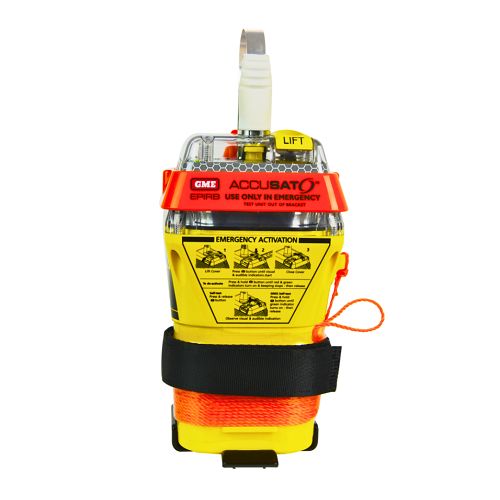
A 10‑year battery EPIRB with integrated GNSS (supports GPS and Galileo), infrared strobe and 121.5 MHz homing signal. Approved for worldwide COSPAS‑SARSAT operation.
Explore →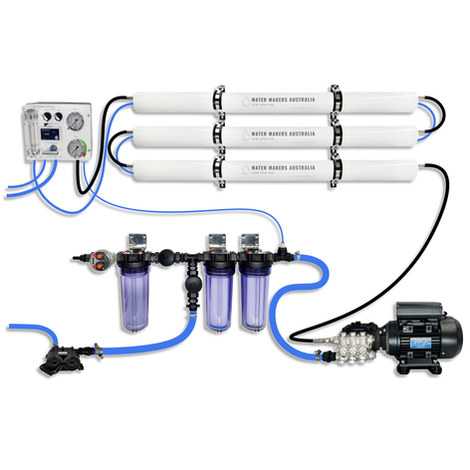
A three-membrane modular watermaker with 200 L/h nominal output and up to 240 L/h family-level marketing, for larger crews and heavy use.
Explore →