Loading this page…

Loading this page…
Sailing club
Sorrento Sailing Couta Boat Club (SSCBC) is a waterfront sailing club at the southern end of the Mornington Peninsula in Sorrento, Victoria. The club hosts Australia’s largest Couta Boat fleet with regular weekend racing (November to June), runs a Sailing Academy and Learn to Sail programs for children and adults (including youth and coaching programs), and operates a waterfront clubhouse used for dining, members’ events and private functions.
About
Sorrento Sailing Couta Boat Club (SSCBC) is a waterfront sailing club at the southern end of the Mornington Peninsula in Sorrento, Victoria. The club hosts Australia’s largest Couta Boat fleet with regular weekend racing (November to June), runs a Sailing Academy and Learn to Sail programs for children and adults (including youth and coaching programs), and operates a waterfront clubhouse used for dining, members’ events and private functions.
Service area: Sorrento, VIC
Keep exploring
On a peak summer weekend at Sorrento, the moorings and starting line fill with gaff-rigged wooden boats whose working lives began chasing barracouta along the Bass Strait coast more than a century ago. The Sorrento Sailing Couta Boat Club is the custodian of that fleet — Australia's biggest Couta Boat fleet, by the club's own account — and the centre of what The Wooden Boatshop ranks among the most significant maritime heritage revivals in the country. The club sits in Australian Sailing's top affiliation tier, Category A, and its honours shelf carries Yachting Victoria's Club of the Year award from 2005 plus both the Victorian and Australian Yacht Club of the Year titles for 2015–16.
The club occupies a panoramic site on the Sorrento foreshore at the southern end of the Mornington Peninsula, where calm bay water and offshore summer breezes have attracted championship regattas in numbers few Australian clubs can match — world titles in the 49er and 29er, the foiling Moth, the RS:X windsurfer and the WASZP among them. A large membership supplies the skilled volunteer workforce those events demand, while the founding emphasis on a friendly family environment and opportunities for juniors and youth still shapes the program.
The modern club is a union of two traditions: a dinghy sailing club formed from a seven-boat race in 1948, and a Couta Boat revival movement that began in the early 1980s and needed a home. Their marriage in 2001 created something genuinely singular — a club where a five-year-old can start sailing in the morning and a restored 1900s fishing boat races for the Sorrento Cup in the afternoon.
The most distinctive doorway into this club is Cara na Mara — Irish for friends of the sea — a program that introduces children from the age of five to sailing and boating, earlier than almost any club syllabus in the state. From there the pathway climbs through junior programs for five-to-seven and seven-to-eleven age groups, then into OutThere Sailing for teenagers, following the national junior framework without fuss. The accredited Sailing Academy, under Academy Manager David White, runs the operation as an Australian Sailing Discover Sailing Centre.
The adult on-ramp is equally unusual: the Couta Crew Course offers grown beginners a structured route into crewing the club's signature classic keelboats, and the club even keeps its own Couta Boat, Ripple, specifically so that members and visitors can sample the fleet before committing to one. Specialty offerings include the Foil Lab for the new foiling disciplines, powerboat courses and structured coaching programs, while the youth performance pathway steps through Green Fleet, Open Fleet and Youth Fleet into the ILCA, 29er and Waszp classes, supported by formal partnerships with VIODA and the Victorian ILCA, 29er and Waszp associations.
A 2024 after-school program run with TLC Healthcare showed what that pipeline can do: fifty-seven young sailors entered the sport in its first intake, thirteen of them on scholarships carrying nine months of free membership and training. Couta Boat racing itself runs most weekends from November to June, with the Portsea Cup off Portsea Pier the pinnacle event alongside the Sorrento Cup, and Couta Boat national championships have been hosted here.
It is a program list with two souls — cutting-edge foiling and heritage gaff-riggers — and Sorrento runs both without apparent strain.
The clubhouse address is 3154 Point Nepean Road, Sorrento, postcode 3943, at the toe of the Mornington Peninsula where Port Phillip narrows toward the Heads. Expansive decks and lawn areas wrap the clubhouse, which commands panoramic views across the bay — the same views that greeted competitors at the long list of world and national championships the club has hosted. The sailing water is the club's great recruitment asset.
By its own description, Sorrento offers calm summer waters and gentle offshore breezes, and the prevailing offshore sea breeze over flat water creates near-ideal conditions for off-the-beach boats, dinghies and sailboards. It is easy to see why event organisers keep coming back: flat water for speed, reliable breeze for fair racing, and a shore setup built for big fleets.
The second sailing ground is cultural rather than geographic. The Couta Boat fleet that races here descends from the working fishing boats that, from as early as 1885, worked the barracouta grounds off the Bass Strait coast and then raced their catch back to market — speed was profit, and the boats evolved accordingly. Many boats in today's fleet are restored originals, the oldest built in the early 1900s, and in peak summer hundreds of Couta Boats sail out of Sorrento.
The Portsea Cup, raced off Portsea Pier, keeps the fleet's competitive edge sharp in water just around the point from the clubhouse. Sorrento township itself — ferries to Queenscliff, a historic main street, summer crowds — gives the club a setting that feels equal parts working harbour and holiday coast, and the club acknowledges both halves of that identity in how it programs its season.
The sailing club half of the story began in November 1948 with an inaugural race for seven diverse craft, from which Sorrento Sailing Club was formed. A control box went up in 1952, and in 1959 members built a clubhouse funded in part by the proceeds of regular club dances — the Peninsula way. The club took up the Gwen 12 class in 1953 — only the second anywhere to do so — and over the decades its beach saw Sharpies, Paper Tigers, Tornadoes, Quickcats, Deltas, Northbridge Juniors, Mirrors, Moths and trailable yachts. The late David Haskins recorded the first fifty years in Briefing at the Coloured Wall, published for the fiftieth anniversary in 1998.
The Couta half began in the 1982/83 season, when a group of enthusiasts — Marcus Bourke, Will Baillieu, Peter Graham and Tim Phillips OAM, the founder of The Wooden Boatshop — formed the Couta Boat Club. It grew large but never had a permanent base. In 1997, with Sorrento Sailing Club's membership diminishing, the two clubs signed a memorandum of understanding to share facilities, and the arrangement ripened into a formal union in 2001: the Sorrento Sailing Couta Boat Club.
Recognition followed — Club of the Year from Yachting Victoria in August 2005, then Victorian and Australian Yacht Club of the Year for 2015–16 — and a professionally built new clubhouse replaced the 1952 control box and 1959 building in time for the 2006/07 season, with a further redevelopment now under way that will enlarge the members' lounge, dining room, bar, kitchen and training centre.
The events resume spans the 49er and 29er worlds of 2008, the 2015 foiling Moth worlds with eighteen countries, the 2020 RS:X windsurfing worlds, the 2023 WASZP Games and Australian Youth Championships in 2014 and 2020. Earlier eras ran Cat Weeks and a playful Little America's Cup, and the club has twice contested the New York Yacht Club's Global Team Race, finishing eleventh in 2018 and ninth in 2019.
Introductory paragraphs for a Mornington Peninsula sailing guide describing what makes the area distinctive from the water, the sailing experience, suitability for different types of sailing and connections to nearby cruising grounds.

Look for a friendly club with beginner-focused training, accessible facilities and boats, a supportive community, clear safety practices, and opportunities to progress at your own pace.
Explore →
Legal safety equipment for recreational boats in South Australia depends on the type, size and where you operate; you must check the current SA government requirements for your vessel. Independently of legal minimums, carry a sensible set of recommended items (lifejackets, means of communication, signaling, fire protection, anchor and basic tools) and make them usable and maintained.
Explore →
Do a seasonal inspection and servicing routine that focuses on hull and antifouling, through-hulls and seacocks, rigging and sails, engine and fuel systems, electricals and batteries, safety gear and bilge systems. Tailor exact tasks to your boat type, age and where you sail in South Australia, and follow manufacturer and marine service advice for anything technical.
Explore →
There are legal obligations in Western Australia for recreational boat owners and skippers covering vessel registration, carriage of safety equipment and general skipper responsibilities, but the exact requirements depend on vessel type, size, where you sail and whether the vessel is commercial or recreational. Check the Western Australian Department of Transport (DoT WA) and the national authority for the precise checklist that applies to your boat and voyage.
Explore →A concise, practical introduction to the essential parts of a recreational sailing boat for beginners in Australia. Covers hull, deck, rigging, sails, steering, below-decks spaces and safety equipment, with simple explanations, common mistakes and a pre-decast checklist to help new sailors communicate and get underway.
Explore →
A practical, Australia‑focused introduction to sailing: key terms, common boat types, basic manoeuvres, where to learn, licence and club options, and planning your first trips with safety and local conditions in mind.
Explore →
A practical guide for new sailors on picking the right Australian sailing club: training, boat access, racing, social fit, costs and the key questions to ask before joining.
Explore →
Buying a Sailing Boat
Explore →Burke Yachtsman Gear Bag 40L - Shop Now Zip Pay | Tamar Marine Skip to content 59 – 63 Holbrook Street, Invermay Online Shop Open 24/7 Products search Contact us 1300 MARINE $ 0.00 0 Cart Burke Yachtsman Gear Bag 40L $ 79.90 Colour Choose an option Black Blue Black Blue Clear - Burke Yachtsman Gear Bag 40L quantity + Add to cart Enquire about this product SKU BAGB-Y24/BLACK* Category Bags - Sail & Gear A Burke classic and customer favourite, the Yachtsman’s Gear Bag is built tough to handle wet, salty conditions while keeping your gear dry and protected. Made from double coated waterproof…
Explore →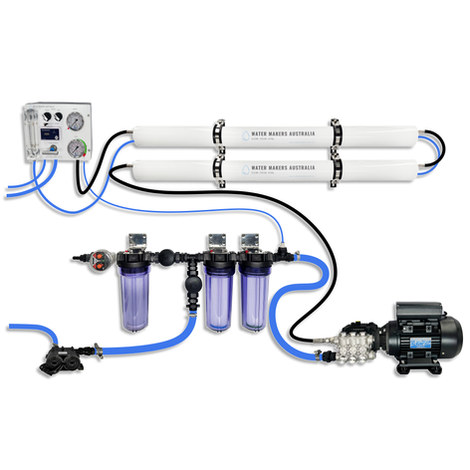
A two-membrane modular watermaker with 140 L/h nominal output, aimed at families and liveaboards that want more water per run.
Explore →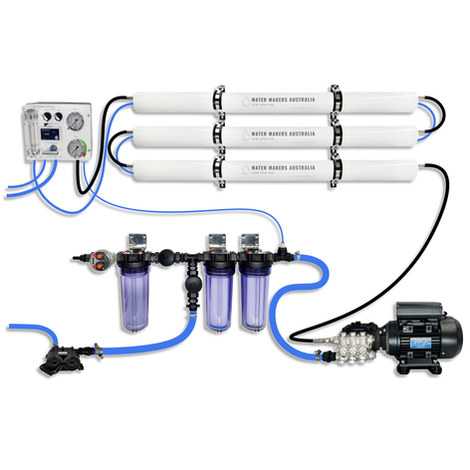
A three-membrane modular watermaker with 200 L/h nominal output and up to 240 L/h family-level marketing, for larger crews and heavy use.
Explore →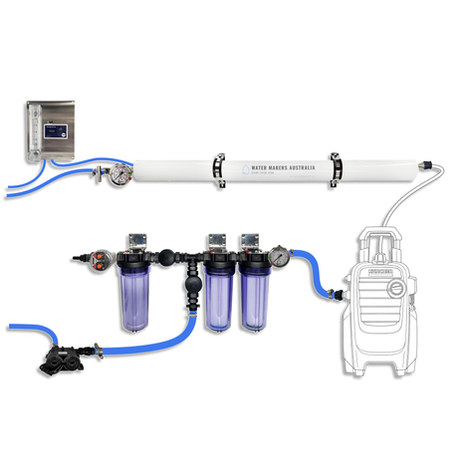
A one-membrane modular marine watermaker with 80 L/h nominal output, remote stainless control panel, standard consumables and direct Australian support.
Explore →