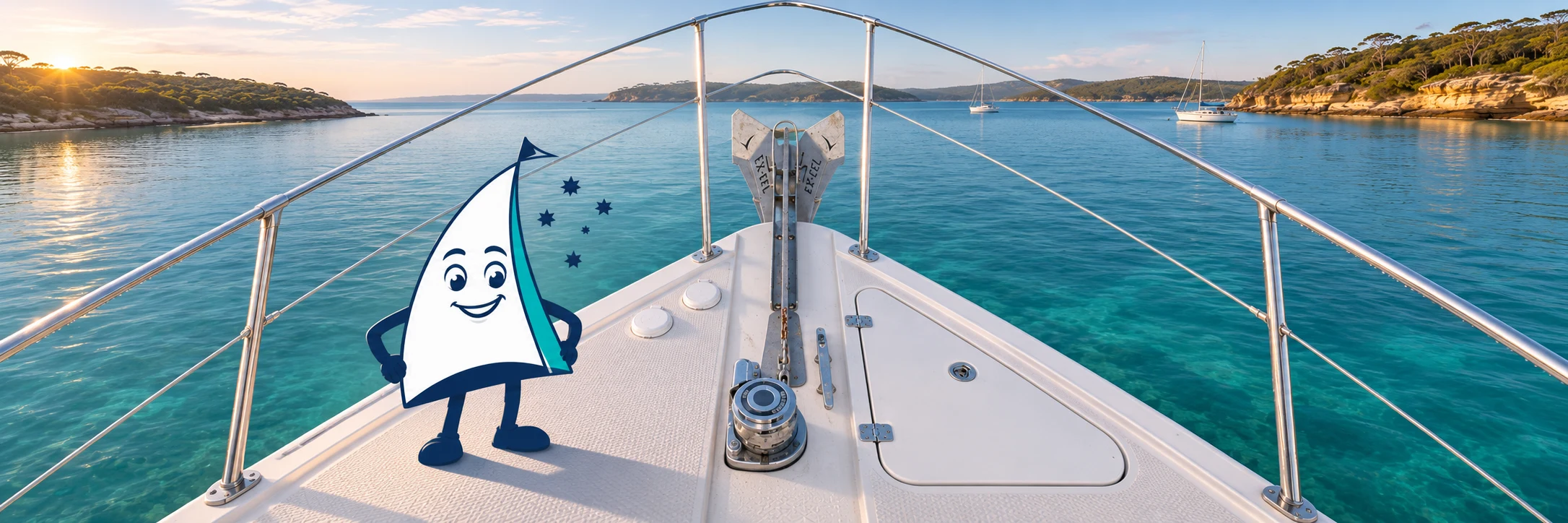
Australian-made anchors · Sponsored feature
Anchor Right: Australian thinking for your next anchorage.
Meet Anchor Right Australia, the makers of SARCA anchors. From the distinctive Super SARCA to the roll-bar-free Excel and the stowable Excel Alloy, this is Australian design with the practical details of boating in mind.
Explore the range, meet the thinking behind it, and take a closer look at what belongs on your boat.
Three designs. Different priorities.
Start with how you use your boat.
Is the priority a good fit on an existing roller, a familiar hoop design, or an anchor that packs away? These are useful starting points for a conversation with the maker.
A clear bow, a considered design
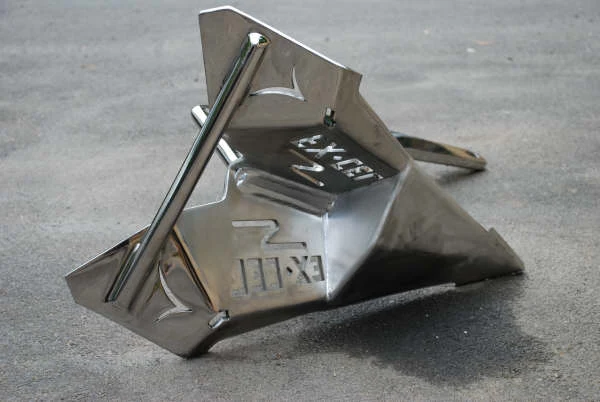
SARCA Excel
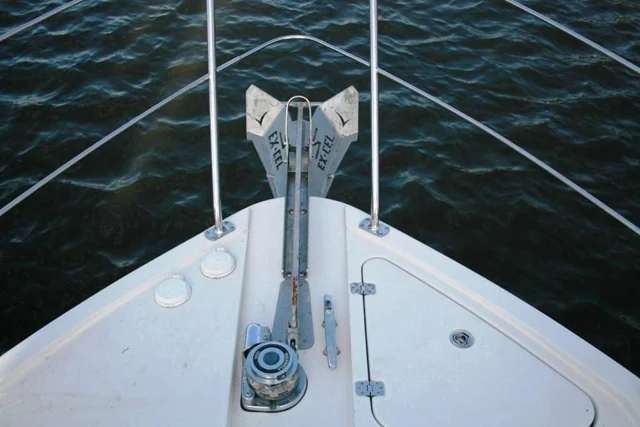
The Excel brings Anchor Right’s approach to a design without a roll bar. A weighted toe helps it right itself, while the fluke combines convex and concave surfaces. Choose from galvanised or stainless steel versions, then check the model’s dimensions against your bow roller and pulpit.
Explore it if you’re reviewing the fit of your main anchor at the bow.
Explore SARCA Excel ↗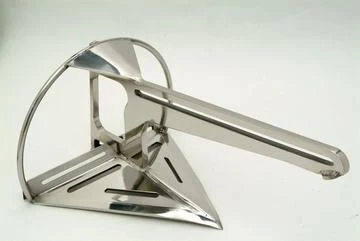
The distinctive hoop design
Super SARCA
The Super SARCA’s rear hoop helps orient its toe towards the seabed. Its slotted shank is another defining detail, with a trip-release arrangement explained in the manufacturer’s instructions. Galvanised and stainless steel versions give owners a choice of finishes.
Explore it if you want to understand the original SARCA approach and its setup.
Explore Super SARCA ↗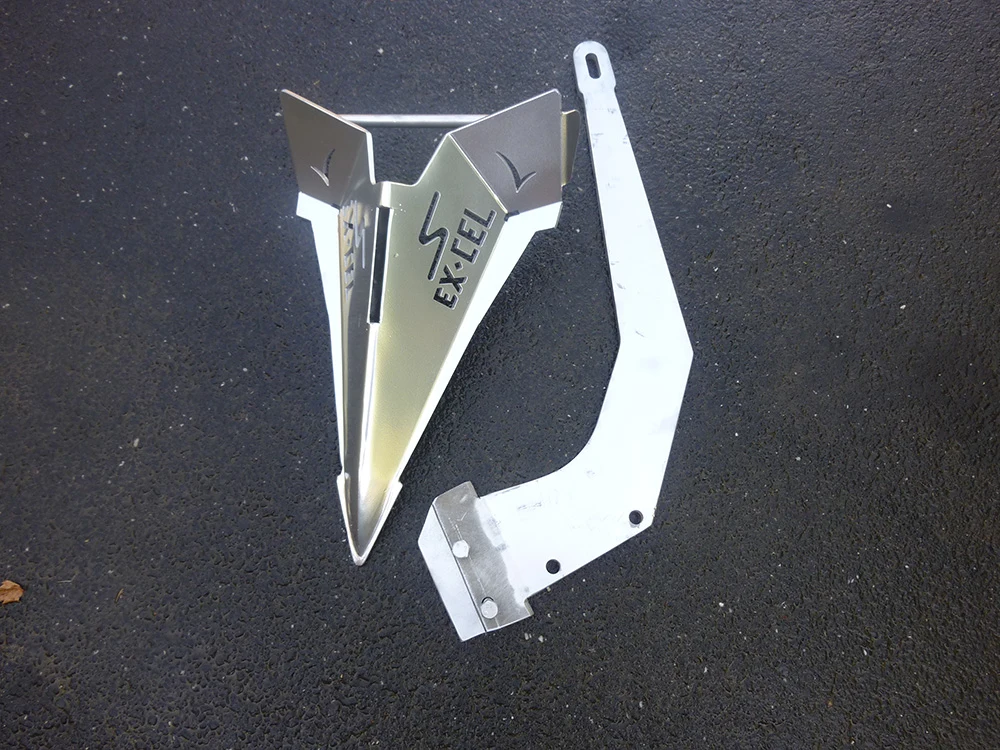
A different answer to storage
Excel Alloy
The alloy version adds a removable shank to the Excel family. That makes a bulky piece of equipment easier to find a home for aboard. Anchor Right describes it as lighter to handle than the steel versions, with a compact shape when disassembled.
Explore it when handling weight and locker space are part of your decision.
Explore Excel Alloy ↗Product photographs: Anchor Right Australia. Follow each product link for the current sizes, dimensions and setup information.
The people behind the gear
A workshop idea, shaped by time on the water.
Designer Rex Francis brought a background in mechanical work and tool design to a problem he knew as a boater. Anchor Right’s account of SARCA’s development describes years of experimentation and feedback from commercial fishermen and recreational owners.
That link between the workshop and the water continued with the Excel. The company says it developed the design in response to boat owners whose bow arrangements could not accommodate a hoop. It is a wonderfully concrete design brief: make an anchor that works with the space a boat actually has.
For YouSail, the appeal is being able to explore those design choices with the Australian company that makes the equipment. A photograph of your bow and a conversation about your cruising plans are a useful place to start.
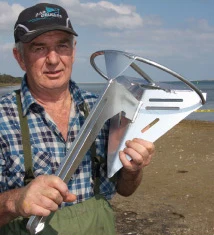
Rex Francis, the designer behind SARCA.
Photo: Anchor Right Australia.
Look beyond the outline
Understand what the testing tells you.
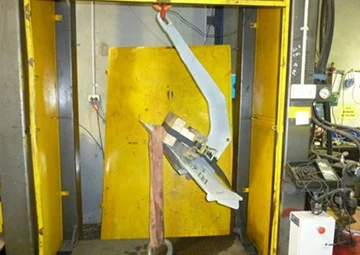
There is more to an anchor than the shape you see on the roller. Anchor Right’s testing pages distinguish between proof testing, which applies a load to the anchor’s structure, and field testing of holding performance.
The company also developed its Tidal Anchor Test Skid, or T.A.T.S., to investigate holding performance. Its published material includes test photographs, explanations and a report from Robertson’s Lifting and Rigging. Reading the method alongside the result gives a much clearer picture than a headline alone.
Bring those questions to the supplier: which model does a result cover, what was tested, and how does that relate to your boat and intended cruising grounds? The value is in understanding the equipment you choose.
Before you order
A better conversation starts with four details.
- Your boatBring its length, type and loaded displacement. Describe the cruising you plan to do.
- Your bow arrangementPhotograph the roller, pulpit and deck from above and from the side. Include the available clearance.
- Your storage spaceFor a stowed anchor, measure the locker opening as well as the space inside. Consider how you will lift it out.
- Your existing equipmentTell the supplier about the chain, connectors and windlass, so the conversation covers the complete arrangement.
A few useful answers
Before you take a closer look.
What is the difference between Excel and Super SARCA?
The Super SARCA has a rear hoop and slotted shank. The Excel has no roll bar and uses a different fluke arrangement. Compare their dimensions and discuss the installation with Anchor Right, particularly if your pulpit or roller limits the available space.
Why consider the Excel Alloy?
Its lighter construction and removable shank make handling and stowage central to the design. Ask the manufacturer which model suits your intended use and how to assemble and secure it correctly.
Can I choose an anchor from boat length alone?
Anchor Right treats its sizing tables as guidance and lists other factors including vessel displacement, windage and operating conditions. Use the published measurements to start the discussion, then confirm the choice for your particular boat.
Where can I find product advice or a retailer?
Anchor Right has an enquiry page and a retailer directory on its website. Follow the links below to speak with the manufacturer or find a stockist.
Meet our supporter
Make the next upgrade a considered one.
Explore the specifications, look at real installations and ask the people who make the gear. Anchor Right’s range gives you three distinct starting points for a setup that suits your boat.
Thank you, Anchor Right Australia, for supporting YouSail. Product information and photographs are sourced from Anchor Right; the Saily hero is a YouSail illustration.