Meet our supporters · Marine air conditioning
SeaAir cools your cabin at anchor on battery power
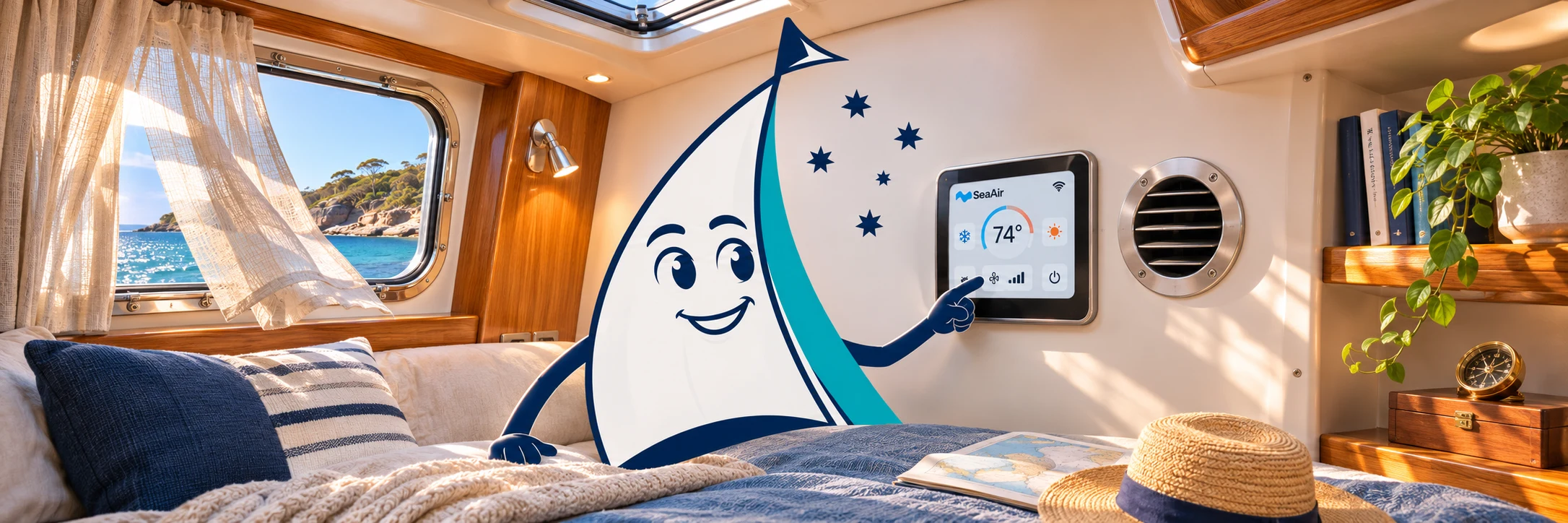
It is easy to find a breeze in the cockpit and quite another thing to find one in the berth below. SeaAir makes marine air conditioning and heating that can run directly from a suitable DC battery system. Its appeal for cruising sailors is simple. You can cool the sleeping cabin after the shore-power lead has been put away.
Choose how much battery to spend on comfort
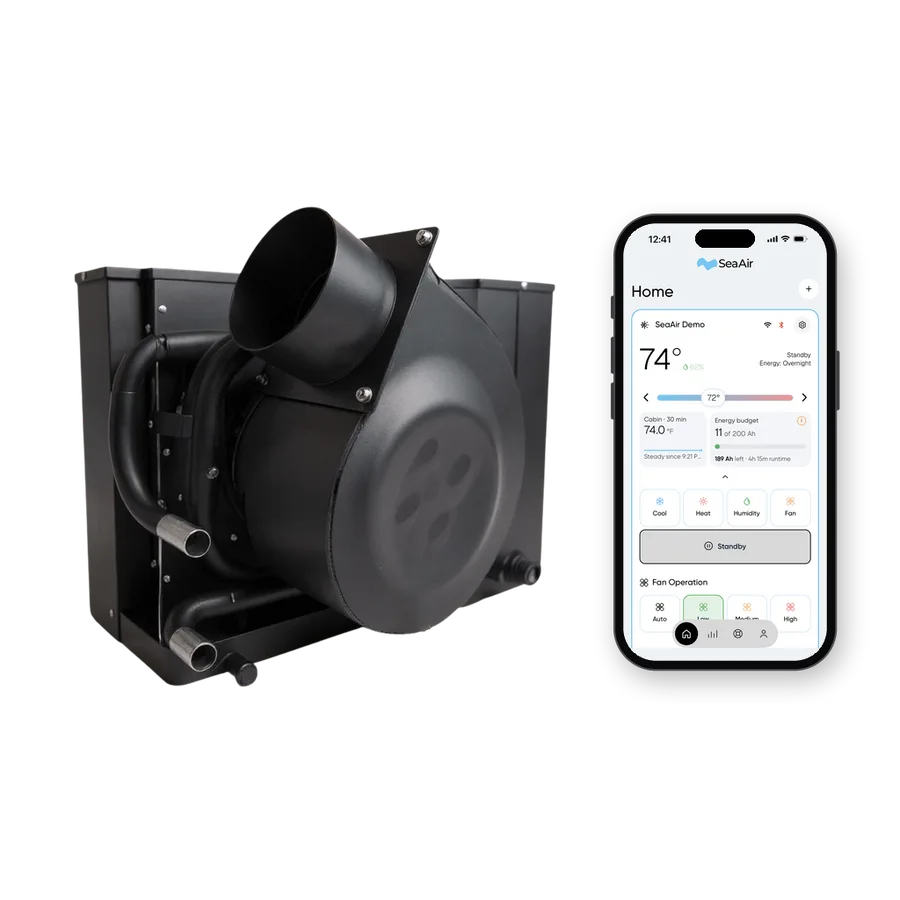
We like the amp-hour budget. Before turning in, you can give the air conditioner a power allowance. The system stops when it reaches that limit. For a skipper who also needs battery capacity for the fridge and the morning’s instruments, that is a much more useful control than a thermostat alone. It puts a number on a decision you otherwise have to make by guesswork.
A hot cabin and a sleeping cabin need different things
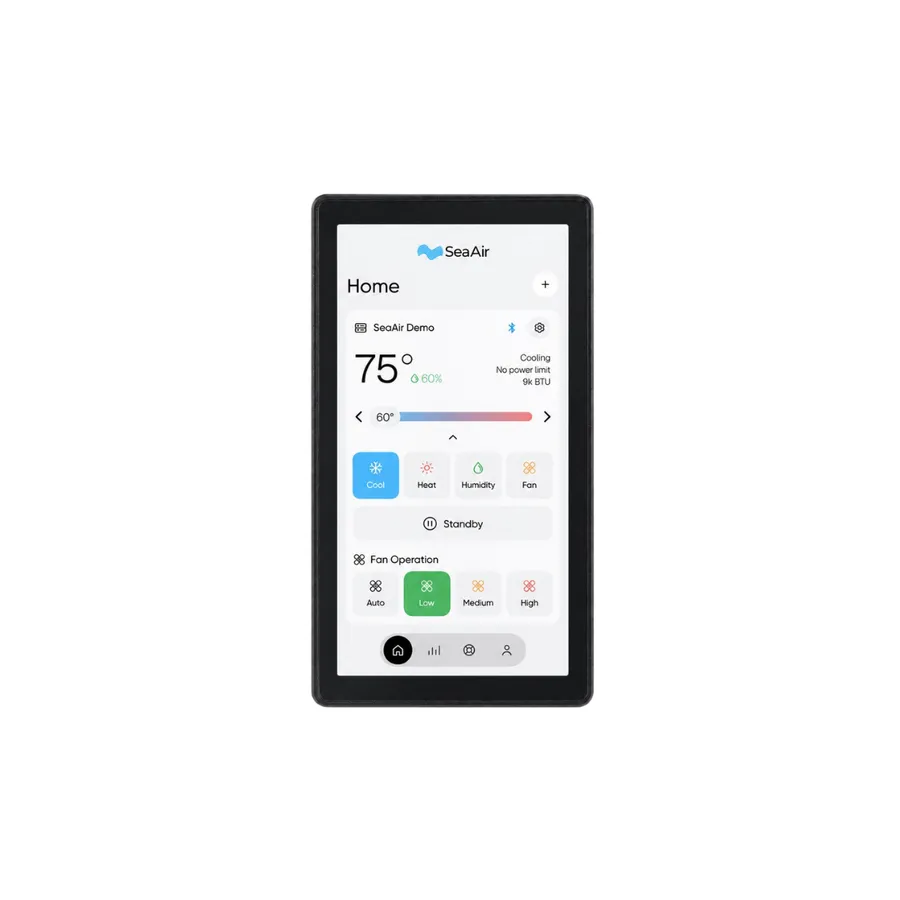
Come below after the boat has been closed up in the sun and you may want a quick burst of cooling. Later in the evening, a lower output may be enough to keep the berth comfortable. SeaAir offers Boost, Daytime and Overnight settings and varies its output. Its mobile app lets you check and adjust the system without getting out of the bunk.
Think about the installation as a whole
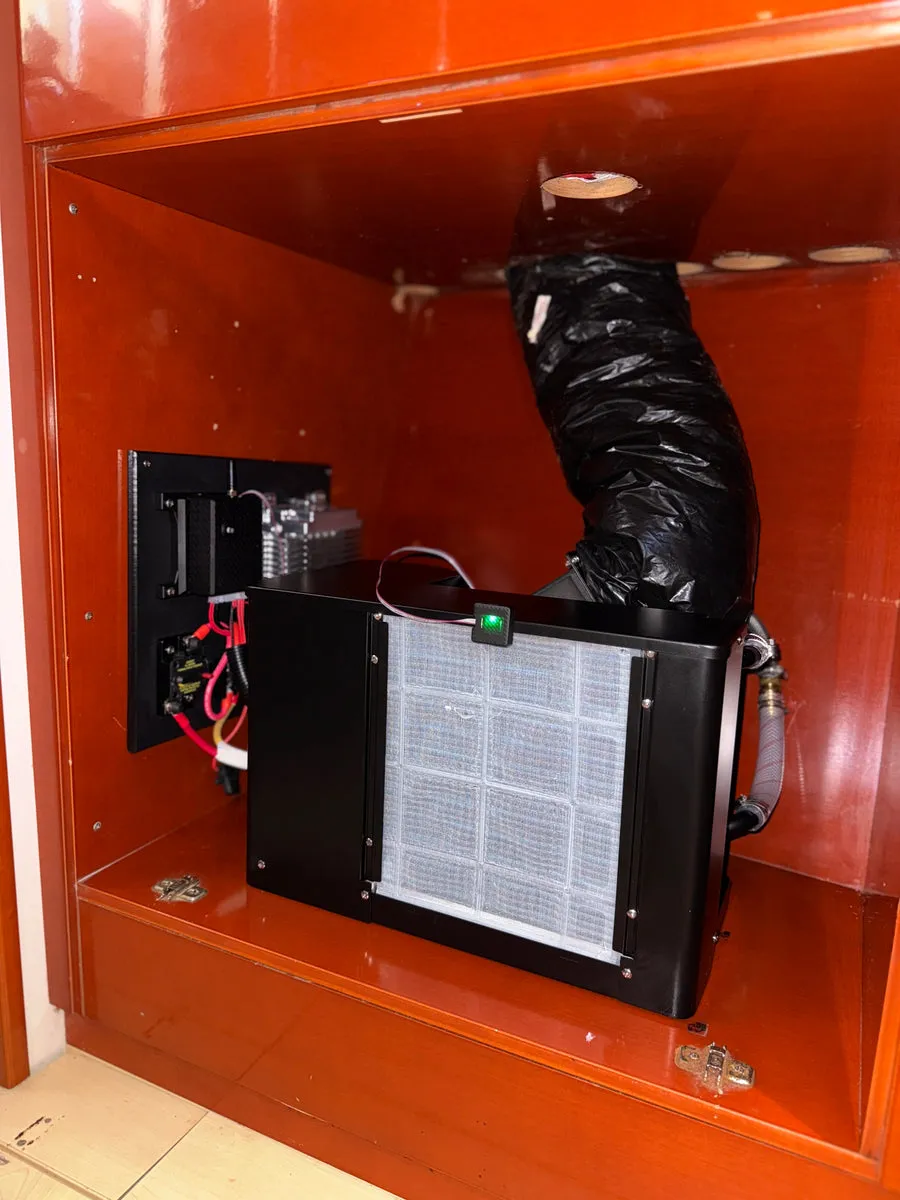
SeaAir lists DC systems for 12, 24 and 48 volt installations, and offers ducting and a separate touchscreen. When considering one for a yacht, start with the cabin you want to cool, where the air will go and the usable capacity of your house bank. Those details determine how much cooling you can enjoy between charges. What draws us to SeaAir is the combination of cabin comfort and control over the electricity it takes to get it.
How much cooling can you afford tonight?
On a humid Queensland evening there’s often a breeze in the cockpit long after the berth below has become uncomfortable. SeaAir’s Overnight mode and amp-hour limit address the decision a skipper actually has to make: how much house battery can we spare for sleep? Set a budget with tomorrow’s fridge, instruments and other loads in mind, and the system can stop when that allowance is used.
We’d sketch the cabin and duct route before comparing units. Where does the warm air collect? Where will the cool air reach the bunks? Send SeaAir those dimensions, your bank voltage and usable capacity. Ask what output and current draw to expect in that cabin. That’s how you turn a catalogue capacity into a useful conversation about your own boat.