Loading this page…

Loading this page…
Sailing club
Fremantle Cruising Yacht Club is an Australian Sailing affiliated club based in Fremantle, with a jetty leased in Challenger Harbour — the marina built for the 1987 America's Cup. It is a home for cruising sailors on the Fremantle waterfront, close to Rottnest Island and the open Indian Ocean.
About
Fremantle Cruising Yacht Club is an Australian Sailing affiliated club based in Fremantle, with a jetty leased in Challenger Harbour — the marina built for the 1987 America's Cup. It is a home for cruising sailors on the Fremantle waterfront, close to Rottnest Island and the open Indian Ocean.
Service area: Fremantle, WA
Keep exploring
Fremantle Cruising Yacht Club (FCYC) is an Australian Sailing affiliated club in Fremantle, with its office at Suite 39, 11 Cliff Street and a jetty leased in Challenger Harbour, next to Fremantle's historic Fishing Boat Harbour. It's a club for cruising sailors who want a base on the Fremantle waterfront.
The location is hard to beat. Challenger Harbour was built for the 1987 America's Cup, so FCYC members berth in a harbour that once hosted the world's most famous yacht race, a short walk from Fremantle's cafés, pubs and markets. From the harbour mouth it's a quick sail to Rottnest Island and the open Indian Ocean, which suits cruising sailors perfectly.
The club's focus is sailing in company and sharing local knowledge, from weekend trips to Rottnest to longer coastal cruises. Contact the club on (08) 9336 1122 or fcyclub@bigpond.com. See other clubs nearby on our Fremantle sailing clubs page and our Fremantle page.
FCYC is a cruising club, and much of what members learn comes from sailing in company and sharing local knowledge. For formal training, nearby Fremantle Sailing Club runs learn-to-sail and Safety and Sea Survival courses through its Sailing Academy. If you're planning a cruise, our guides to planning a coastal passage along Western Australia and sailing Rottnest Island are good starting points.
Cruising clubs are a great place to learn the practical side of sailing that courses don't always cover: anchoring in a crowded bay, planning around the sea breeze, provisioning and maintaining a boat for longer trips. Sailing in company with more experienced members is one of the best ways to build confidence before heading further afield.
The club's jetty is in Challenger Harbour in Fremantle, beside the Fishing Boat Harbour. The harbour was built for the 1987 America's Cup to berth 12-metre yachts, and after the Cup it was modified for recreational boats, with leases to FCYC and to the Royal Perth Yacht Club's annex. It has pens from 10 to 35 metres, three wharves and fuel, and it offers easy access to the Indian Ocean.
From Fremantle, Rottnest Island is a short sail offshore, and the coast north and south offers plenty of cruising. Our guide to sailing Fremantle harbour covers approaches and local conditions.
Fremantle Cruising Yacht Club's home in Challenger Harbour ties it to one of the great moments in Australian sailing. The harbour was built in 1983–84 for the 1987 America's Cup, the first defence held outside the United States after Australia II's famous win in 1983. It was designed to berth the 12-Metre yachts, with a stone breakwater to protect them from the ocean.
When the Cup left Fremantle at the end of the 1987 regatta, the harbour was converted for recreational boating. Of its seven jetties, one was leased to FCYC and four to the Royal Perth Yacht Club's annexe. That turned a purpose-built America's Cup base into a permanent home for Fremantle's cruising sailors. Today it sits beside the historic Fishing Boat Harbour, one of the busiest and most atmospheric parts of the Fremantle waterfront.

Pick a protected bay, estuary or river reach where you can rig, launch and arrive on calm water within a short, sheltered transit; choose a site with a good ramp or jetty, clear recovery options and a nearby sailing club, marina or commercial operator for local knowledge and help.
Explore →
There are legal obligations in Western Australia for recreational boat owners and skippers covering vessel registration, carriage of safety equipment and general skipper responsibilities, but the exact requirements depend on vessel type, size, where you sail and whether the vessel is commercial or recreational. Check the Western Australian Department of Transport (DoT WA) and the national authority for the precise checklist that applies to your boat and voyage.
Explore →
Expect very different seasonal systems across Western Australia: the south‑west (Perth to Albany) has a strong summer afternoon sea breeze (the “Fremantle Doctor”) and winter westerly fronts, while northern WA follows a wet/dry monsoonal cycle with strong seasonal onshore winds, thunderstorms and cyclone risk in the wet season. Local headlands, estuaries and tidal flows often change what you actually feel on the water, so learn the local timing and sheltered venues first.
Explore →
Increase inspection and cleaning frequency, use correctly sized and positioned sacrificial anodes or maintain impressed-current systems, select antifouling and application timing for local WA fouling pressure, and treat stainless and electrical connections proactively to break the corrosion chain.
Explore →
A practical guide for new sailors on picking the right Australian sailing club: training, boat access, racing, social fit, costs and the key questions to ask before joining.
Explore →A concise, practical introduction to the essential parts of a recreational sailing boat for beginners in Australia. Covers hull, deck, rigging, sails, steering, below-decks spaces and safety equipment, with simple explanations, common mistakes and a pre-sail checklist to help new sailors communicate and get underway.
Explore →A practical guide to the coastal weather systems that affect sailing along Western Australia's coast, focusing on the Fremantle Doctor, local sea breezes, and linked coastal phenomena. Explains how these systems form, when they tend to occur, how they influence boat handling and passage planning, common mistakes, and a
Explore →A practical guide for recreational sailors planning voyages to Esperance and the Recherche Archipelago: what to expect, key planning considerations, common anchorages, safety and communications, equipment recommendations and sensible steps for a successful trip in this remote southern WA cruising area.
Explore →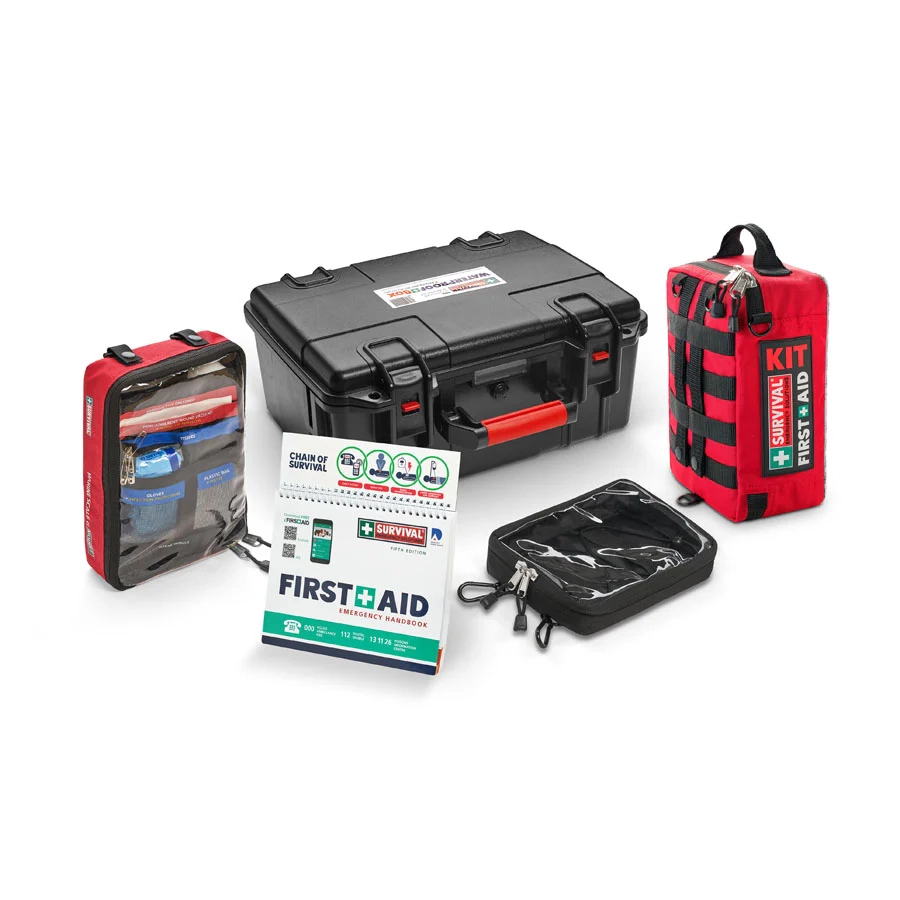
A 142-item marine first aid kit built around the Australian Scale G requirement, with a workplace kit, a Scale G module and a handbook packed in a large waterproof box.
Explore →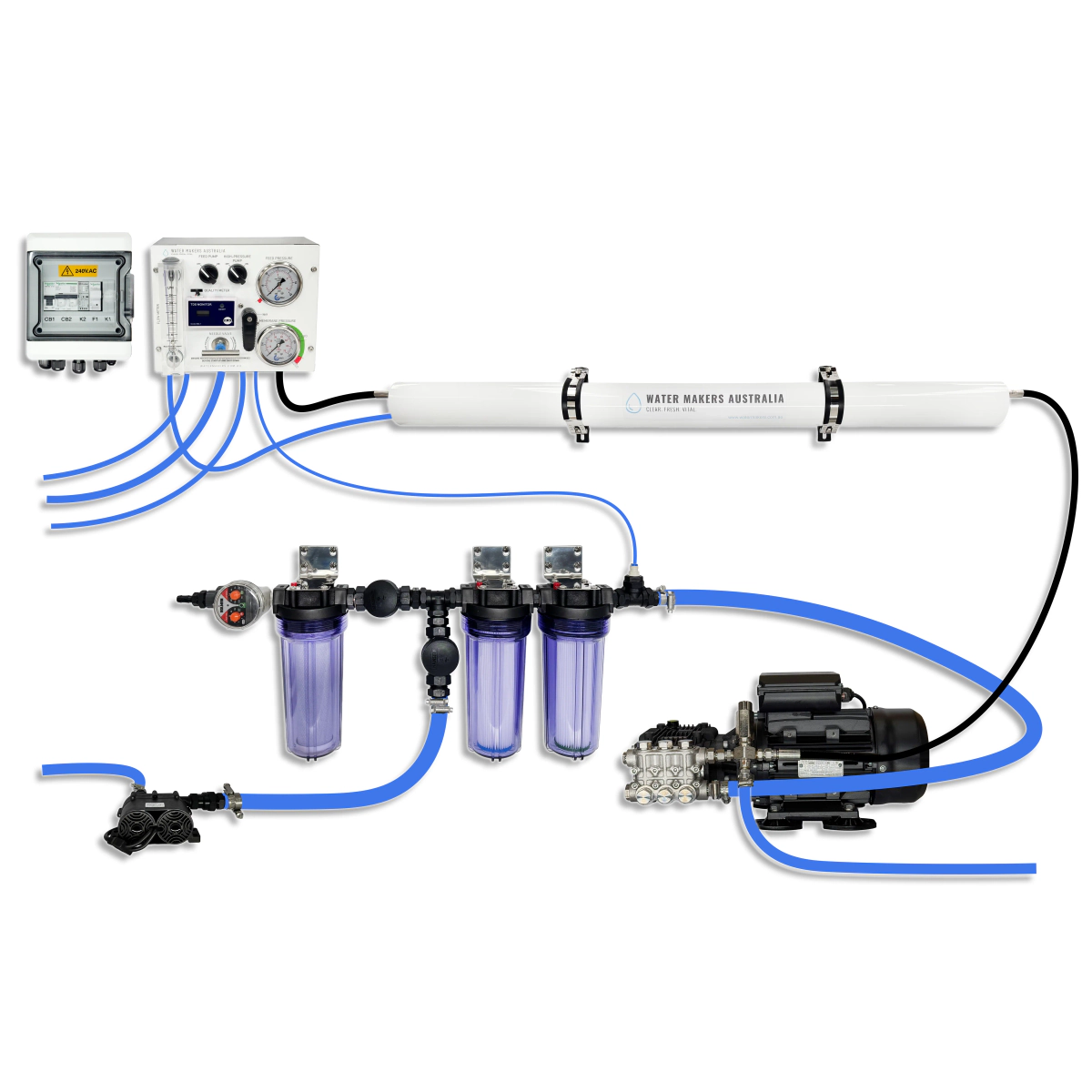
Single-membrane 240 V reverse-osmosis watermaker producing a nominal 80 L/h, built to order in Sydney for cruising boats of about 10 to 15 m with a generator or inverter.
Explore →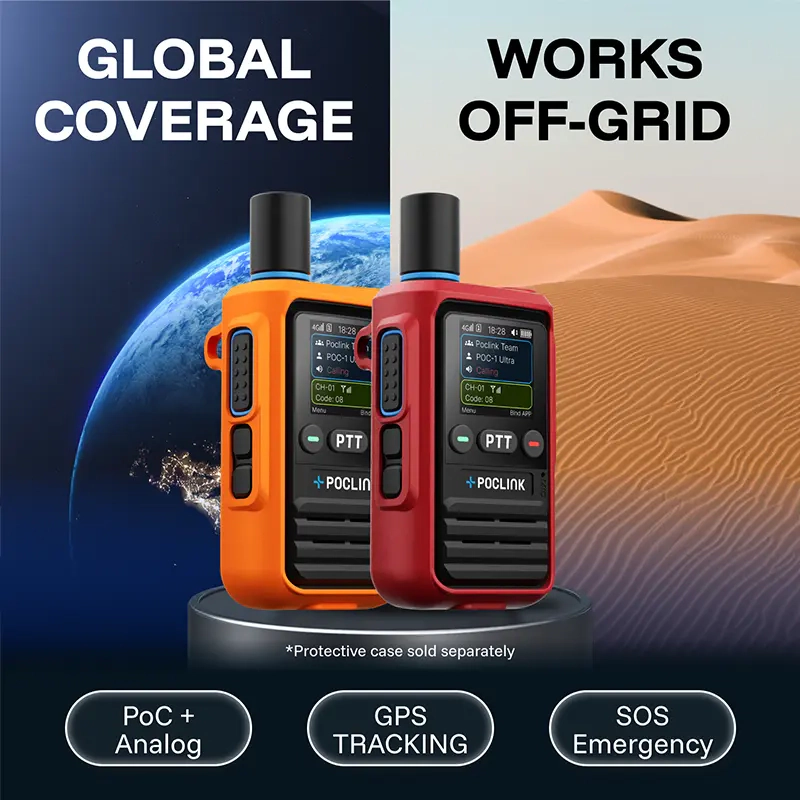
Push-to-talk radio that uses 4G mobile networks where there is coverage and a built-in 16-channel analog radio where there is none, with GPS and SOS. Sold as a two-pack.
Explore →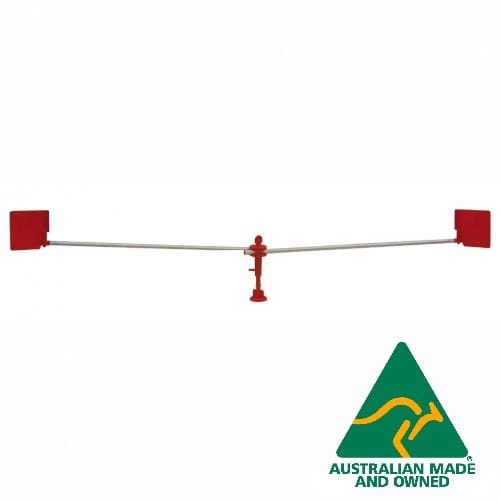
Wind-driven bird repeller with 1 metre rotating arms for smaller areas such as a boom, a solar panel or a small bimini. UV stabilised, with a bayonet base and a 12 month warranty.
Explore →