Loading this page…

Loading this page…
Sailing club
Sailability Tasmania has been helping people of all abilities get out on the water since 1999, with volunteer-run sailing in Hobart, Launceston and Wynyard. It welcomes sailors regardless of age, ability or background, with a particular focus on people with disability, and asks only for a small donation to help cover running costs.
About
Sailability Tasmania has been helping people of all abilities get out on the water since 1999, with volunteer-run sailing in Hobart, Launceston and Wynyard. It welcomes sailors regardless of age, ability or background, with a particular focus on people with disability, and asks only for a small donation to help cover running costs.
Service area: Wynyard; Launceston; Hobart, Tasmania
Keep exploring
Sailability Tasmania Inc. offers sailing and boating for people of all abilities, with a particular focus on people with disability. It runs in three regions — Hobart, Launceston and Wynyard — and aims to provide a service seven days a week throughout the year, including in winter.
The program is run by experienced volunteers, and sailors are asked for a small donation to help cover running costs. Regular sailors are encouraged to become members, and Sailability is always keen to hear from new volunteers — particularly retired, experienced boat people. In Hobart it sails from 23 Marieville Esplanade, Sandy Bay, home of the Derwent Sailing Squadron, one of its major supporters.
Sailability is less about formal courses and more about getting people sailing. Experienced volunteers take participants out on the water at a pace that suits them, whether that means a relaxed social sail or, for those who want it, building skills towards more independent or competitive sailing. The aim, in the organisation's own words, is to support participation at social, recreational and competitive levels.
Regular sailors are encouraged to join as members, and the program is always looking for new volunteers. You do not need to be an expert to help — there are roles on and off the water — but Sailability is particularly keen to hear from retired, experienced boat people who can share their skills. Each region has its own coordinator, listed on the Sailability Tasmania website, who can explain how to get involved locally.
Sailability Tasmania operates in three parts of the state. In Hobart it sails from 23 Marieville Esplanade in Sandy Bay, the home of the Derwent Sailing Squadron, on the sheltered waters of the River Derwent. The North West program is based in Wynyard, home of the Wynyard Yacht Club, and there is also a Launceston program in the north of the state — see our Launceston sailing clubs page for clubs in the area.
Because the program runs year-round, sailing continues through the cooler months when conditions allow. Contact the coordinator for your region before your first visit so the team can make sure the right boat and support are ready for you.
See our Sandy Bay sailing clubs page for the Hobart clubs around the program's home base.
Sailability Tasmania Inc. began operating in 1999, part of the national Sailability movement that brings sailing to people with disability. It has grown into a statewide program with bases in the south, north and north west, run almost entirely by volunteers.
Community support has been vital along the way. The organisation lists the Derwent Sailing Squadron, TasPorts, Commonwealth Bank, Rotary, Jackson Motor Company and the Tasmanian Community Fund among its major supporters — a reminder of how many people have helped keep the boats on the water.
American River (Kangaroo Island, SA) is a small, sheltered inlet and township on the north‑eastern side of Kangaroo Island that acts as a calm staging point for cruising the eastern part of the island and for short hops through Backstairs Passage. It’s distinctive for its protected anchorage inside Eastern Cove and the adjacency of Pelican Lagoon — a shallow, ecologically important lagoon with sanctuary zoning — which shapes how and where boats can move. The area suits sheltered day sailing, weekend cruising and short coastal passages; it’s appropriate for trailer sailors, small cruisers and a

Treat Tasmanian waters as cold year-round: prevent immersion where possible, wear appropriate layers and a lifejacket, carry reliable distress equipment, and have clear procedures to recover and rewarm anyone who gets wet.
Explore →
Late spring to summer is usually the best time for beginners to start learning to sail in Tasmania because the weather is generally warmer, days are longer and conditions are often more settled. Expect lighter to moderate winds with regular afternoon sea breees in summer, while spring and autumn bring more changeable and sometimes stronger conditions; winter is colder, wetter and typically windier with more fronts and swell.
Explore →
Plan the crossing as a deliberate offshore passage with a chosen route that reduces exposure, a weather window that keeps wind, swell and fronts well offshore, and firm alternates and abort points — using up-to-date synoptic and high‑resolution marine forecasts plus local observations to time departure and arrival.
Explore →
Check condition, compatibility and provenance: inspect cloth, seams and stitching, UV and water damage, measurements and fit to your mast/boom and fittings, and the age and repair history of sails, spars and standing/ running rigging before buying online.
Explore →A concise, practical introduction to the essential parts of a recreational sailing boat for beginners in Australia. Covers hull, deck, rigging, sails, steering, below-decks spaces and safety equipment, with simple explanations, common mistakes and a pre-decast checklist to help new sailors communicate and get underway.
Explore →
A practical checklist and explanation of the safety equipment recreational sailors should carry in Australian waters, with how to choose gear, use it correctly, and common mistakes to avoid.
Explore →A practical guide for new recreational sailors in Australia covering essential safety equipment, basic rules of the water, good habits, and simple checklists to help you plan safer outings.
Explore →Practical guide for recreational sailors navigating the Swan River and coastal waters around Perth. Covers local weather patterns, tides and currents, river navigation, launching and berthing options, safety equipment, common hazards, and step-by-step pre-departure and on-water checklists tailored to Western Australian
Explore →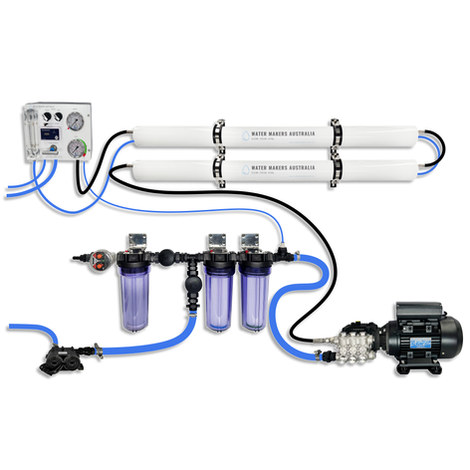
A two-membrane modular watermaker with 140 L/h nominal output, aimed at families and liveaboards that want more water per run.
Explore →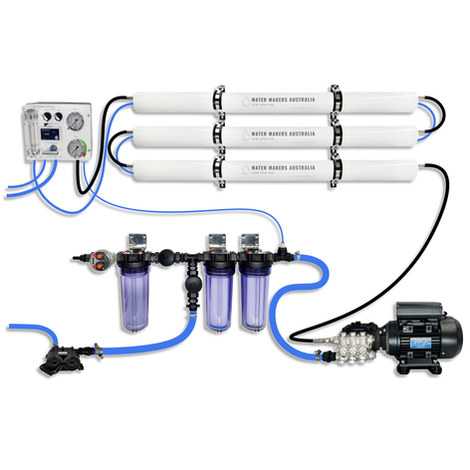
A three-membrane modular watermaker with 200 L/h nominal output and up to 240 L/h family-level marketing, for larger crews and heavy use.
Explore →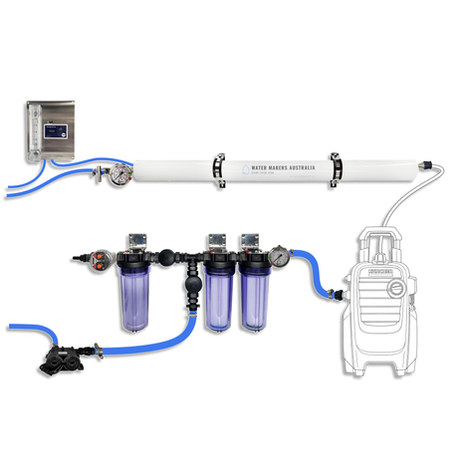
A one-membrane modular marine watermaker with 80 L/h nominal output, remote stainless control panel, standard consumables and direct Australian support.
Explore →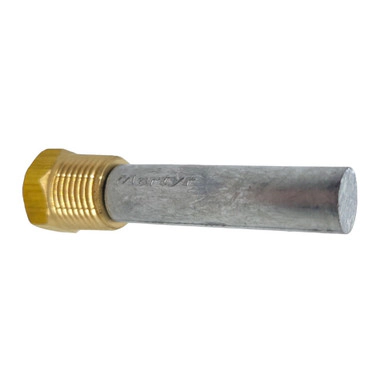
Imported from All Marine Spares. This draft has no editorial summary yet.
Explore →