Loading this page…

Loading this page…
Sailing club
Sandringham Yacht Club is one of Port Phillip's great sailing clubs, with roots going back to 1903 and a burgee flown ever since. From its modern clubhouse and 360-berth marina on Jetty Road, it runs keelboat racing, a J/70 youth program, women in sailing programs, Tackers and OutThere learn to sail, Discover Sailing, cruising courses and SailPASS daily access.
About
Sandringham Yacht Club is one of Port Phillip's great sailing clubs, with roots going back to 1903 and a burgee flown ever since. From its modern clubhouse and 360-berth marina on Jetty Road, it runs keelboat racing, a J/70 youth program, women in sailing programs, Tackers and OutThere learn to sail, Discover Sailing, cruising courses and SailPASS daily access.
Service area: Sandringham, VIC
Keep exploring
Sandringham Yacht Club (SYC) is on Jetty Road, Sandringham, on the eastern shore of Port Phillip about 16 kilometres south-east of Melbourne's CBD. It has a 360-berth marina with power, water and full marina services, a modern clubhouse opened in 2009, a boatyard with a 40-tonne travel lift, and a busy calendar of racing and events.
On the water, SYC runs keelboat racing through the year, a J/70 youth squad and youth development program, and a Women in Sailing program with development sessions, female helm races and the Women in Sailing Challenge. Learn-to-sail options include Tackers (ages 7–12), OutThere Sailing (ages 12–17), Discover Sailing experiences, navigational cruising courses and a diesel engine course. SailPASS offers affordable daily access for beginners. See other clubs nearby on our Sandringham sailing clubs page.
SYC's learn-to-sail pathway covers every age. Tackers is Australian Sailing's program for 7 to 12 year olds, run in three stages (Tackers 1, 2 and 3) with a Tackers Squad for those ready to race. OutThere Sailing is for 12 to 17 year olds who want a social, adventurous way to learn. Adults can start with a Discover Sailing experience, and the club also runs navigational cruising courses and a diesel engine course for boat owners.
Young sailors with racing ambitions can join the SYC J/70 Youth Squad or Youth Development Program, and the Women in Sailing program includes a Female Sailors Development Program, female helm races and the Women in Sailing Challenge. The Skippers Assistance and Support Program helps owners get the most out of keelboat racing. If you just want to get out on the water, SailPASS offers affordable daily access for beginners and enthusiasts alike.
The club is on Jetty Road in Sandringham, on the eastern shore of Port Phillip Bay, about 16 kilometres south-east of Melbourne. The bay offers a big, open racecourse, and conditions can vary from gentle sea breezes to strong south-westerlies, so there is always something to learn.
SYC's 360-berth floating marina provides secure berths with power and water and easy access to the bay, backed by a boatyard with a 40-tonne travel lift. The clubhouse hosts weddings, corporate events and celebrations with views across the water. For other clubs on this stretch of the bay, see Hampton Sailing Club, Black Rock Yacht Club and Royal Brighton Yacht Club.
SYC traces its roots to the Port Phillip Yacht Club, established in 1903 next to the public jetty. The Sandringham Yachting and Angling Club was founded in 1911, renamed Sandringham Yacht Club in 1912, and raced its first season in 1913–14. When fire destroyed the Port Phillip Yacht Club's clubhouse in 1931, the two clubs combined in 1932.
A second fire in 1955 destroyed SYC's clubhouse along with all its records and memorabilia, but the club rebuilt quickly in time to host the Finn class for the 1956 Melbourne Olympics. Prince Philip visited during the Games and became SYC's Commodore-in-Chief on 25 January 1980, returning in 2000.
A new clubhouse was built in 1963 through debenture funding, the 340-berth floating marina was developed in the early 1990s, and a major waterfront redevelopment in 2002 added a 40-tonne travel lift. The current clubhouse was completed in June 2009 at a cost of $12.75 million.
Batemans Bay and the Clyde River form a classic NSW South Coast cruising region where a sheltered, tidal estuary meets a short, island‑dotted entrance to the Tasman Sea. It’s distinctive for easy access from Canberra, a mix of river and bay sailing, a compact marina and mooring network, and a river entrance (the Clyde River bar) that can change rapidly. The area suits day sails, weekend cruising, trailer‑boat exploration and sheltered coastal passages; offshore or long‑passage plans require careful timing and local knowledge. Preparation for tidal flow, variable southerly swells and shallow, s

Write a one‑page plan with the who/what/when/where/how of your trip, keep a copy on board and leave the main copy with a responsible person ashore (and optionally with your club, marina office or local volunteer rescue service).
Explore →
Pick a protected bay, estuary or river reach where you can rig, launch and arrive on calm water within a short, sheltered transit; choose a site with a good ramp or jetty, clear recovery options and a nearby sailing club, marina or commercial operator for local knowledge and help.
Explore →
Plan as a chain of conservative daily legs tied to your boat’s real-world fuel and speed in the expected sea state, with confirmed primary and alternate anchorages/berths, fuel legs and back-up fuel options, and a documented emergency/diversion plan (comms, tow and med-evac). Build tidal and weather gates into each leg and carry chart and comms redundancy.
Explore →
Expect light to moderate, thermally-driven sea breezes in summer with afternoon strengthening; more changeable and often stronger winds with frontal systems in autumn and spring; and the windiest, roughest conditions in winter when cold fronts and sou’westers are most frequent. Gulf St Vincent is more sheltered than the exposed coast but can still produce steep chop and sudden changes near Adelaide and headlands.
Explore →
A practical guide for new sailors on picking the right Australian sailing club: training, boat access, racing, social fit, costs and the key questions to ask before joining.
Explore →A concise, practical introduction to the essential parts of a recreational sailing boat for beginners in Australia. Covers hull, deck, rigging, sails, steering, below-decks spaces and safety equipment, with simple explanations, common mistakes and a pre-decast checklist to help new sailors communicate and get underway.
Explore →
A practical guide to Queensland’s top sailing areas, what to expect from each region, seasonal and safety considerations, suggested itineraries and useful planning checklists for recreational sailors.
Explore →A practical guide for recreational sailors planning visits to Albany and King George Sound. Covers the main anchorage areas, typical local weather patterns, tidal and current considerations, navigational hazards, on-the-water etiquette and a pre-departure checklist to help you plan a safe passage and enjoyable stopover
Explore →Burke Yachtsman Gear Bag 40L - Shop Now Zip Pay | Tamar Marine Skip to content 59 – 63 Holbrook Street, Invermay Online Shop Open 24/7 Products search Contact us 1300 MARINE $ 0.00 0 Cart Burke Yachtsman Gear Bag 40L $ 79.90 Colour Choose an option Black Blue Black Blue Clear - Burke Yachtsman Gear Bag 40L quantity + Add to cart Enquire about this product SKU BAGB-Y24/BLACK* Category Bags - Sail & Gear A Burke classic and customer favourite, the Yachtsman’s Gear Bag is built tough to handle wet, salty conditions while keeping your gear dry and protected. Made from double coated waterproof…
Explore →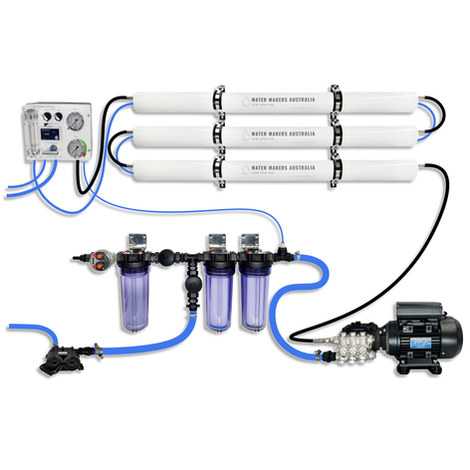
A three-membrane modular watermaker with 200 L/h nominal output and up to 240 L/h family-level marketing, for larger crews and heavy use.
Explore →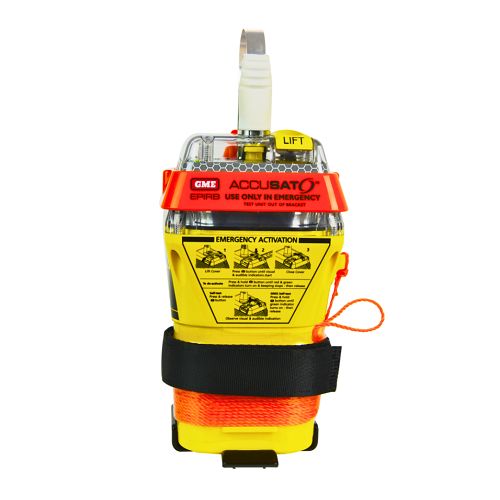
A 10‑year battery EPIRB with integrated GNSS (supports GPS and Galileo), infrared strobe and 121.5 MHz homing signal. Approved for worldwide COSPAS‑SARSAT operation.
Explore →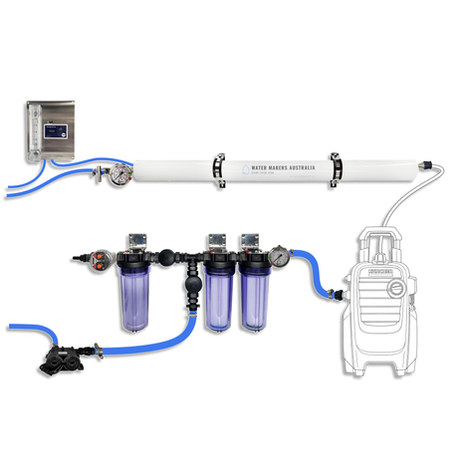
A one-membrane modular marine watermaker with 80 L/h nominal output, remote stainless control panel, standard consumables and direct Australian support.
Explore →