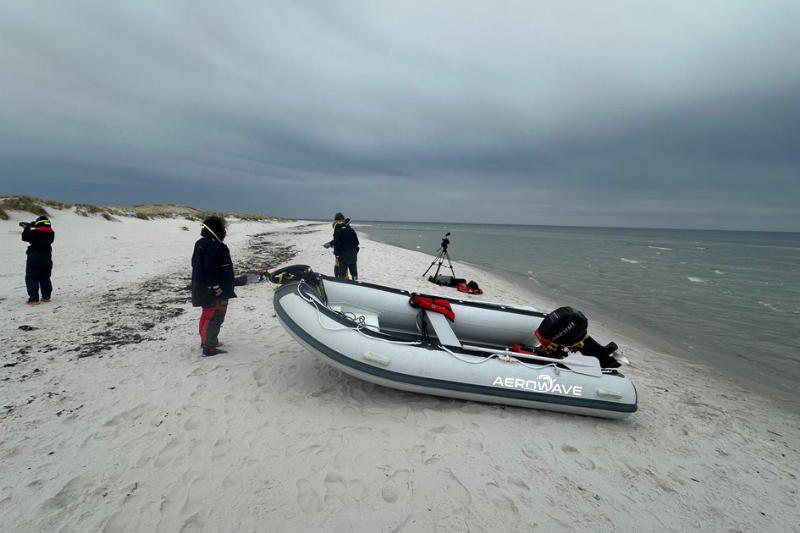
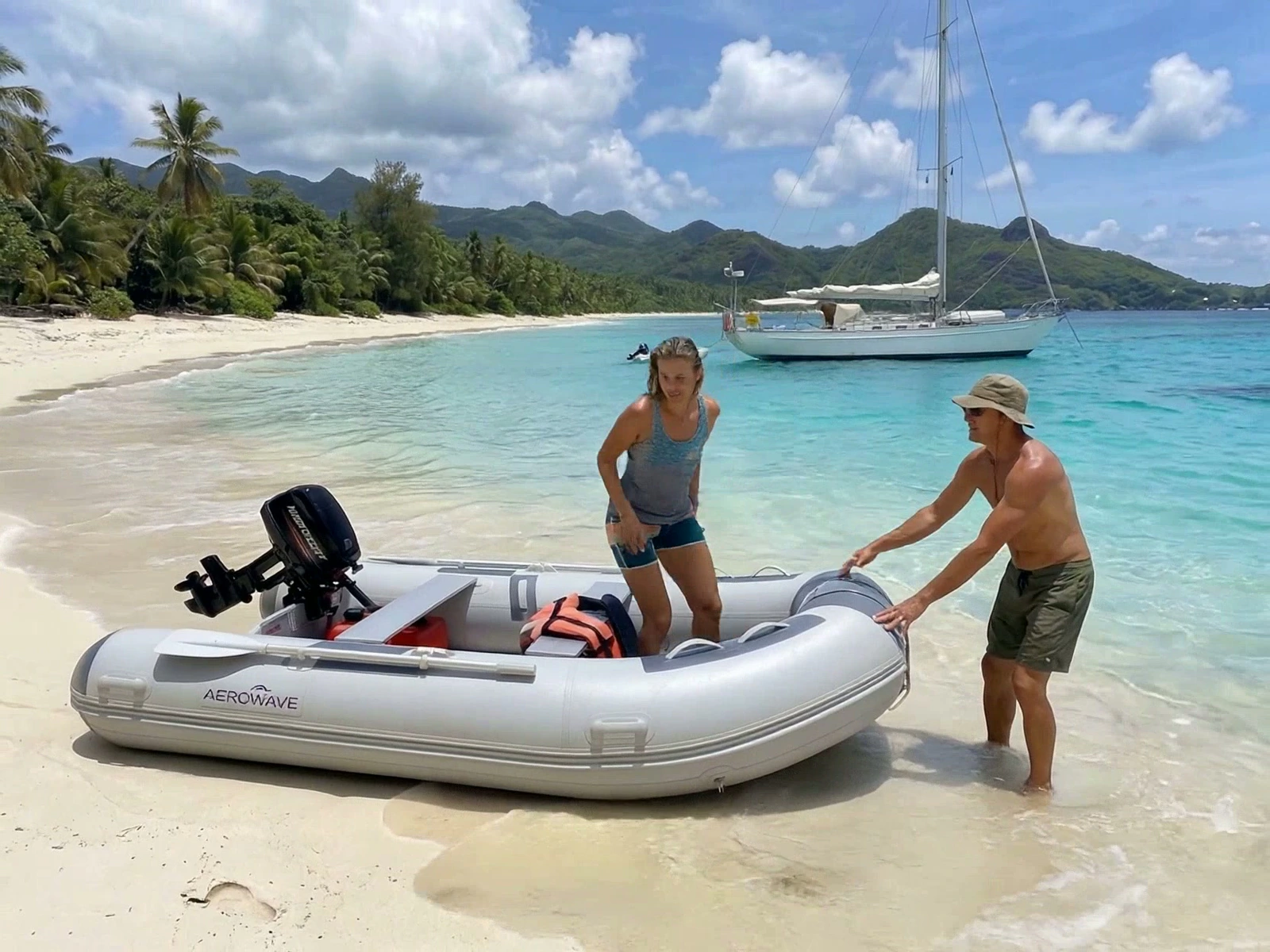
Beach landings capsize more dinghies than anything else. The rule is simple: if the surf is big enough to make you hesitate, do not land there. Find a sheltered corner, a river mouth at the right tide, or a jetty.
Before you leave the yacht
- Lifejackets on, kill cord on.
- Everything loose in a dry bag and tied in.
- Oars shipped and ready. An outboard is a liability in the last ten metres.
- Shoes on. Beaches hide rocks, shells and stonefish.
Read the beach
- Stand off outside the break and watch for several minutes. Waves come in sets, with lulls between.
- Look for the end of the beach in the lee of a headland, where waves are smallest.
- Dark, flat water between breaks can be a rip running out. Good for leaving, not for landing swimmers.
- Check the tide. A falling tide leaves a heavy dinghy a long carry from the water.
Going in
- Wait for the last wave of a set.
- Follow it in on its back, at its speed. Do not get ahead of it, and do not let the next one catch you.
- Keep the stern square to the waves. Sideways is how dinghies roll.
- In the shallows, kill the engine and tilt it before the propeller touches.
- Everyone out on the seaward side, at the bow, and walk the boat up at once. Never stand between the dinghy and the beach with a wave coming.
Once ashore
- Carry or drag it above the high tide line. Dinghy wheels on the transom make this a one person job.
- Tie the painter to something that will not move, or bury the anchor.
- Lock it if you are going out of sight.
- Cover the tubes or turn it over if you will be hours. Sun on a hard inflated tube raises the pressure, so let a little air out.
Anchoring off instead
Where the surge would grind the dinghy on sand or rock, anchor it just outside the break with a stern anchor and a long line ashore, and haul it in when you return.
Getting off again
- Walk the dinghy out bow first until it floats, holding it into the waves.
- Wait for a lull. Heaviest person in last, at the stern.
- Row or motor straight out through the break without stopping. Meet each wave bow on.
- Lower the outboard only when there is depth.
When not to
At night, with children or nervous passengers, with a heavy load, or in any real surf. A long walk from a calm landing is always the better trip.
The landing, step by step
Read the beach first
Stand off outside the break for a few minutes and watch. Waves come in sets, usually with a quieter spell between them. Count the sets. Look for the part of the beach where the waves break smallest, often the end sheltered by a point or reef. Look at the slope: a steep beach dumps hard at the edge, a flat one breaks further out and more gently. If you would not swim in it, do not land a dinghy in it.
What to carry
- Lifejackets worn, not stowed
- Kill cord attached to the driver
- Oars in the rowlocks, ready
- A long painter and a small anchor
- Everything else in a dry bag tied in
- Shoes you can walk on rock and shell in
Mistakes to avoid
- Coming in sideways. A dinghy that broaches in the break rolls.
- Leaving the outboard down and locked. Tilt it or unlock it before the last wave so it kicks up.
- Everyone jumping out the same side, or jumping out on the seaward side of the boat where it can run over you.
- Dragging the dinghy by one handle up a beach. Carry it or use wheels. Sand and shell cut the fabric.
- Leaving it below the high tide line.
When not to land
Onshore wind against an ebbing tide, a dumping shore break, or any surf you cannot see over from the dinghy are all reasons to find another landing or stay aboard. Many cruising accidents happen in the tender, close to shore, on an ordinary day.