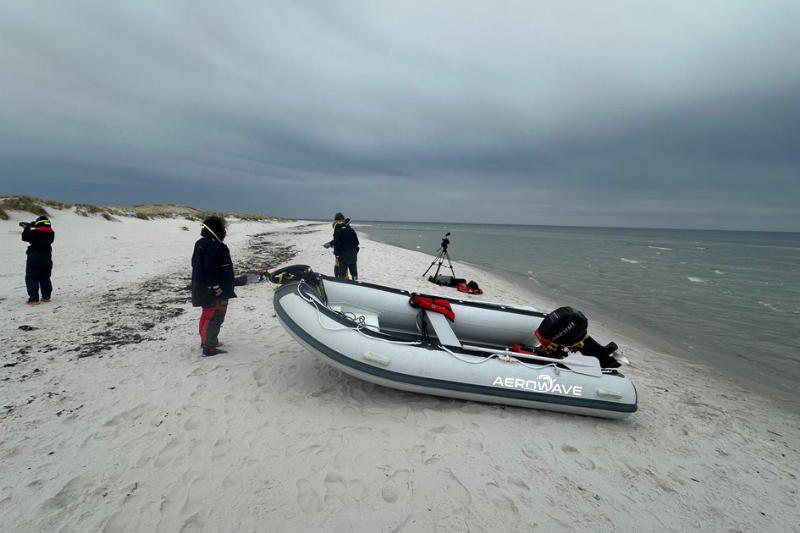
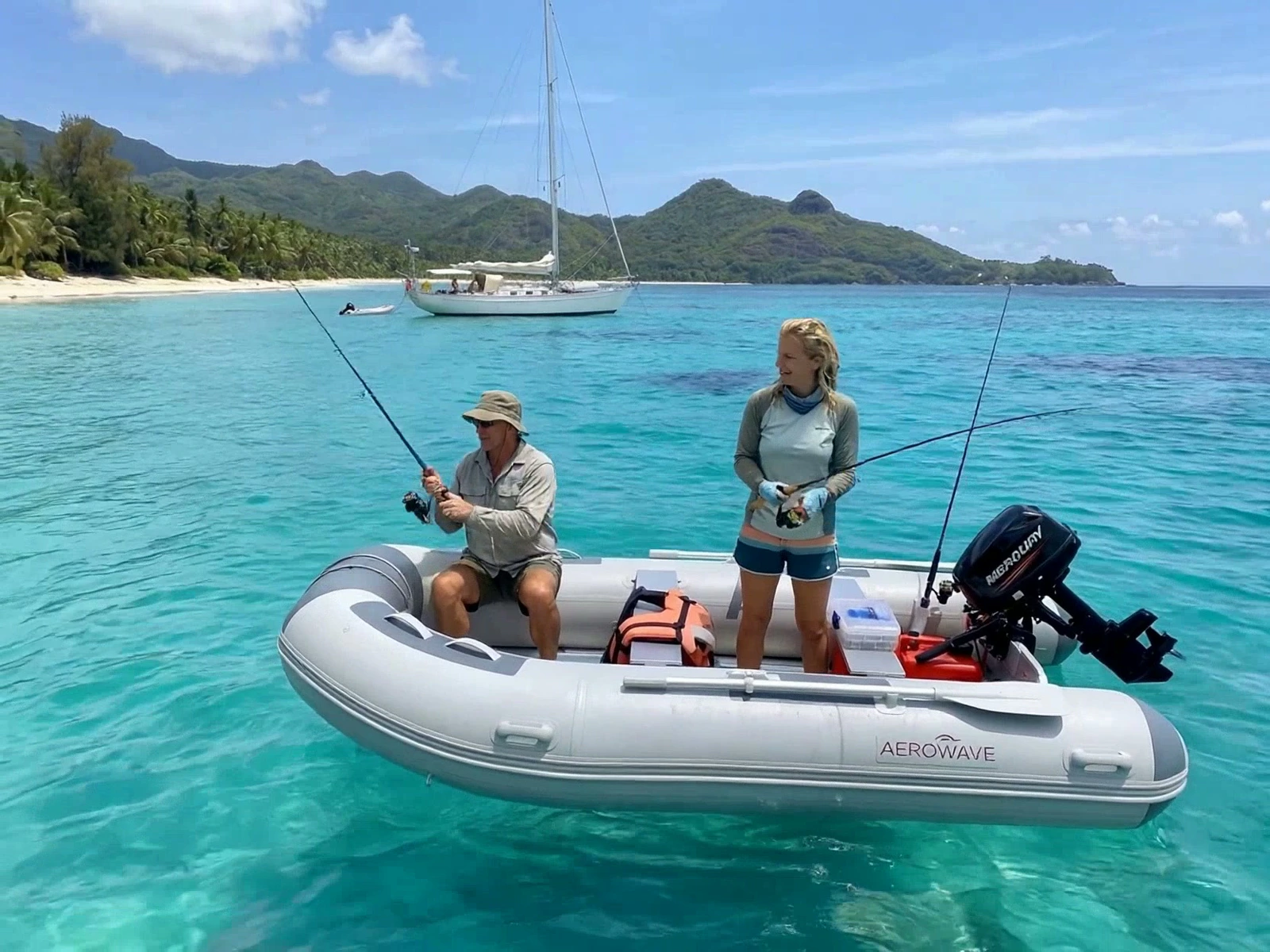
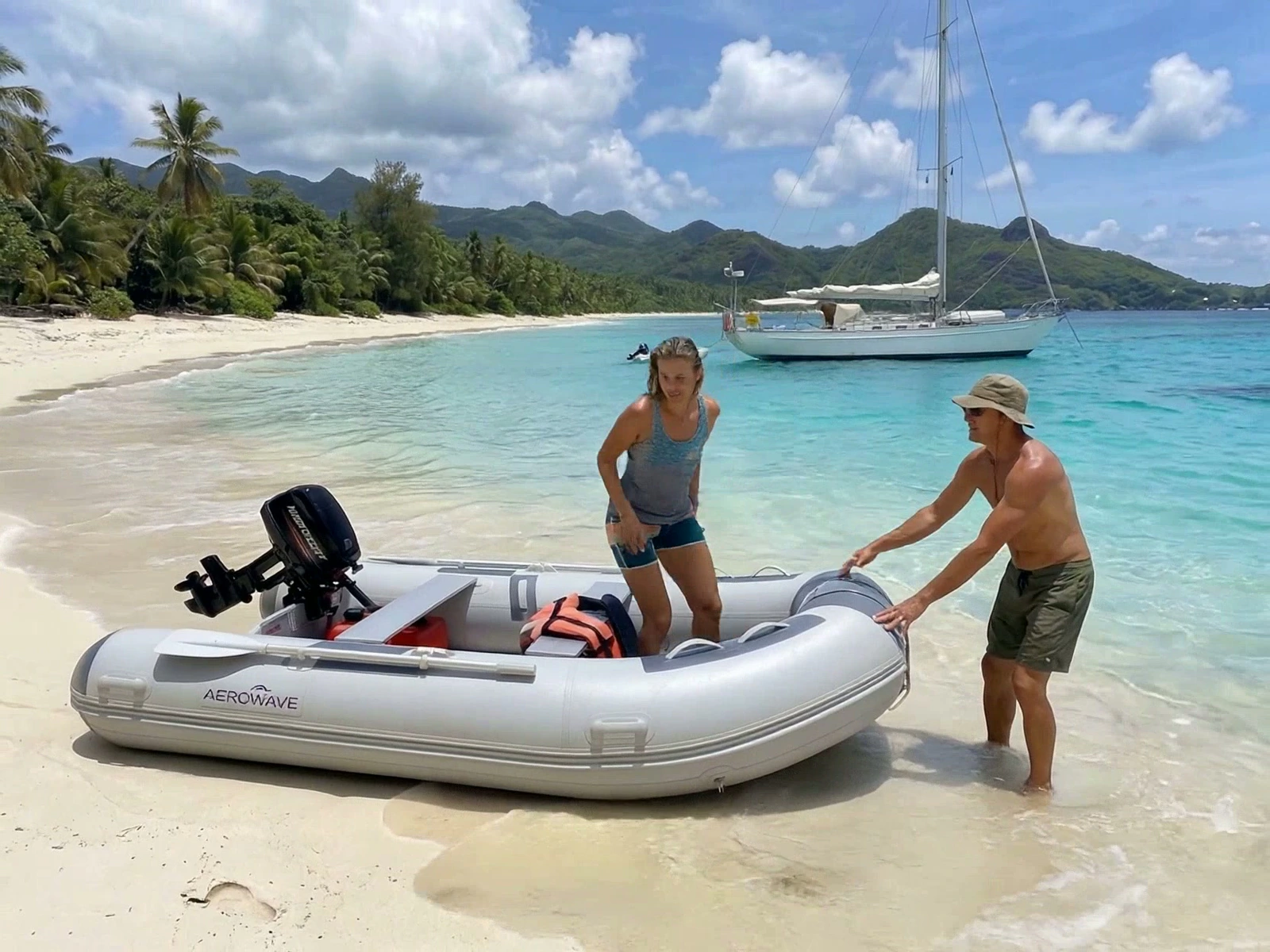
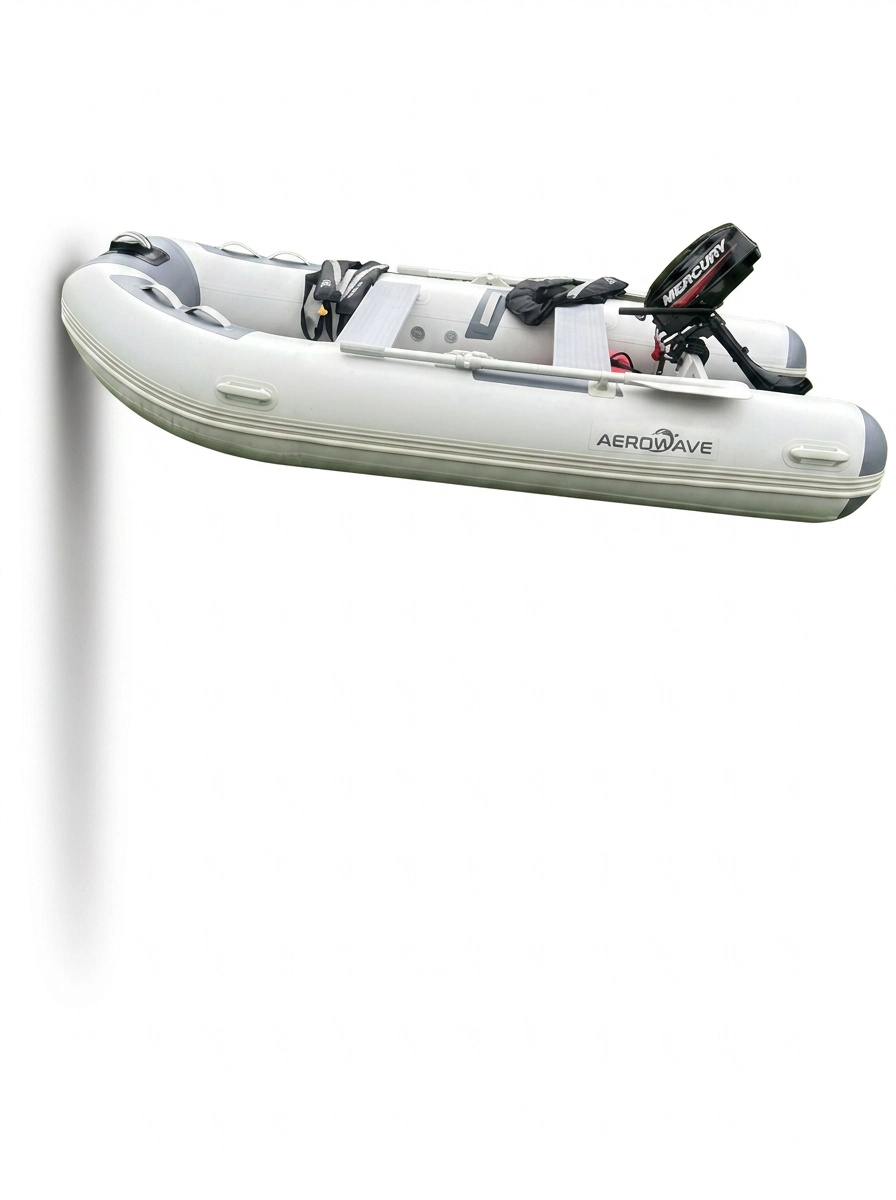
If getting the dinghy aboard is hard, it gets towed or left in the water, and that is how dinghies are lost and stolen. Set the system up so the least strong person aboard can do it.
Take the outboard off first
- Lift it before the dinghy, unless your davits are rated for both and you are in flat water.
- Under about 15 kg it can be handed up with a safety line tied on.
- Above that, use a small crane on the pushpit or a tackle from the boom end or the radar post. Always with a lanyard on the engine.
- Store it upright on a rail bracket, fuel off, tilted as the maker says. Four strokes must lie only on the side marked.
Halyard to the foredeck
- Fit a three point bridle: two legs to the transom lifting eyes, one to the bow, meeting at a ring above the balance point.
- Bring the dinghy alongside at the shrouds. Clip a spare halyard to the ring.
- One person winches, one fends off, or tie a fender between dinghy and topsides and do it alone.
- Lift until it clears the lifelines, swing it in, lower it upside down on the foredeck.
- Pull the drain plug and let it empty before lifting. Water is heavy.
Davits
- Check the rated load covers dinghy, outboard, fuel and whatever rain collects.
- Lift bow and stern evenly. Keep the drain plug out when hoisted so it cannot fill.
- Stop it swinging: cross lashings from each tube to the opposite quarter, pulled tight.
- For an offshore passage, take the outboard off and consider moving the dinghy to the deck. A wave into a dinghy on davits can tear them off.
Deflate and bag
- Open all valves and roll from the transom toward the bow to push the air out.
- A 12 volt pump on deflate saves ten minutes.
- Dry it first when you can. A wet, salty dinghy in a bag sticks and rots.
- Stow the bag where it cannot shift.
Lashing for sea
- Upside down on the foredeck, bow forward, slightly deflated so it sits down on the deck.
- At least three straps to strong points: padeyes, the mast base, the windlass. Not to handrails or stanchions.
- Nothing loose underneath except what is tied in.
- Check that the staysail, the windlass and the anchor locker still work with it there.
Towing, when you must
Short distances in flat water only. Outboard, oars and fuel out. Two painters to a towing bridle on the transom eyes, dinghy pulled up close on the second stern wave, and shorten it right in before going astern.
The lift, step by step
Three ways to carry it
| Method | Suits | Watch for |
|---|---|---|
| Davits | Boats over about 38 feet, RIBs, daily use | Weight aft, windage, must be lashed hard at sea |
| Foredeck, inverted | Offshore passages, most monohulls | Needs a halyard lift and blocks the forehatch |
| Deflated in a locker | Small boats, occasional use | Time to inflate, wear at the folds |
| Towed | Short hops in flat water only | Drag, flipping, a painter round the prop |
Gear to have ready
- Three or four point lifting bridle with the lengths marked
- A halyard with enough length, and someone on the winch
- Fenders or a board to keep the dinghy off the topsides
- Lashing straps and strong points on deck
- A separate lifting arrangement for the outboard
Mistakes to avoid
- Lifting with the outboard, fuel and water still in the dinghy.
- Leaving the bung in on davits. Rain fills a dinghy fast and a full dinghy can tear davits off.
- Towing with the outboard on, or towing at all in a following sea.
- Lashing to guardrails or stanchions. Use padeyes or the toerail.
- Standing under the dinghy while it is on the halyard.
Before a passage
For anything more than a day hop in settled weather, take the tender off the davits unless they are built for offshore loads, take the outboard off, and lash the dinghy so it cannot move at all when you pull on it hard. If you can shift it by hand, a wave can shift it further.