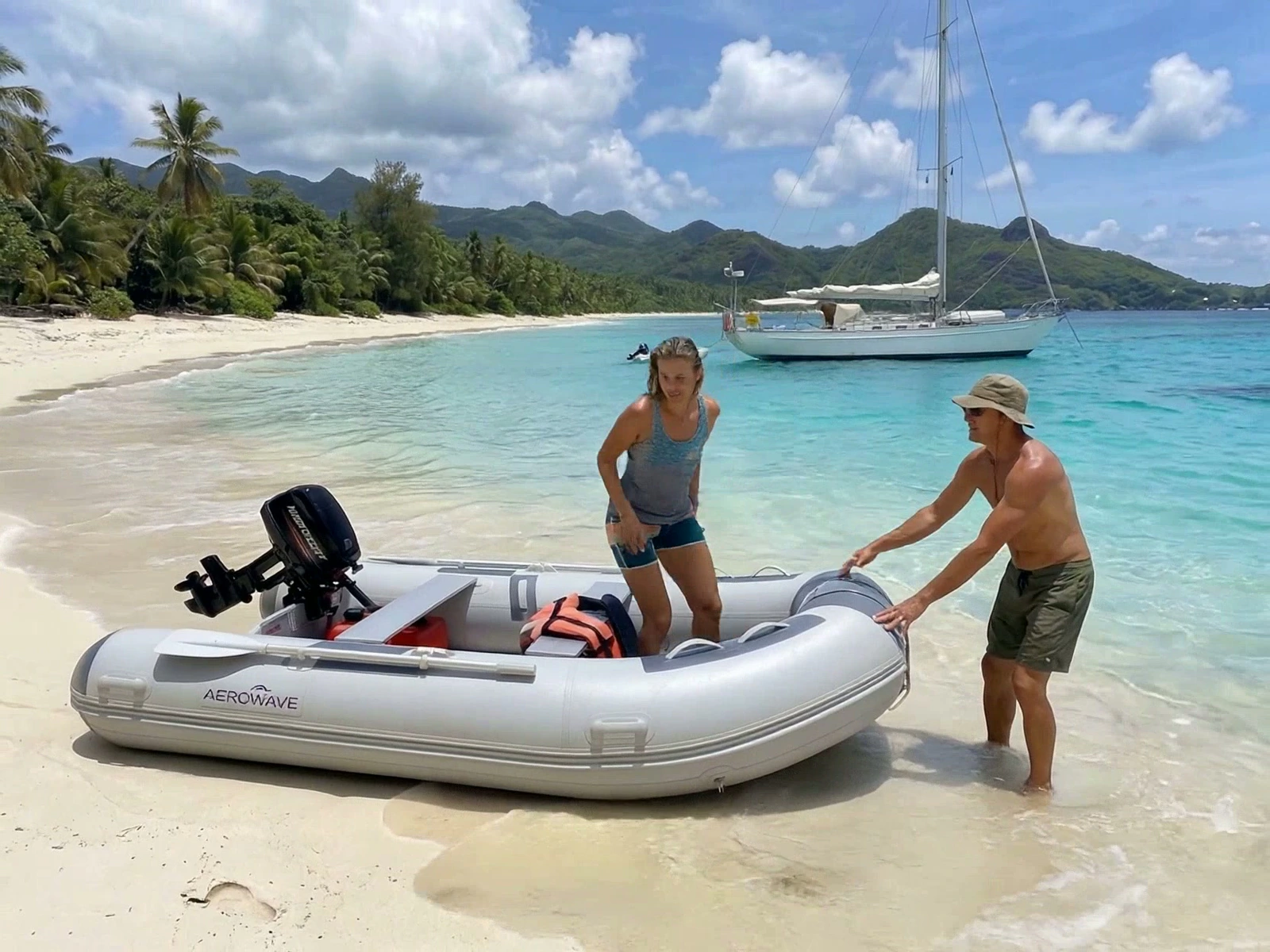
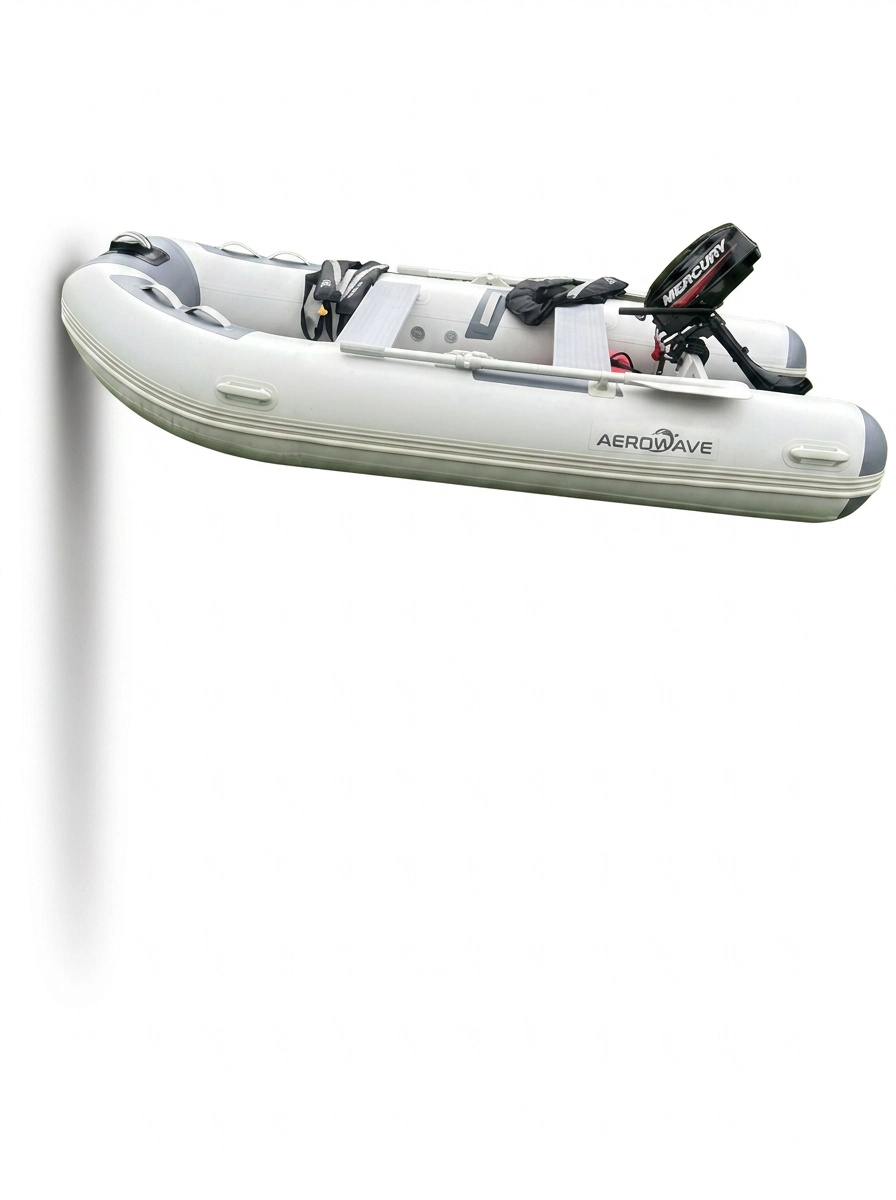
Work through these in order. Each answer rules out options, and by the end there are usually only one or two left.
1. Where will it live at sea?
Measure it. Foredeck length between the mast and the inner forestay or windlass. Davit width and rated load. Locker opening size for a bagged inflatable. A dinghy that does not fit its stowage gets towed, and towed dinghies get lost.
2. Who and what will it carry?
Count the usual crew, plus guests, plus a week of shopping and two jerry cans.
Calculator
Dinghy load
Check a trip against the capacity on the builder's plate.
- 298 kg
- 75%
- Within the limit
3. How far will you run?
- Marina and close anchorages, a few hundred metres: a small roll up and a 2.5 hp, or oars, is enough.
- Long runs across a bay or to dive sites: you need to plane, which means an air deck or RIB and 6 hp or more.
Calculator
Outboard size to plane
A rule of thumb for the power needed to get a loaded inflatable on the plane.
- 260 kg
- 21.7 hp
- This load will not plane within the plate limit
4. How will you lift it?
- Dinghy: a halyard and a bridle will lift up to about 60 kg onto the foredeck. Above that you want davits.
- Outboard: 15 kg can be handed up. Past about 25 kg you need a crane or tackle on the pushpit, or you will hurt your back or drop it in the water.
- Whatever you choose, the weakest person aboard should be able to launch and recover it with the system you fit.
5. What is the budget over ten years?
A cheap PVC dinghy replaced twice costs about the same as one Hypalon dinghy. Count the cover, the lock, the lifting gear and the outboard service too.
Typical answers
- 8 to 10 metre yacht: 2.3 to 2.6 m roll up or air deck, 2.5 to 4 hp, stowed in a locker.
- 10 to 13 metre yacht: 2.7 to 3.1 m air deck or light aluminium RIB, 6 to 10 hp, on the foredeck or davits.
- Liveaboard over 12 metres: 3.1 to 3.4 m RIB, 10 to 15 hp, on davits.
Before you buy
Sit in it, with your crew, on the water if you can. Check the tube diameter, the dryness of the ride, where the fuel tank sits and whether the oars are usable. You will row it one day.
Types compared
| Type | Good at | Not so good at |
|---|---|---|
| Roll up inflatable, slatted or air floor | Stowing in a locker, light weight | Rowing, planing, long life in the tropics |
| Rigid inflatable (RIB) | Planing with a load, dry ride, towing | Weight, needs davits or deck space |
| Rigid dinghy | Rowing, takes abuse, lasts decades | Stability when boarding, stowage |
| Folding or nesting dinghy | Stowage on a small foredeck | Assembly time, carrying capacity |
Measure before you buy
- Where it will live: on davits, on the foredeck, or rolled in a locker. Measure that space, with the hatch and the inner forestay in the way.
- What you can lift. Two people can handle about 40 kilograms on a rolling deck without a halyard. More than that needs davits or a hoist.
- How many people and how much shopping, water and fuel it must carry at once.
- How far you usually anchor from the landing.
Calculator
Dinghy load
Check a trip against the capacity on the builder's plate.
- 298 kg
- 75%
- Within the limit
PVC or Hypalon
PVC is lighter and cheaper to make, and modern welded PVC lasts well in temperate water if it is kept covered. Hypalon style fabric handles sun and heat far better and is easier to repair, so it suits Queensland, the Pacific and anywhere the tender lives inflated on davits all year. Whichever you choose, a cover or chaps will add years.
Mistakes to avoid
- Buying for the brochure photo and not for your foredeck.
- An outboard too heavy to lift from the dinghy to the rail safely.
- No way to lock it. Tenders and outboards are the most stolen things on a cruising boat.
- Forgetting the rules. Check your state rules for registration, the safety gear a tender must carry and when a licence is needed. They differ.