Getting back to a person in the water is the easy half. Getting a wet, tired adult back over the side is the half most crews have never tried. Practise both, with the people you really sail with.
Before you go out
- Use a fender tied to a bucket as the casualty. It drifts like a person.
- Agree roles, then swap them. The skipper is as likely to go over as anyone.
- Run it first in flat water and light wind.
The first ten seconds
- Shout "man overboard" so everyone hears.
- One person points at the casualty and never looks away. That is their only job.
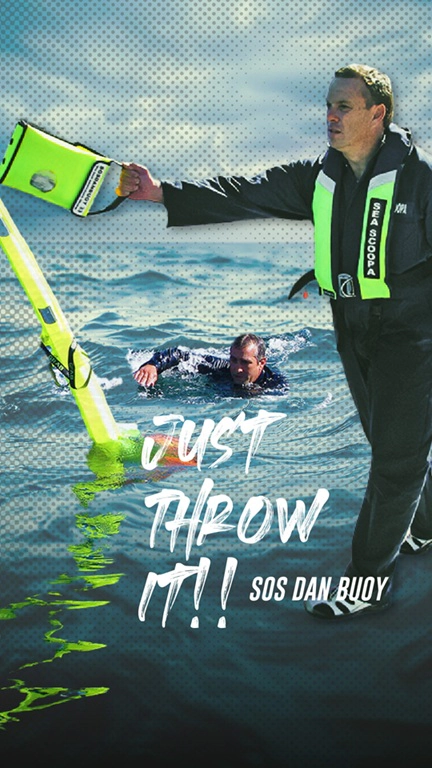
- Throw the danbuoy, horseshoe or anything that floats, at once.
- Press the MOB button on the plotter.
- If there is any doubt about getting them back quickly, send a DSC distress alert and a Mayday. You can cancel it later.
Getting back
- Under engine is simplest for most cruising crews: sheets in or sails down, check for lines in the water, then start the engine and motor back.
- Under sail, the quick stop works short handed: tack at once without touching the jib sheet, so the boat heaves to near the casualty, then circle back.
- Approach from downwind so the boat slows as you arrive and does not drift over the person.
- Engine in neutral when you are alongside. Stop it if anyone is near the stern.
Making contact
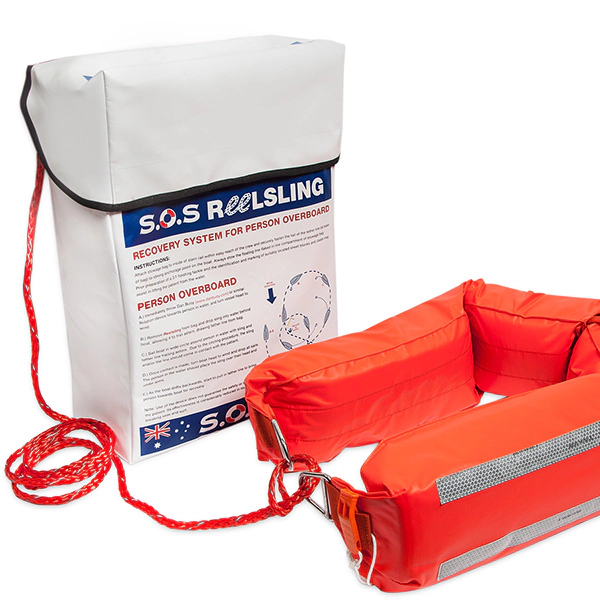
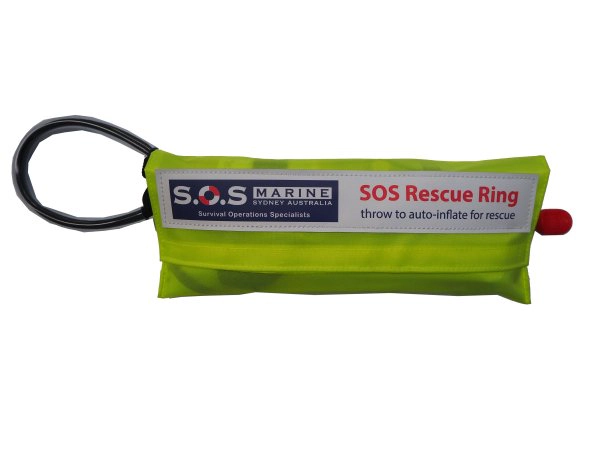
Get a line to them before anything else. A throw bag or a rescue sling on a floating line is the tool. Once they are attached to the boat, the worst is over.
Recovery
This is what the drill is for.
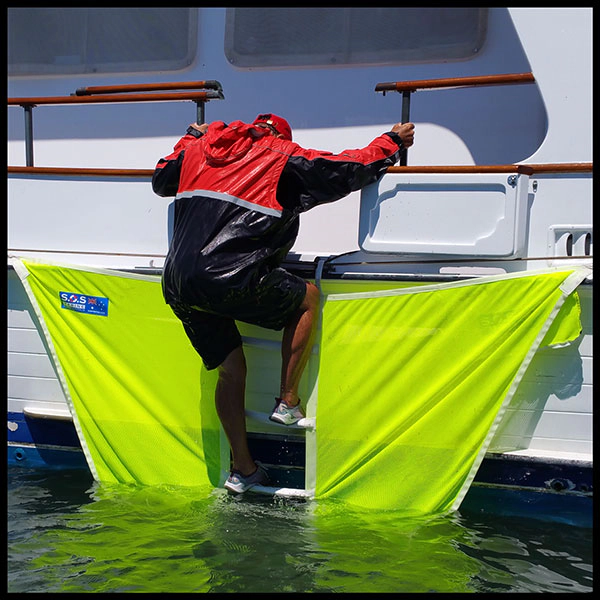
- A conscious, fit person may climb a deep boarding ladder at the stern in flat water. In a seaway the stern is dangerous.
- For anyone else, use a lifting system at the shrouds: a halyard on a winch, clipped to the lifejacket's harness loop or a recovery sling, or a dedicated tackle.
- Lift them as near to horizontal as you can if they have been in cold water for long.
- Time the lift with your lightest crew member winching. If they cannot do it, change the system now.
After the drill
Write down what was slow or did not work, and fix it before the next sail. Then repeat at night, in harbour, to see how little you can see.
Calculator
How far away you can be seen
The distance at which someone looking for you can see you over the curve of the sea.
- 5.3 nm
- 5.1 nm
The whole sequence
Set up the drill
- Use a fender tied to a bucket or a weighted cushion. It drifts more like a person than a fender alone.
- Pick open water with room, moderate wind, and brief everyone first.
- Give each person a job: spotter, helm, thrower, plotter button, radio.
- Throw it without warning once the basics are understood.
Three ways back
| Method | How | Suits |
|---|---|---|
| Quick stop | Tack at once without touching the jib, circle, come back head to wind | Short handed crews, stays close to the person |
| Reach, tack, reach | Beam reach away for a few lengths, tack, reach back and luff up | Bigger crews, heavier weather |
| Under engine | Sails down or sheeted in, motor back from downwind | Light air, or when sailing back is failing |
Check for lines in the water before the engine goes into gear, and take it out of gear alongside the person. Practise all three. The one you need depends on the day.
The hard part is getting them aboard
Reaching the person is half the job. Lifting a wet adult over a metre of topsides is the half most crews have never tried. Work out your method at the dock: a boarding ladder that reaches well under the water, a halyard to a lifting strop, a recovery sling, or the dinghy. Try it with a real person in calm water wearing a lifejacket. You will change your plan.
Mistakes to avoid
- Everyone looking at the helm and nobody at the person. The spotter does nothing but point.
- Throwing gear late. The first ten seconds matter most.
- Approaching fast or from upwind so the boat drifts over the person.
- Practising only in daylight with a full crew. Try it with two aboard.
How often
At the start of every season, and again with any new crew before a passage. Ten minutes on the way out of the harbour is enough to keep it fresh.