There are dozens of models and they differ in only four ways that matter. Decide these and the shortlist writes itself.
Step 1: output
Work out daily use, then the litres per hour that makes it in a run time you will tolerate.
Calculator
Watermaker output
The litres per hour to look for, from your daily use and how long you will run it.
- 30 L/h
- 40 L
Buy a little more than the sum says. Output drops in cold water and as the membrane ages.
Step 2: power source
- 12 or 24 volt DC, conventional pump: cheapest, simple, but hungry. Fine if you make water while motoring.
- DC with energy recovery: uses about a third of the power per litre. The choice for boats that live on solar.
- 240 volt AC: high output for boats that already run a generator.
- Engine driven: high output for almost no electrical load, but the pump has to be mounted on the engine.
Calculator
Watermaker power use
What making your water costs the batteries.
- 13 Ah a day
- 160 Wh a day
Step 3: layout
- Framed units come assembled on one base. Quick to fit if you have a locker that takes it.
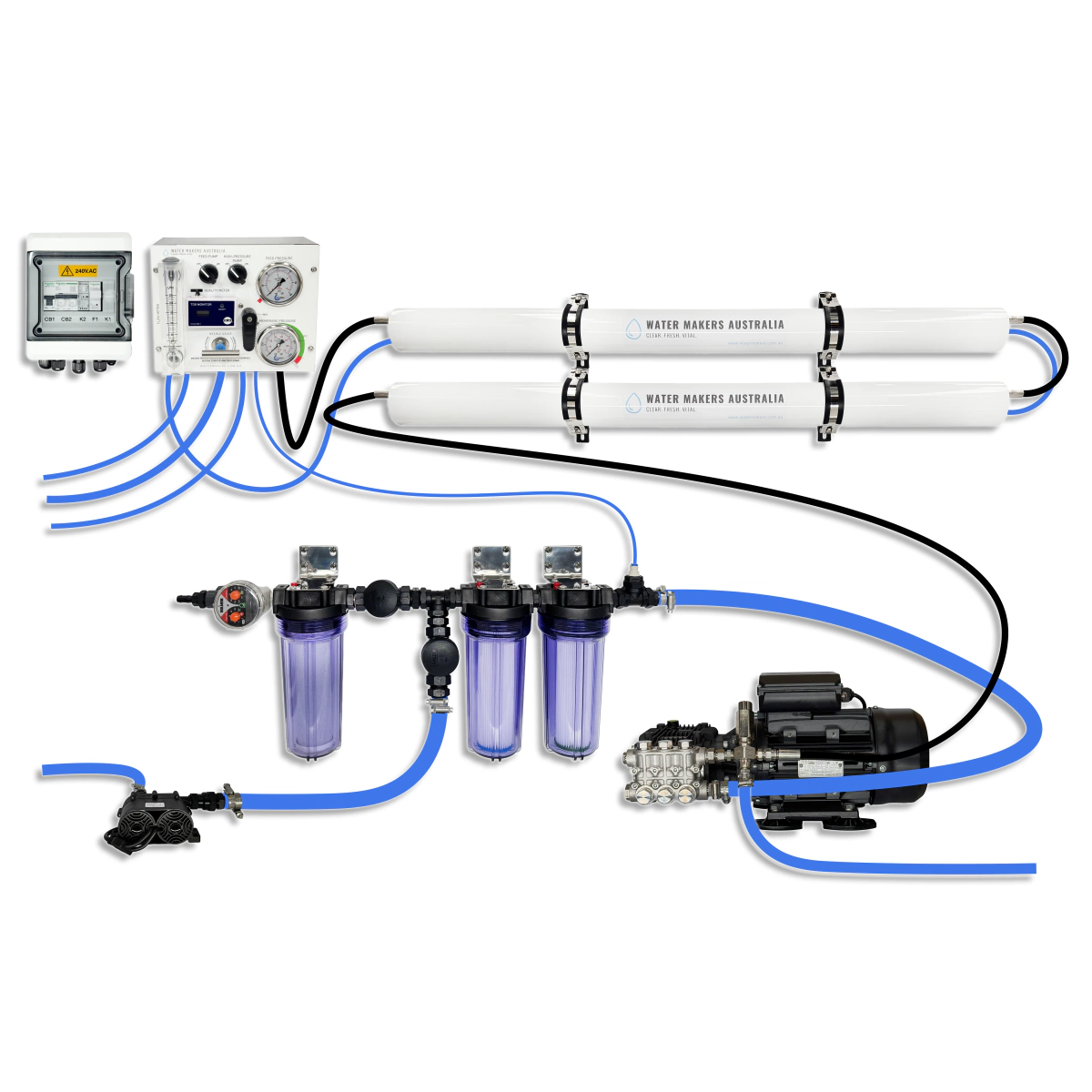
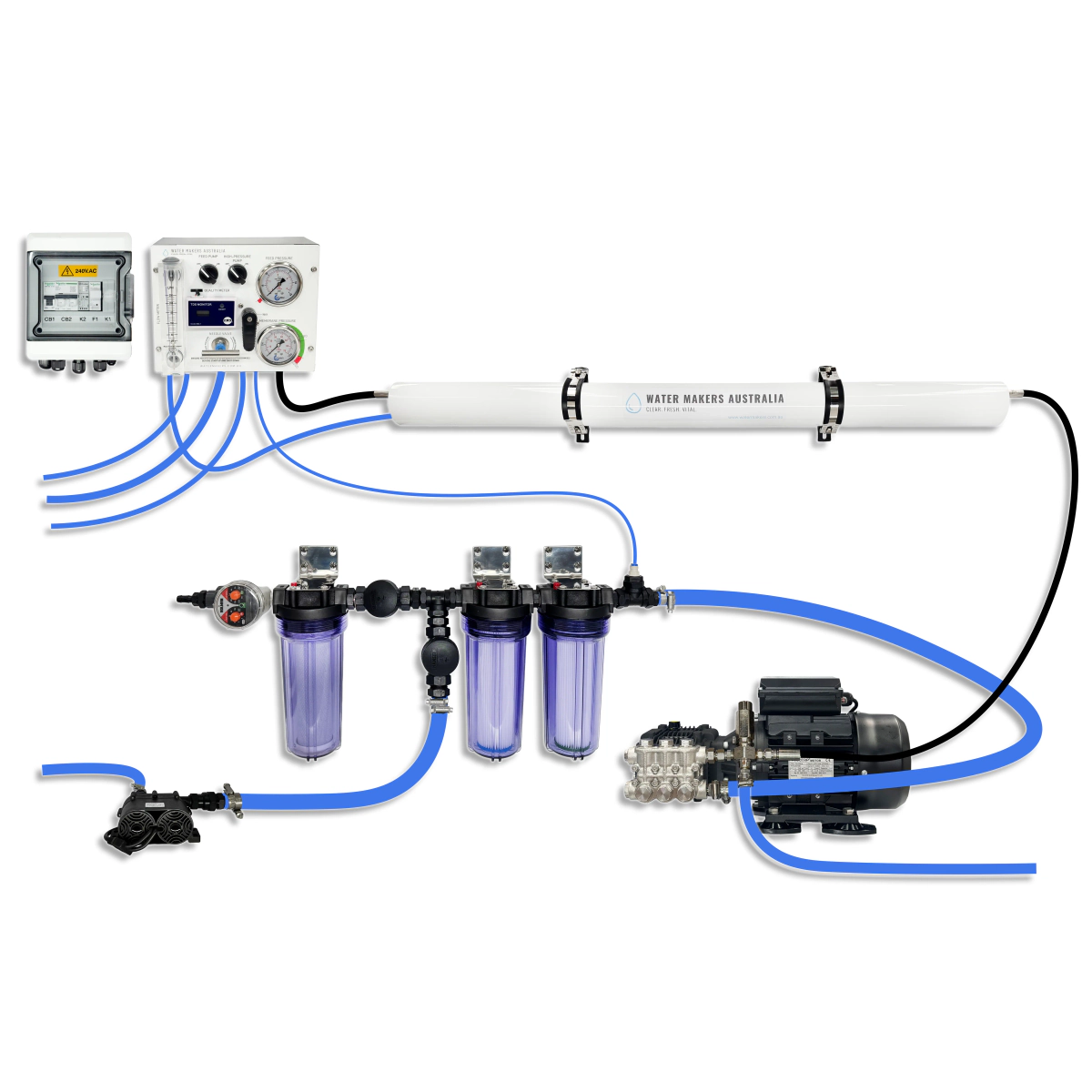
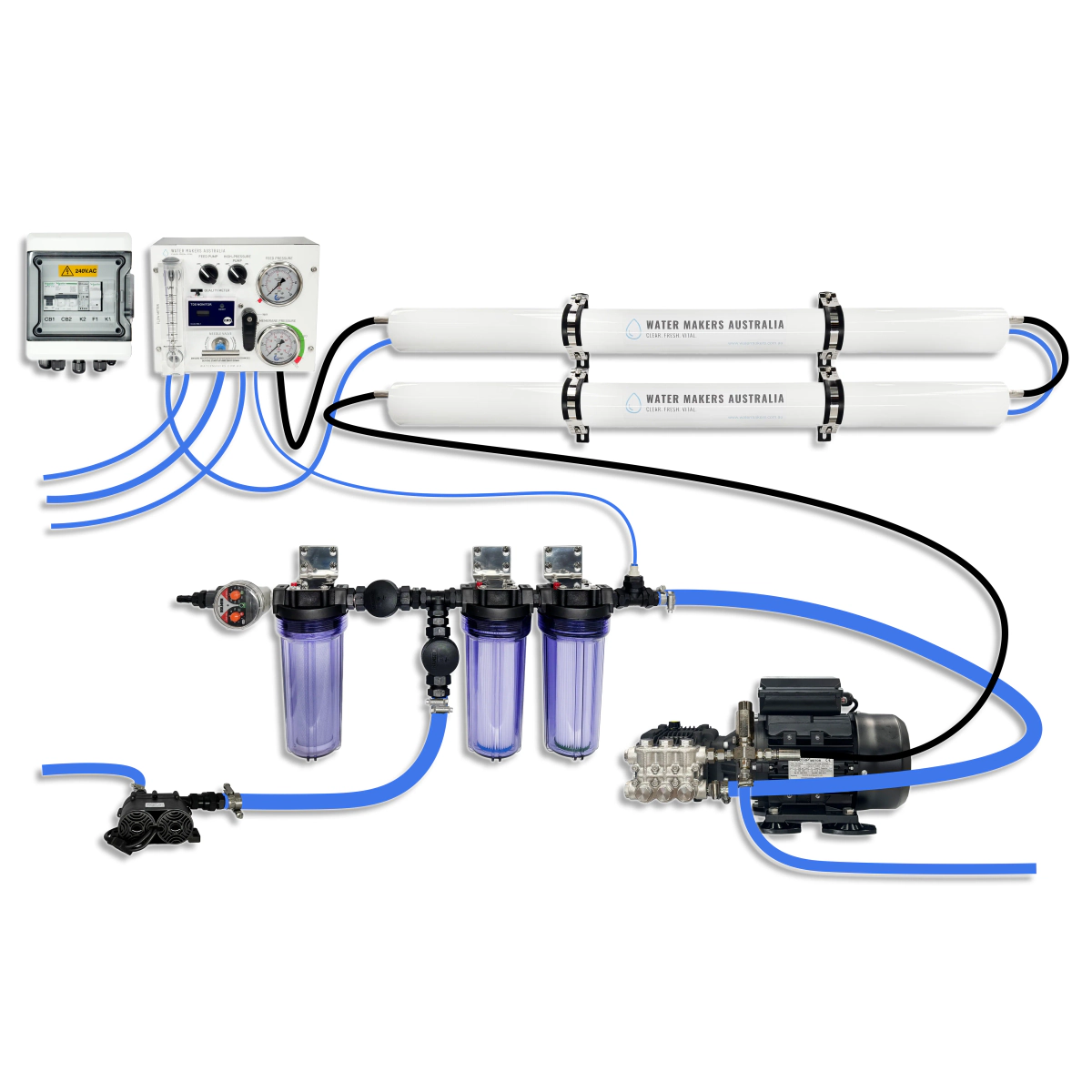
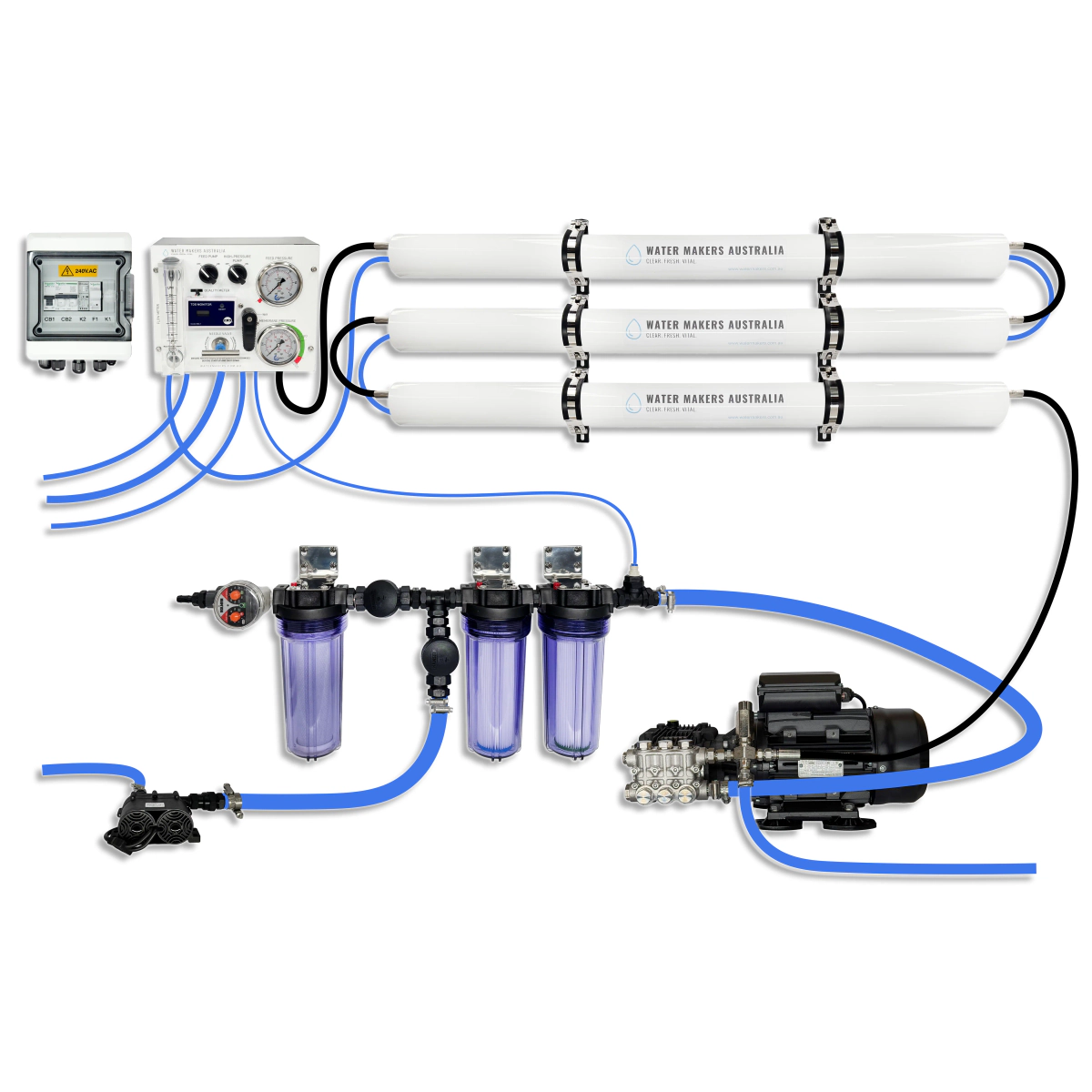
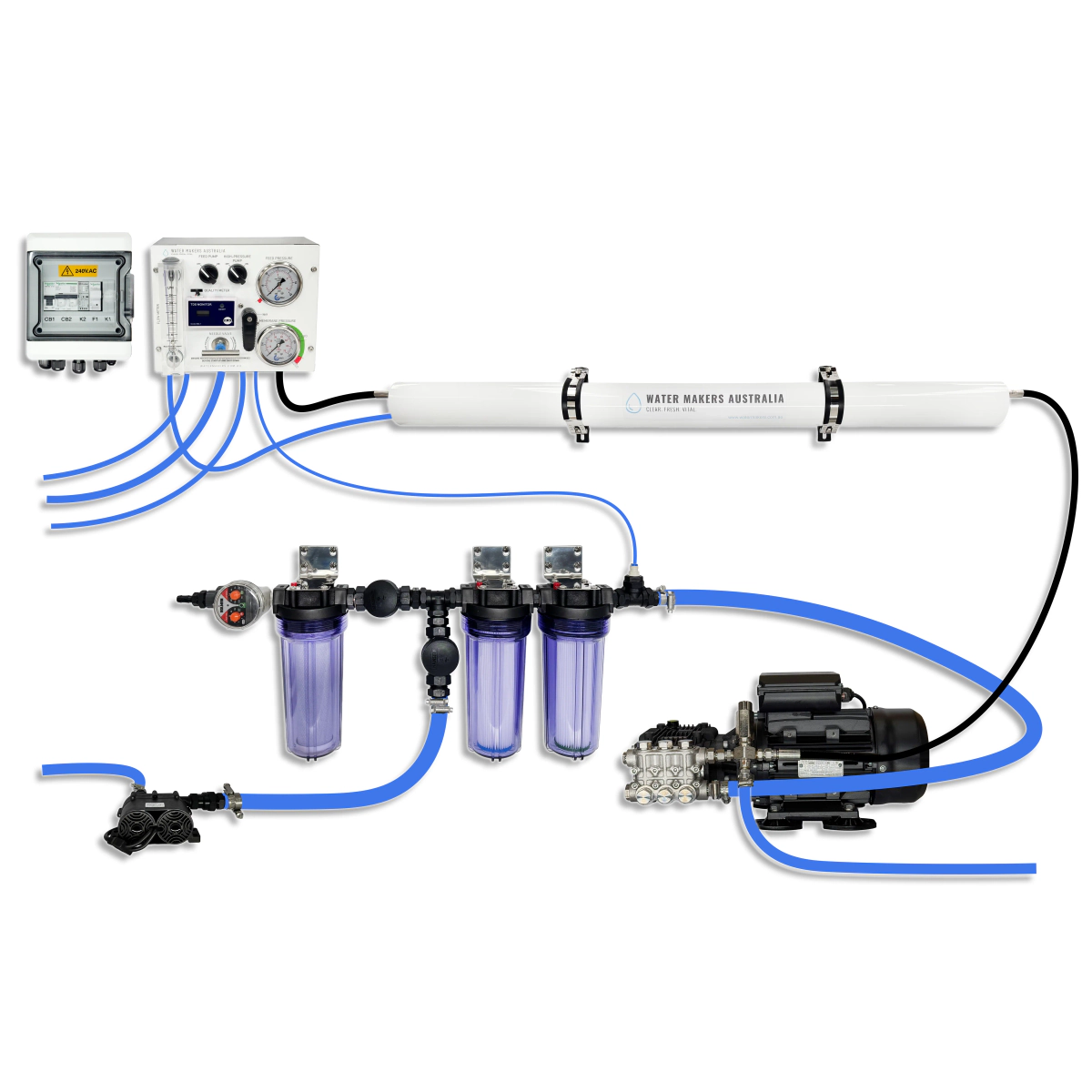
- Modular units come as separate pump, membrane and filter assemblies. Easier to fit on a yacht, where no single space is big enough.
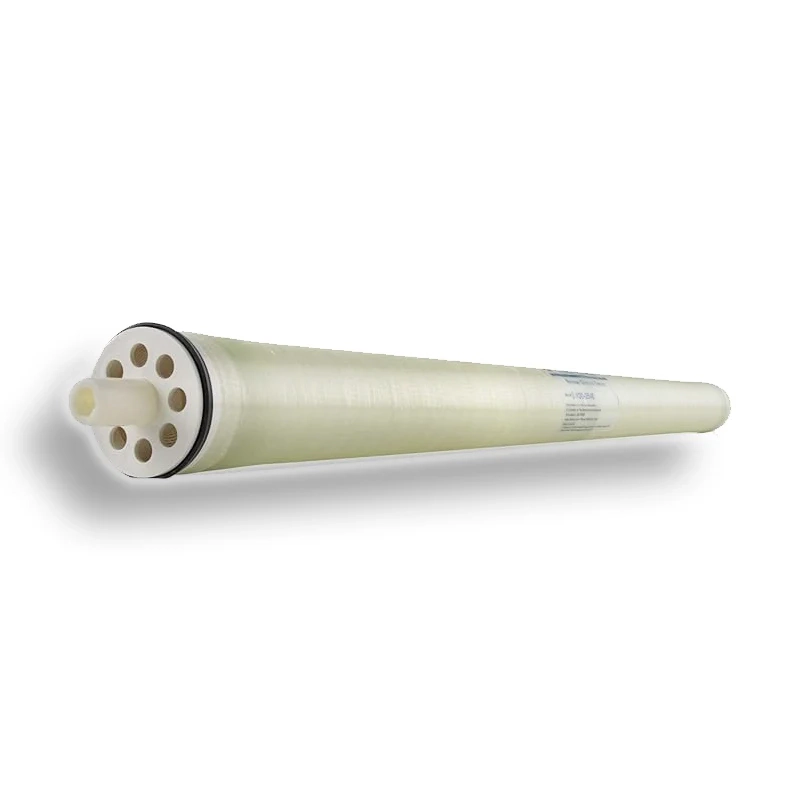
- Measure the membrane housing length first. It is usually the awkward part.
Step 4: support
- Who stocks membranes, seals and pump parts in Australia?
- Are the membranes and filters standard sizes sold by anyone, or the maker's own?
- Is there a manual good enough to service it yourself?
Step 5: controls
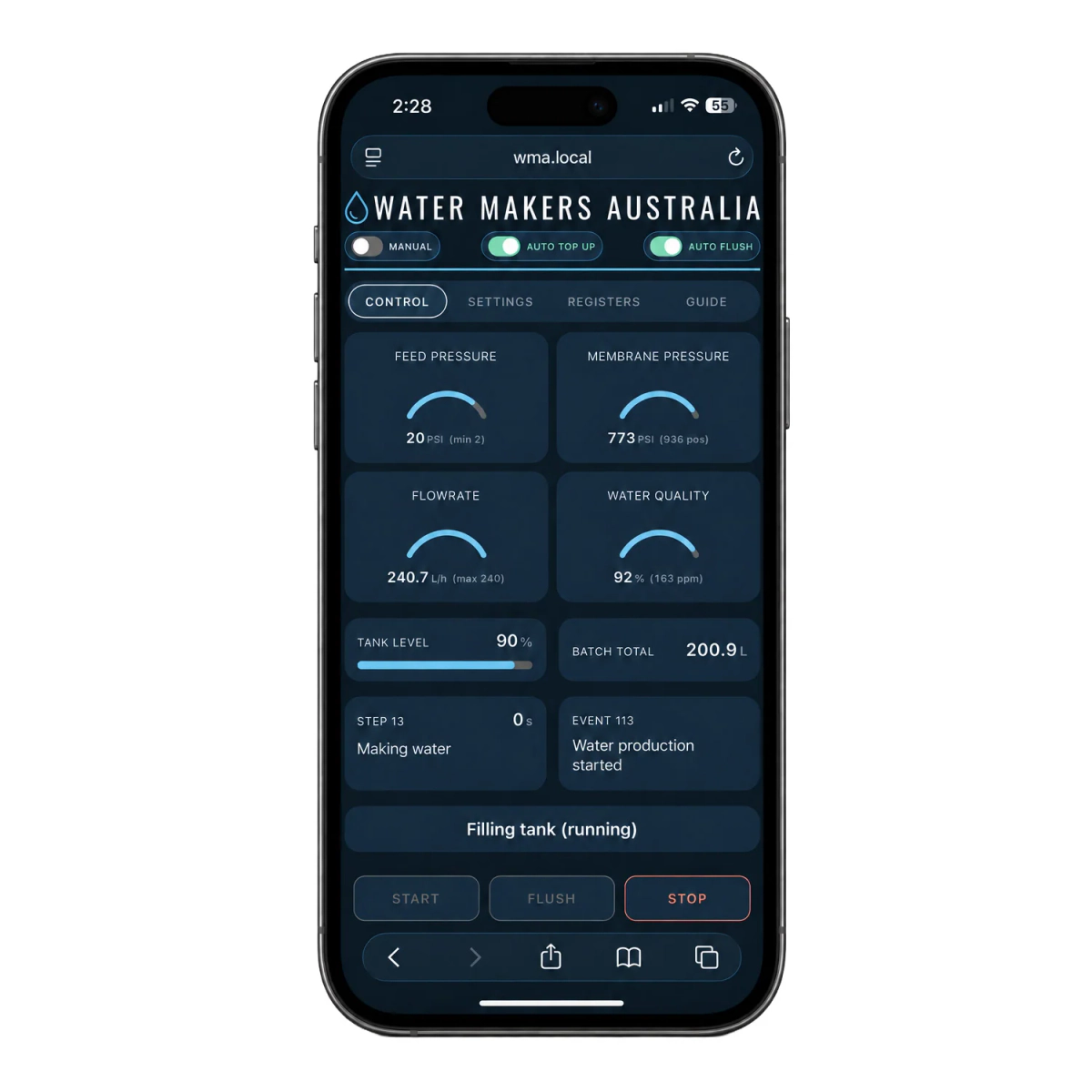
Manual units have a pressure valve and a gauge. They cost less and there is less to fail. Automatic units start, flush and stop themselves, which matters if you leave the boat for weeks.
Questions for the seller
- Rated output at what water temperature?
- Amps at my battery voltage?
- Price of a spare membrane and a year of filters?
- Warranty, and who honours it here?
Types compared
| Type | Power | Output | Suits |
|---|---|---|---|
| 12 or 24 volt, energy recovery | Low. Runs from batteries and solar | Modest, steady | Sailing boats without a generator |
| 12 or 24 volt, conventional pump | Higher draw per litre | Modest | Simple, lower cost systems with good charging |
| 240 volt AC | Needs a generator or large inverter | High | Boats that run a generator daily |
| Engine driven | Engine power | High | Boats that motor a lot. Needs engine room space |
Work out the size
Start with how much water you use, not with the brochure. Count people, showers, dishes and deck washing, then decide how many hours a day you are willing to run the unit. A small unit run for three hours can make the same water as a large one run for one, on less current but for longer. Match the run time to when you have spare power.
Calculator
Daily water use
What the crew gets through in a day.
- 40 L
- 280 L
Modular or boxed
A boxed unit arrives assembled in one frame. It is quick to install if you have a locker that fits it. A modular unit comes as separate parts: pump, membrane, filters and panel. It fits into the odd spaces of a sailing boat and each part is easy to reach, but the install takes longer and there are more hose joints to get right. On most monohulls under 45 feet, modular is the practical choice.
Questions to ask the seller
- What is the output at my water temperature? Output falls in cold water and figures are usually quoted at 25 degrees.
- What does it draw, in amps, at my voltage?
- Are the membrane and filters standard sizes I can buy anywhere?
- Who services it in Australia, and where are parts held?
- Is flushing automatic or manual?
- What does the warranty exclude?
Mistakes to avoid
- Buying on litres per hour alone and ignoring power per litre.
- Proprietary filters and membranes that only one supplier stocks.
- No plan for where the unit, the prefilters and the seawater intake will go.
- Assuming you will use it in marinas and harbours. Dirty water ruins membranes.