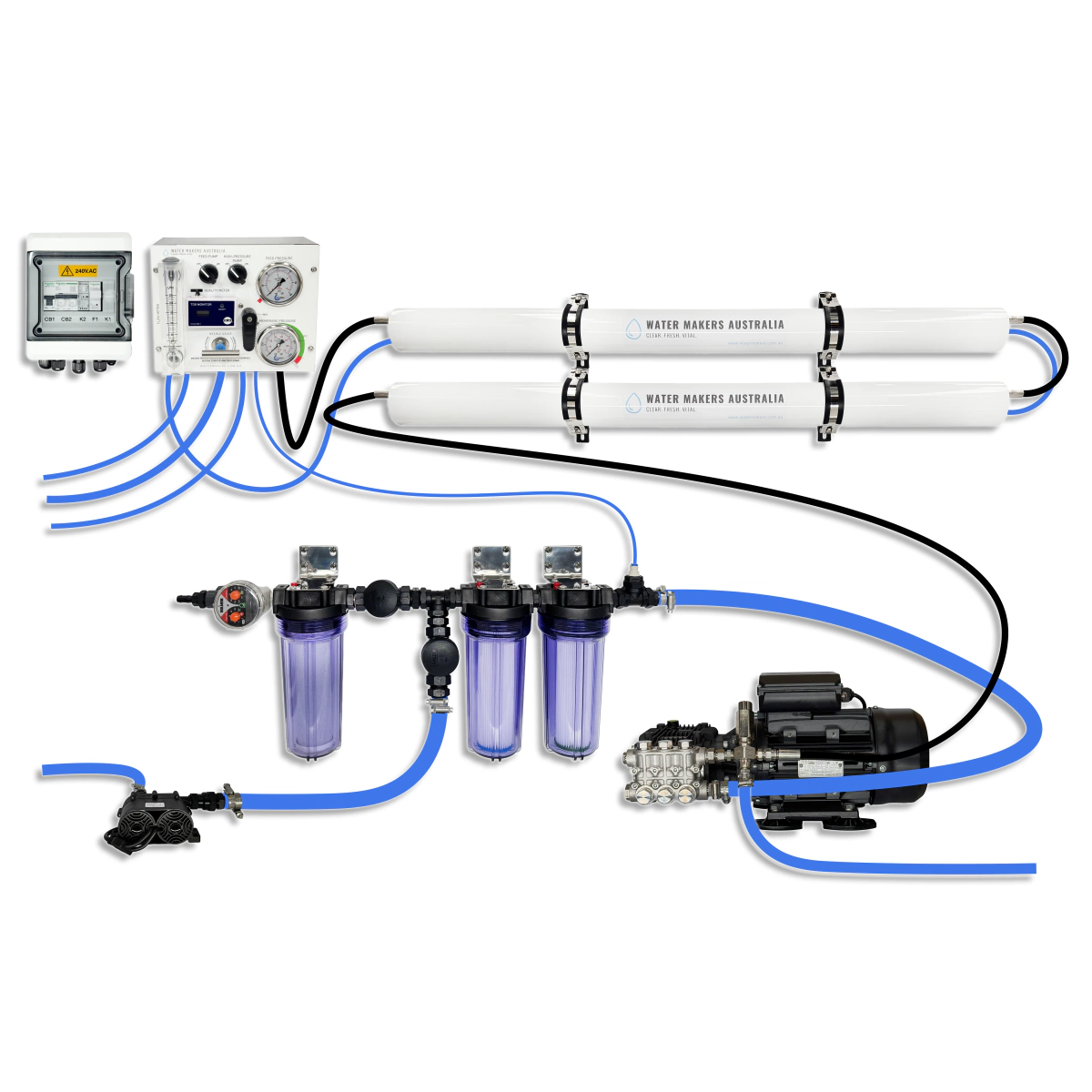
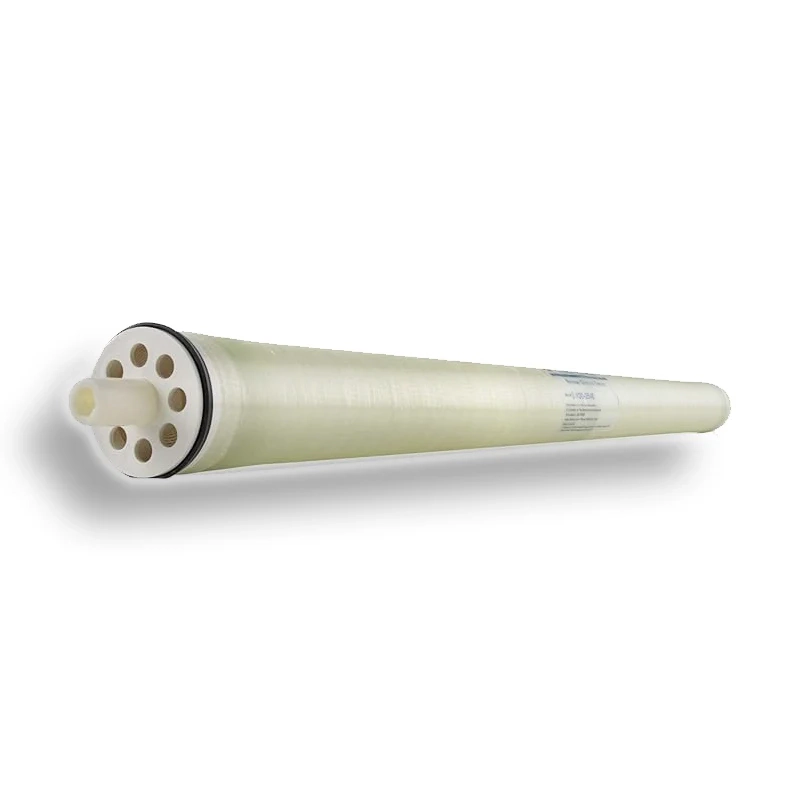
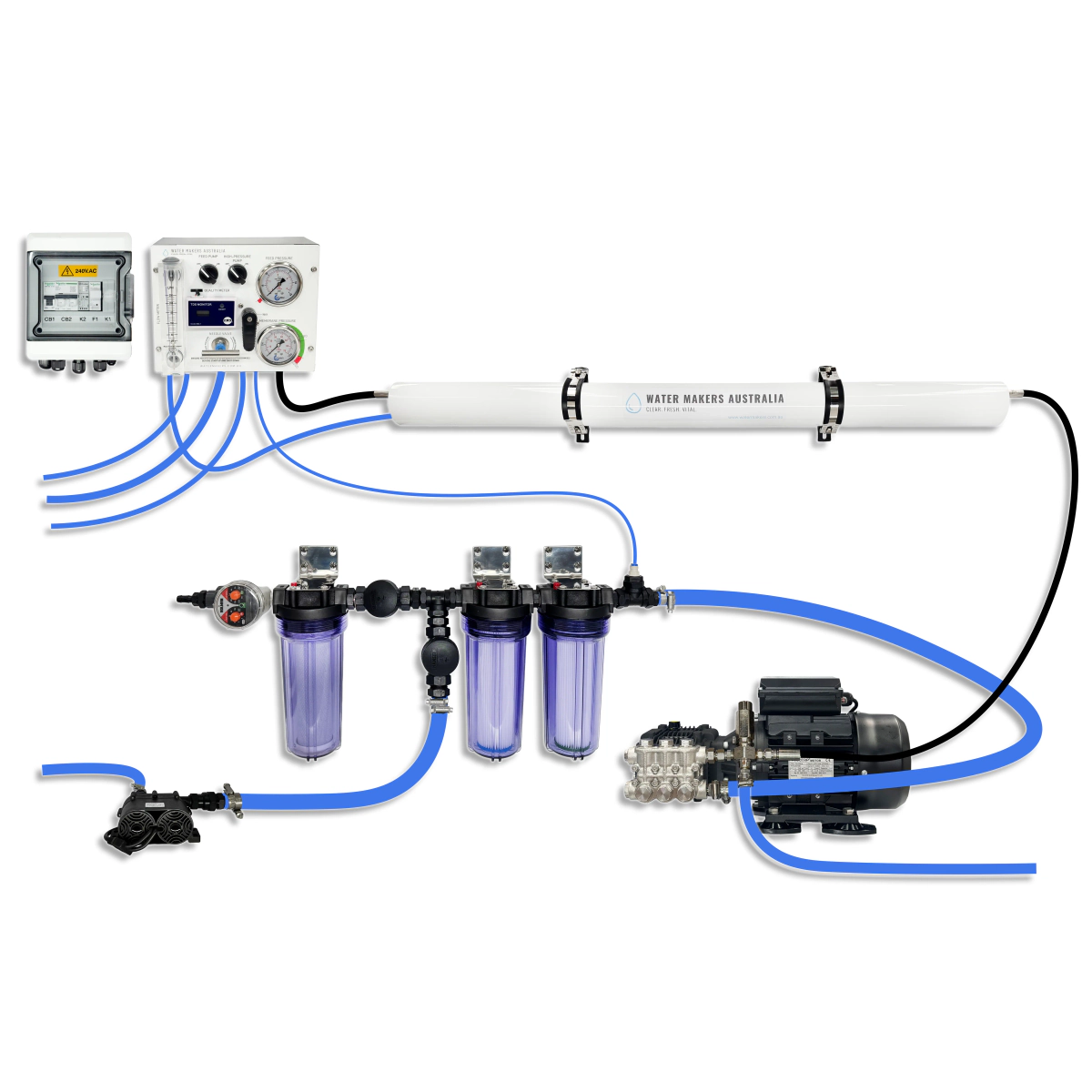
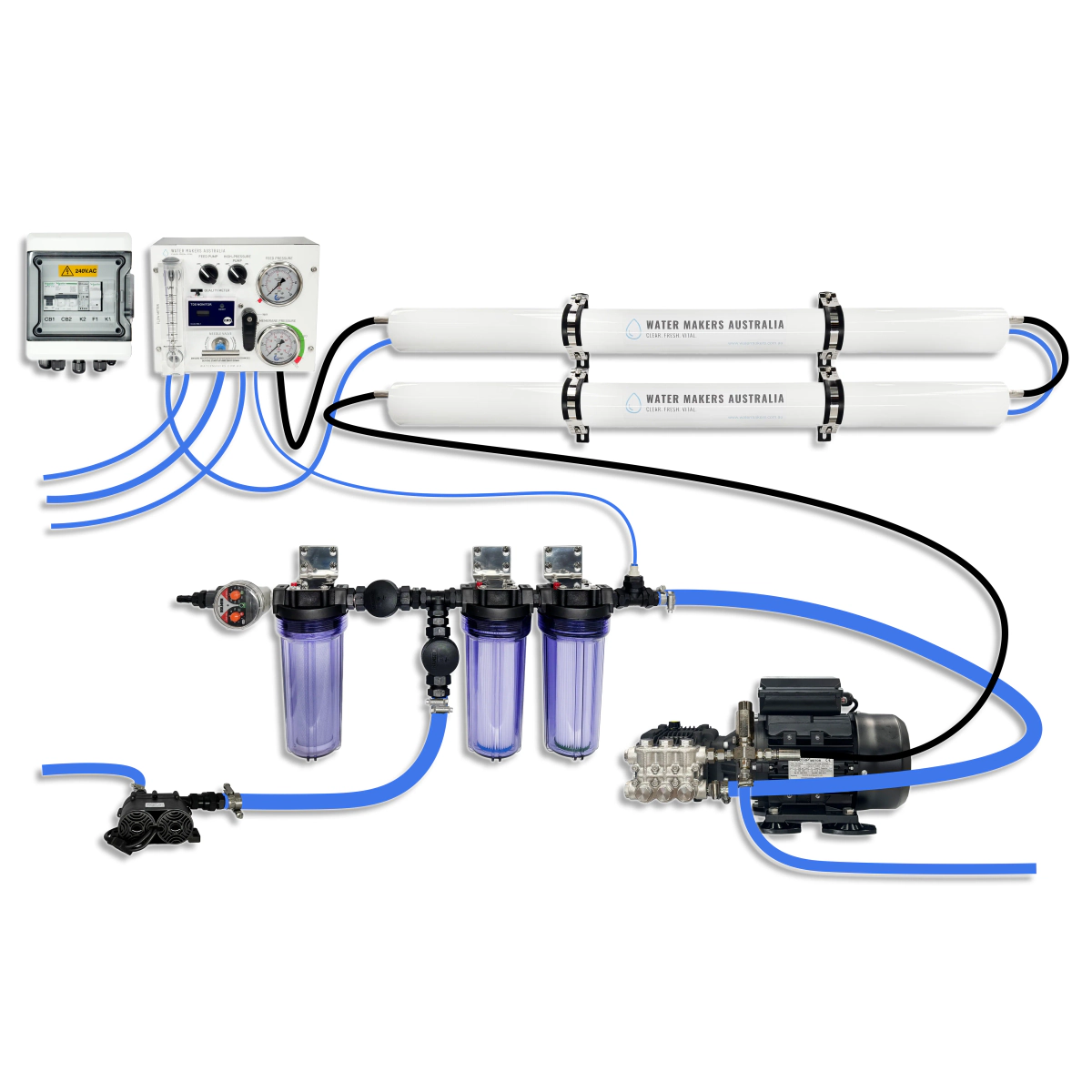
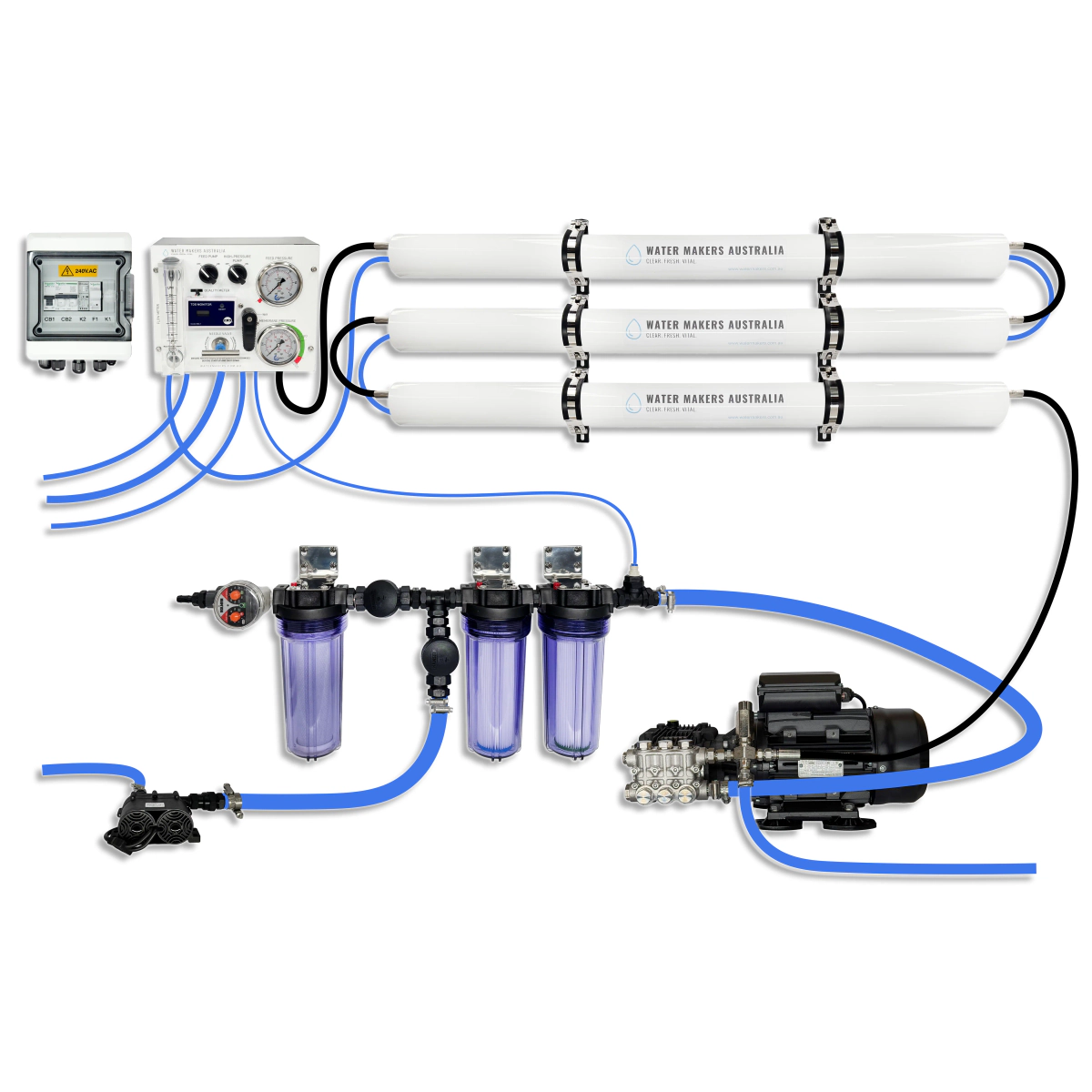
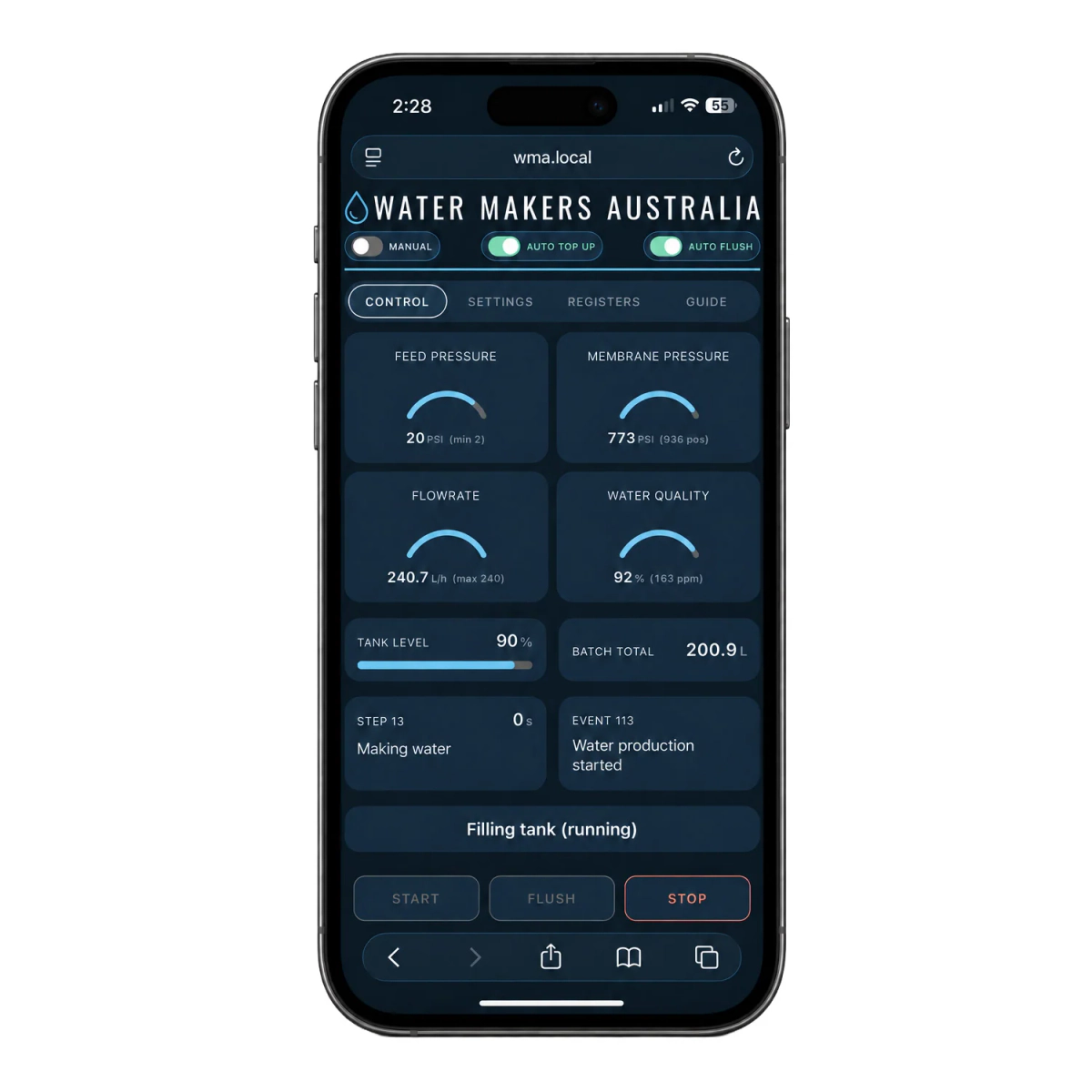
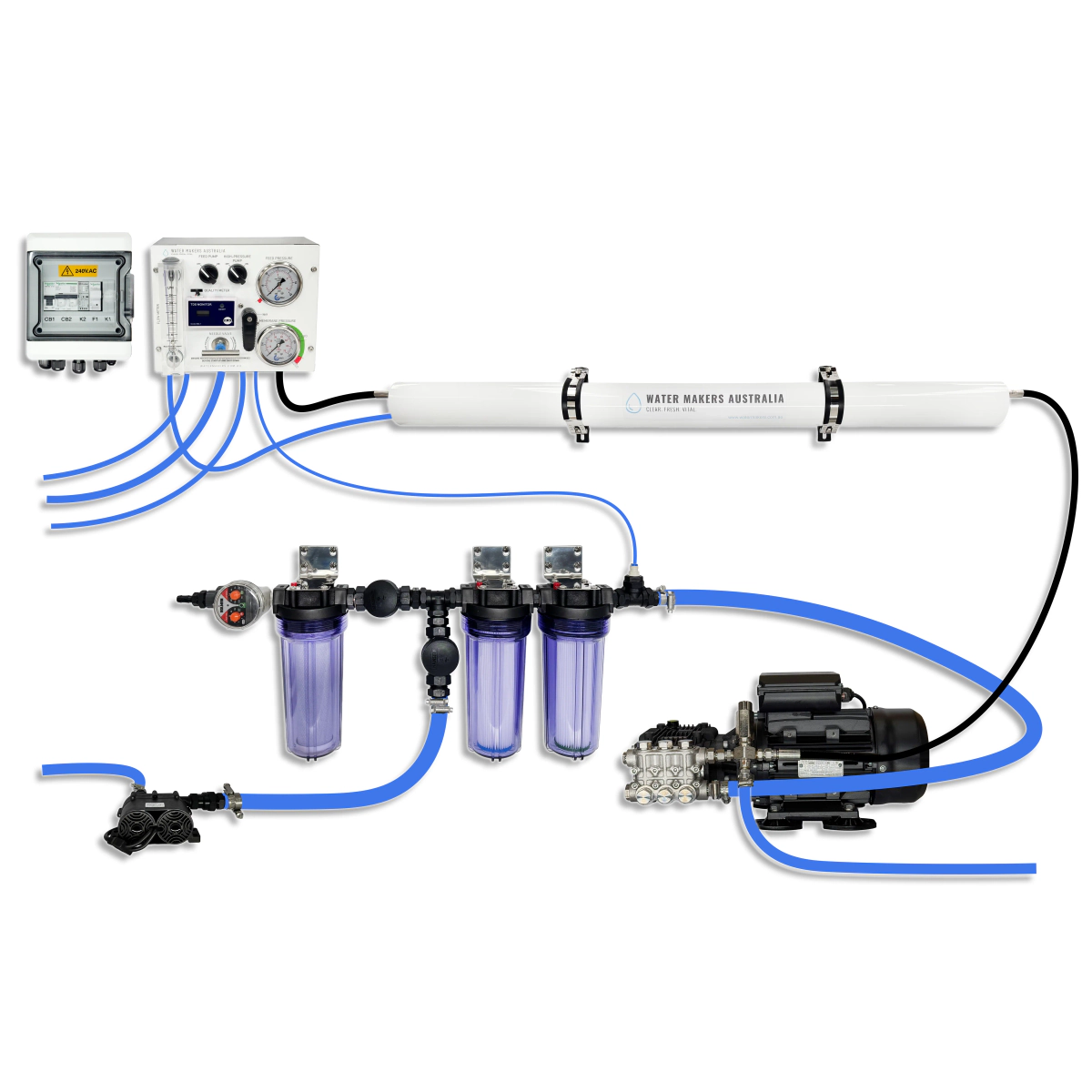
Nearly every watermaker fault is one of four things: not enough water getting in, air getting in, a tired membrane, or a seal. Work from the intake inwards.
Low output
- Cold water. Output falls a few percent for every degree below 25°C. This is normal.
- Blocked pre filters. Change them and compare.
- Low voltage at the pump. Measure at the pump terminals while it runs.
- Pressure below the working figure. Check the gauge and the valve.
- Fouled membrane. If output has fallen slowly over months and the checks above are fine, it needs cleaning or replacing.
Salty or high reading water
- A new or just unpickled membrane reads high for the first 20 to 30 minutes.
- A reading that climbs slowly over a year is the membrane ageing.
- A sudden jump is usually an O ring on the membrane end caps. They are cheap; replace them before blaming the membrane.
- Very warm water gives a slightly higher reading. That is normal.
Pressure will not build
- Air in the feed line. Look for bubbles in the pre filter bowl and tighten every fitting on the suction side.
- Feed pump not delivering. Check the strainer and the seacock.
- Worn pump seals or valves. Pressure builds slowly and the pump runs hot.
Noisy or pulsing pump
- Almost always starved of water. Blocked strainer, kinked hose, or the intake drawing air when heeled.
- Loose mounts amplify normal noise. Check them.
Leaks
- At hose ends: recut and reclamp.
- At high pressure fittings: stop, depressurise, then remake. Do not tighten under pressure.
Before you call for help
Have these ready: pressure, product flow, meter reading, water temperature, hours on the membrane, and when the filters were last changed. With those, a good service agent can usually name the fault by phone.
Start with the simple things
Before taking anything apart: is the seacock open, is the strainer clear, are the prefilters clean, is the battery voltage healthy at the pump while it runs, and is the water you are in clean and warm enough? Most watermaker faults are a blocked filter, air in the feed, or low voltage.
Symptom table
| Symptom | Likely cause | Check |
|---|---|---|
| Low output, normal pressure | Cold water, or a fouled membrane | Water temperature, then your log for a slow decline |
| Low output, low pressure | Blocked prefilter, air leak on the suction side, worn pump | Filters, hose clamps before the pump, voltage at the pump |
| Pressure higher than usual | Fouled or scaled membrane | Clean with the maker cleaning chemicals |
| Salty product water | Membrane damage, a failed O ring, not enough run time | Salinity after 10 minutes, then seals at the membrane end caps |
| Pump noisy or pulsing | Air in the feed, starved inlet | Intake position, strainer, heel angle |
| Trips the breaker | Low voltage, seized pump, undersized cable | Voltage drop under load |
| Bad smell from product water | Biological growth from sitting unflushed | Flush, clean, then pickle properly next time |
Tools and spares to carry
- Two sets of prefilters
- Spare O rings and a seal kit for the pump and membrane end caps
- Pump oil if your pump uses it
- Handheld salinity meter
- Cleaning and storage chemicals
- Spare hose and clamps for the low pressure side
Cleaning a membrane
Makers supply an alkaline cleaner for biological fouling and an acid cleaner for mineral scale. They are used one at a time, circulated at low pressure, then flushed out well. Cleaning helps a fouled membrane. It does not repair one damaged by chlorine or oil, or one that has dried out. If salinity stays high after cleaning and the seals are good, the membrane is finished.
When to call the service agent
High pressure fittings, pump rebuilds beyond a seal kit, and anything on the energy recovery unit are worth leaving to someone who does them often. The high pressure side runs at around 55 bar. Never loosen a fitting with the system pressurised.